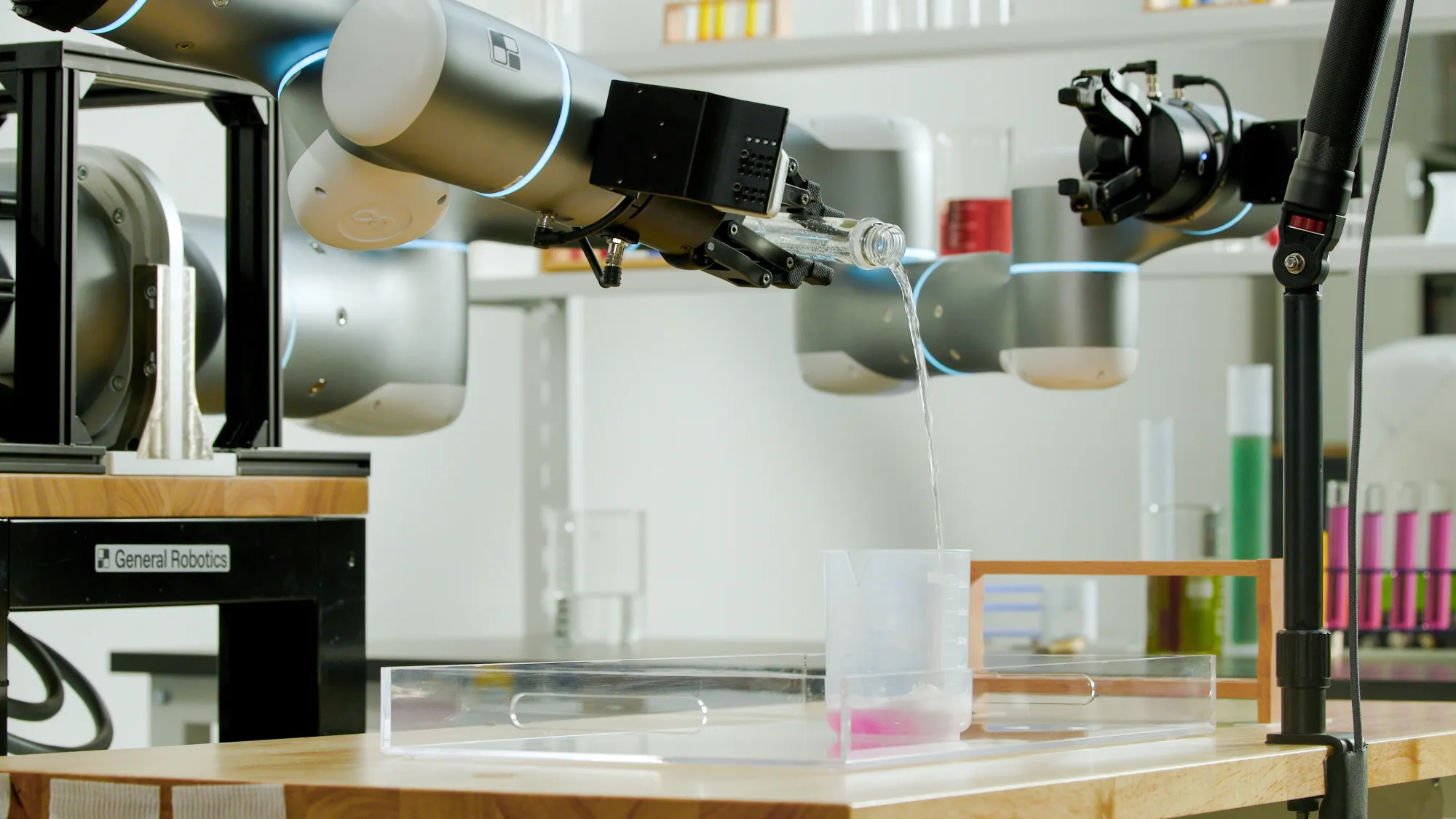
Universal Robots is attempting to bridge the gap between laboratory-grade artificial intelligence and rugged industrial operations by launching its seventh-generation robotics platform. The Gen 7 system, unveiled at the IMTS tradeshow, represents an end-to-end redesign of the company's hardware and software architecture to support "physical AI" applications. By integrating advanced sensing and increased computational power directly into the robot's physical structure, Teradyne Robotics company Universal Robots (UR) aims to reduce the integration friction typically associated with deploying complex AI models in manufacturing environments. This strategic shift moves the company beyond traditional collaborative robotics toward a platform capable of real-time, data-driven decision-making on the factory floor.
Hardware Redesign for AI-Ready Connectivity
The Gen 7 platform introduces the g-Series robot arms—specifically the UR10g-1750, UR17g-1300, and UR18g-950—which are distinguished by a redesigned tool flange. This flange is engineered to deliver data, power, and safety directly to the tool, which the company says enables vision and sensing capabilities required for AI models to operate in real time. By eliminating traditional cabling complexity, the architecture simplifies the connection of high-bandwidth sensors and cameras. To support these intensive data requirements, the new CB7 Core controller provides 40% more compute power while occupying a 30% smaller footprint than previous iterations. This controller is designed to facilitate multi-network communication, allowing the robot to interface directly with PLCs, HMIs, MES platforms, and vision systems without necessitating external switches. Furthermore, the platform incorporates built-in force-torque sensing and impedance control, which the company positions as essential for dexterous manipulation and force-sensitive assembly tasks.
PolyScope X and Ecosystem Integration
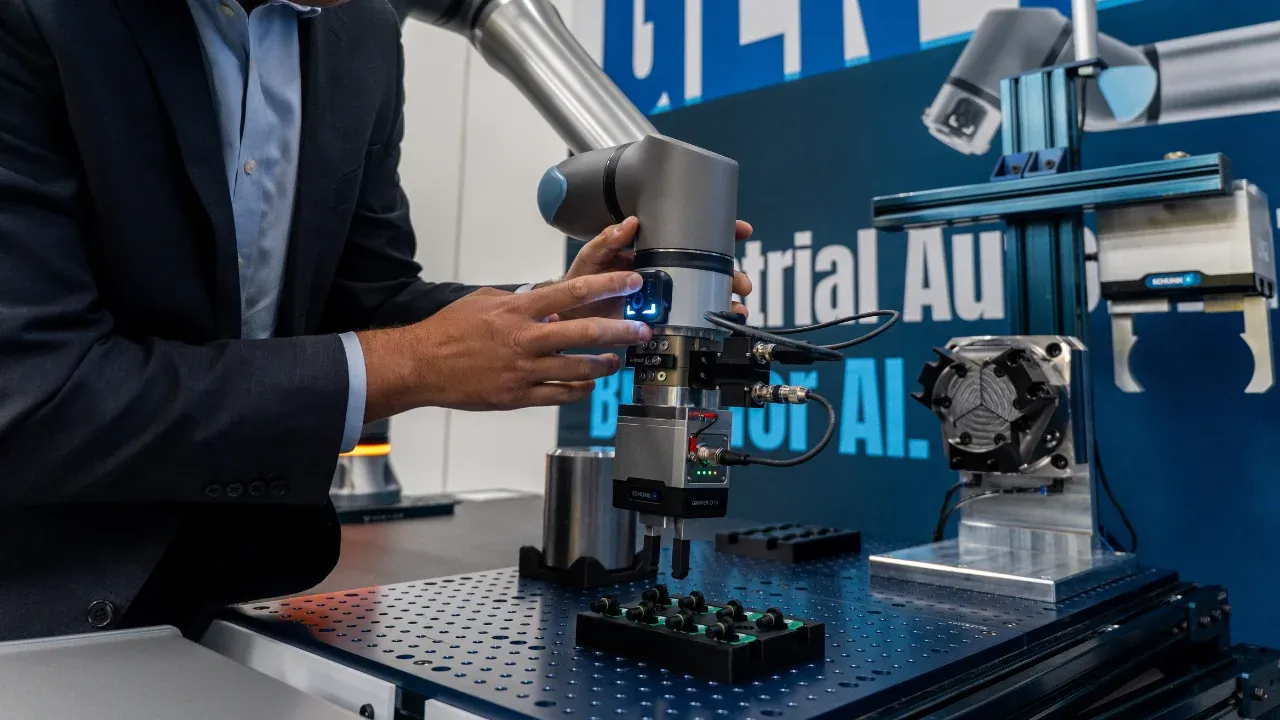
Software and security form the second pillar of the Gen 7 update, centered on the new PolyScope X operating system. This system provides open APIs and ROS2 communication, which the company suggests allows programmers to deploy edge-AI applications using external AI processing or IPCs. To address enterprise security requirements, the platform includes ISO 10218-1 safety functionality and cybersecurity compliance, with Teradyne Robotics maintaining IEC 62443-4-1 ML3 certification. The hardware interface is also updated via the TP7 Core teach pendant, which is 20% lighter than previous models, and the SP7 Smart Panel, a tool flange interface designed for faster programming at the point of task. To demonstrate the platform's open architecture, Universal Robots showcased Gen 7 alongside over 20 ecosystem partners, including Cognex, Schunk, and Inbolt. These demonstrations aim to illustrate how third-party vision and gripping technologies can run natively on the UR controller, potentially reducing the need for external vision PCs and specialized fixtures.
Key Takeaways
- The Gen 7 platform introduces three new g-Series arms: the UR10g-1750, UR17g-1300, and UR18g-950.
- The CB7 Core controller increases compute power by 40% while reducing the footprint by 30% compared to prior generations.
- The platform features a redesigned tool flange that delivers power and data directly to sensors to support real-time AI model execution.
TechInsyte's Take
In our view, Universal Robots is making a calculated move to defend its leadership in the collaborative robot market by preemptively addressing the "physical AI" bottleneck. For years, the primary barrier to sophisticated AI in manufacturing has been the "last inch" of connectivity—the messy, high-latency cabling required to link sensors to controllers. By moving power and data into the tool flange and increasing onboard compute via the CB7 Core, UR is attempting to turn the robot from a blind actuator into a sentient edge device. This signals a shift in the competitive landscape where the value proposition is no longer just ease of use, but the ability to handle high-mix, low-volume production through intelligent, sensor-rich autonomy. If the ecosystem partners can successfully deliver "plug-and-play" AI modules, UR may effectively set the standard for how industrial hardware interfaces with the next generation of generative and physical AI.
Questions & Answers
How does the Gen 7 platform simplify the integration of high-bandwidth sensors for AI?
The Gen 7 platform utilizes a redesigned g-Series tool flange that delivers power, data, and safety directly to the tool. This architecture is intended to eliminate cabling complexity, making it easier to connect the cameras and high-bandwidth sensors necessary for real-time AI model execution.
What specific computational and connectivity improvements does the CB7 Core controller offer?
The CB7 Core controller provides 40% more compute power in a footprint that is 30% smaller than previous generations. It is designed to support multi-network communication, allowing direct connections to PLCs, HMIs, MES platforms, IPCs, and vision systems, which reduces the requirement for external switches.
In what ways does the PolyScope X operating system support edge-AI deployment?
PolyScope X enables the deployment of edge-AI applications through the use of open APIs and ROS2 communication. This allows programmers to utilize external AI processing or IPCs to run advanced applications on the robot.
What cybersecurity and safety certifications does the Gen 7 platform maintain?
The Gen 7 platform features a PLd, Category 3 (ISO 13849-1) certified architecture. Additionally, all g-Series robots are TÜV certified to ISO10218-1 and UL1740, and Teradyne Robotics holds IEC 62443-4-1 ML3 certification for cybersecurity.
Source: Businesswire