Faraday Future (FF) is aggressively repositioning itself from a vehicle-centric model toward a diversified Embodied AI (EAI) ecosystem, signaling a strategic shift into autonomous robotics and industrial productivity. The California-based company, Faraday Future Intelligent Electric Inc. (NASDAQ: FFAI), is preparing to launch a multi-tiered robotics lineup designed to capture market share in both hardware sales and specialized software solutions. By expanding into humanoid, quadruped, and mobile manipulator forms, FF is attempting to establish a presence in the high-growth physical AI sector. This transition is supported by a dual-track strategy of hardware deployment and the development of industry-specific application layers for security, inspection, and education.
FF EAI Robotics Product and Partner Roadmap
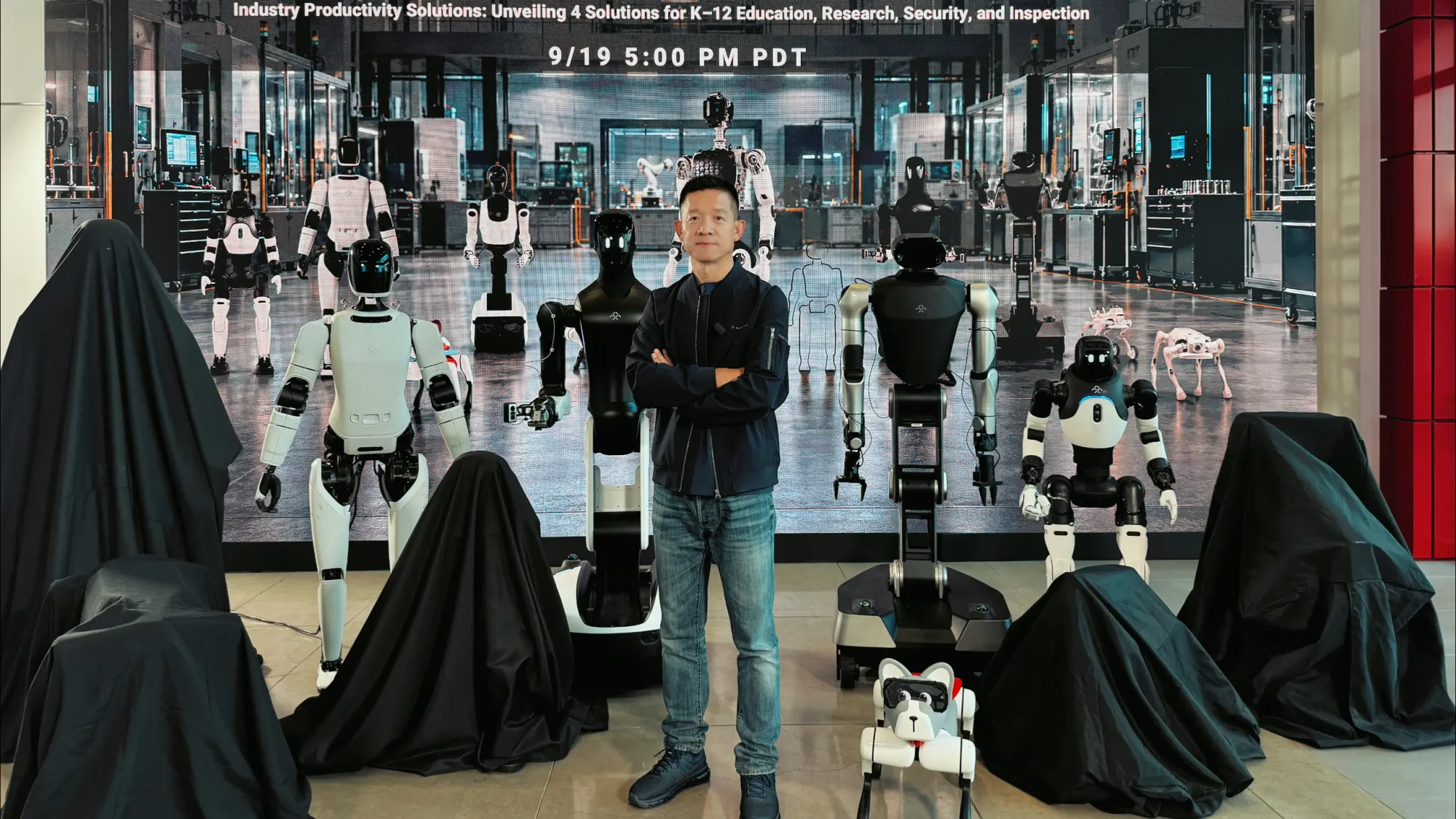
The company is scheduling two major milestones to formalize its robotics market entry. On September 19 at 5:00 p.m. PT, FF will host its "Four-Core Full-Stack AI" Ecosystem New Product Series Launch. This event focuses on two specific pillars: the EAI Devices core and the Industry Productivity Solutions core. During this launch, FF intends to unveil nine new robot devices, including the official commercial release of the "All-New Futurist." The company claims this rollout will complete its "FF EAI Robot World 2.0," covering three distinct forms—humanoids, quadrupeds, and mobile manipulators—across large, medium, and small sizes.
Following the product reveal, FF plans to host a "Built in USA" Launch and Business Partner Conference on September 28. This second phase is designed to secure upstream partnerships to bolster U.S.-based manufacturing, supply chain stability, and product certification. To further its visibility in the robotics sector, the company also confirmed it will exhibit at the IROS 2026 conference in Pittsburgh from September 28 to 30. These coordinated efforts suggest FF is attempting to build a localized, vertically integrated robotics supply chain while simultaneously seeking the scale necessary for mass industrial deployment.
Autonomous Perception and Government Procurement Strategy
At the technical core of FF’s upcoming security and inspection solutions is a proprietary "One Brain, Multiple Forms" technology. This system utilizes multi-sensor fusion and Simultaneous Localization and Mapping (SLAM) to enable autonomous navigation. According to the company, this technology allows robots to sense environments, identify obstacles like vehicles or people, and autonomously re-plan routes to reach specific checkpoints. FF is positioning this capability as a method to reduce repetitive labor and operational risks in sectors requiring constant monitoring.
To facilitate market access, FF has appointed Steven Newton as a Senior Strategic Advisor. Newton, who serves as a Senior Advisor to the US General Services Administration and sits on the Los Angeles Unified School District Procurement Committee, will focus on expanding FF’s footprint in government, public institutions, and education. This move is a targeted attempt to penetrate the U.S. federal government procurement directory and scale the company's K-12 and higher education business. By leveraging Newton's decades of experience in procurement, FF aims to bridge the gap between its technological development and the complex regulatory requirements of public sector contracts.
Key Takeaways
- FF will launch nine new robot devices on September 19, including the "All-New Futurist," covering humanoid, quadruped, and mobile manipulator forms.
- The company is launching four industry-specific solutions targeting K-12 education, research, security, and inspection.
- Steven Newton, a Senior Advisor to the US General Services Administration, has joined FF to drive growth in government and education procurement.
TechInsyte's Take
In our view, Faraday Future’s pivot toward an "Embodied AI" ecosystem represents a high-stakes attempt to find scalability outside the traditional EV market. By diversifying into nine different robot models and four distinct industry solutions, FF is not just selling hardware; it is attempting to build a "flywheel" where device deployment generates the data necessary to refine its "EAI Brain." This is a classic software-as-a-service (SaaS) logic applied to physical robotics. However, the success of this strategy depends heavily on the company's ability to execute its "Built in USA" manufacturing goals and successfully navigate the high barriers to entry in government procurement. The appointment of Steven Newton is a decisive move that suggests FF recognizes that technical superiority in SLAM and sensor fusion is insufficient without a sophisticated mechanism for institutional market access.
Questions & Answers
How does FF's "One Brain, Multiple Forms" technology function in real-world environments?
The technology utilizes multi-sensor fusion and Simultaneous Localization and Mapping (SLAM) to allow robots to sense their surroundings and determine their location. This enables autonomous navigation where robots can detect obstacles, such as people or vehicles, and automatically re-plan their routes or stop to avoid collisions.
What specific industry sectors is FF targeting with its new productivity solutions?
FF is launching four complete solution sets specifically designed for the K-12 education, research, security, and inspection sectors, moving the company from simple device sales to integrated service delivery.
What is the strategic purpose of the "Built in USA" conference on September 28?
The conference aims to recruit upstream partners to support FF's efforts in U.S. local manufacturing, supply chain management, product certification, and broader market access.
How does the company plan to expand its presence in the public sector?
FF is utilizing the expertise of Senior Strategic Advisor Steven Newton, who has extensive experience with the US General Services Administration and school district procurement, to enter the U.S. federal government procurement directory and expand its education business.
Source: Businesswire