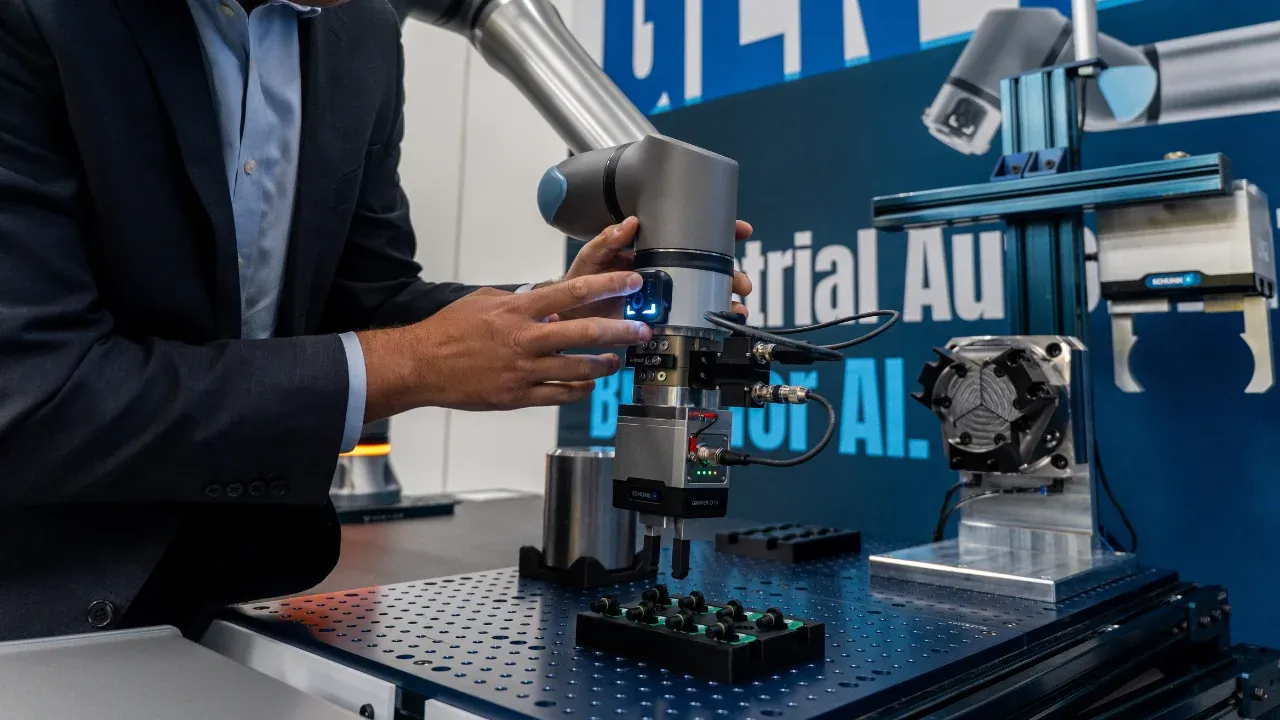
Semtech Corporation is targeting the increasing density and electrical volatility of modern industrial automation with the launch of the TDS2621LP. As collaborative robots (cobots) and autonomous mobile robots (AMRs) integrate more electronics into smaller footprints, the risk of hardware failure from electrical transients rises. This new addition to the SurgeSwitch family aims to provide more predictable protection for 24 V DC power buses, addressing the specific challenges posed by high-energy transients in shrinking robotic architectures and safety-critical I/O modules.
Addressing Transient Energy in Compact Robotics
The move toward smaller, human-adjacent robotic systems creates a significant engineering challenge: managing high-energy transients within constrained physical spaces. In automated manufacturing environments, inductive loads—such as electromagnetic brakes, pneumatic solenoids, and servo motors—switch repeatedly, generating surges directly on the 24 V DC bus. Semtech is positioning the TDS2621LP to mitigate these risks in applications including cobot joint electronics, AGV power buses, and PLC I/O modules. By utilizing a surge-rated FET that operates as a precision voltage-controlled switch, the device seeks to replace bulkier, conventional industrial protection components. This transition allows designers to maintain protection margins without the significant physical overhead typically required by traditional Transient Voltage Suppression (TVS) diodes, which often necessitate over-specification of downstream components to account for unpredictable clamping voltage shifts.
Technical Advantages of SurgeSwitch Architecture
The TDS2621LP differentiates itself from standard PN-junction approaches by offering near-constant clamping voltage across a wide current range. While conventional TVS diodes often see clamping voltage rise alongside peak pulse current, Semtech claims the TDS2621LP maintains a uniform clamping voltage of 35 V even at a 24 A (8/20 μs) peak pulse current. This performance is supported by a low dynamic resistance of 32 mΩ. The device is designed to match the IEC upper tolerance band for 24 V DC systems with a maximum working voltage of 26.4 V. Furthermore, the component utilizes an ultra-compact 1.6 mm2 DFN footprint, which is specifically intended to assist engineers facing extreme density requirements in distributed control cabinets, smart sensor nodes, and USB Type-C industrial ports. This architecture aims to provide predictable headroom for sensitive control circuitry operating under harsh Electrostatic Discharge (ESD) conditions.
Key Takeaways
- The TDS2621LP provides a maximum clamping voltage of 35 V at a 24 A peak pulse current.
- The device features an ultra-compact 1.6 mm2 DFN footprint for high-density industrial applications.
- It is designed for 24 V DC power buses, supporting IEC 61000-4-5 surge compliance.
TechInsyte's Take
In our view, Semtech’s launch of the TDS2621LP is a direct response to the "density vs. reliability" paradox currently facing industrial IoT and robotics designers. As cobots move closer to human workspaces, the cost of a control circuit failure is no longer just financial; it becomes a matter of operational safety and system resilience. By moving away from the unpredictable clamping characteristics of traditional TVS diodes and toward a precision FET-based switch, Semtech is attempting to standardize protection margins. This signals a broader trend where semiconductor providers must move beyond simple suppression toward highly predictable, precision-controlled power management to support the next generation of miniaturized, autonomous industrial hardware.
Questions & Answers
How does the TDS2621LP improve upon traditional TVS diode protection?
Unlike conventional TVS diodes, where clamping voltage can rise with peak pulse current and shift across temperature ranges, the TDS2621LP offers a near-constant clamping voltage of 35 V at 24 A and a low dynamic resistance of 32 mΩ, providing more predictable protection margins.
Which specific industrial robotic components is this technology intended for?
The device is designed for 24 V DC power buses in applications such as cobot joint electronics, controller boards, autonomous mobile robot (AMR) power buses, and actuator or solenoid valve driver boards.
What are the physical and electrical constraints of the TDS2621LP?
The component utilizes an ultra-compact 1.6 mm2 DFN footprint and features a maximum working voltage of 26.4 V, which is matched to the IEC upper tolerance band for 24 V DC systems.
What is the primary electrical threat this device addresses in factory automation?
The device addresses high-energy transients and Electrostatic Discharge (ESD) generated by inductive loads, such as servo motors and pneumatic solenoids, which switch frequently and can damage sensitive control circuitry.
Source: Businesswire