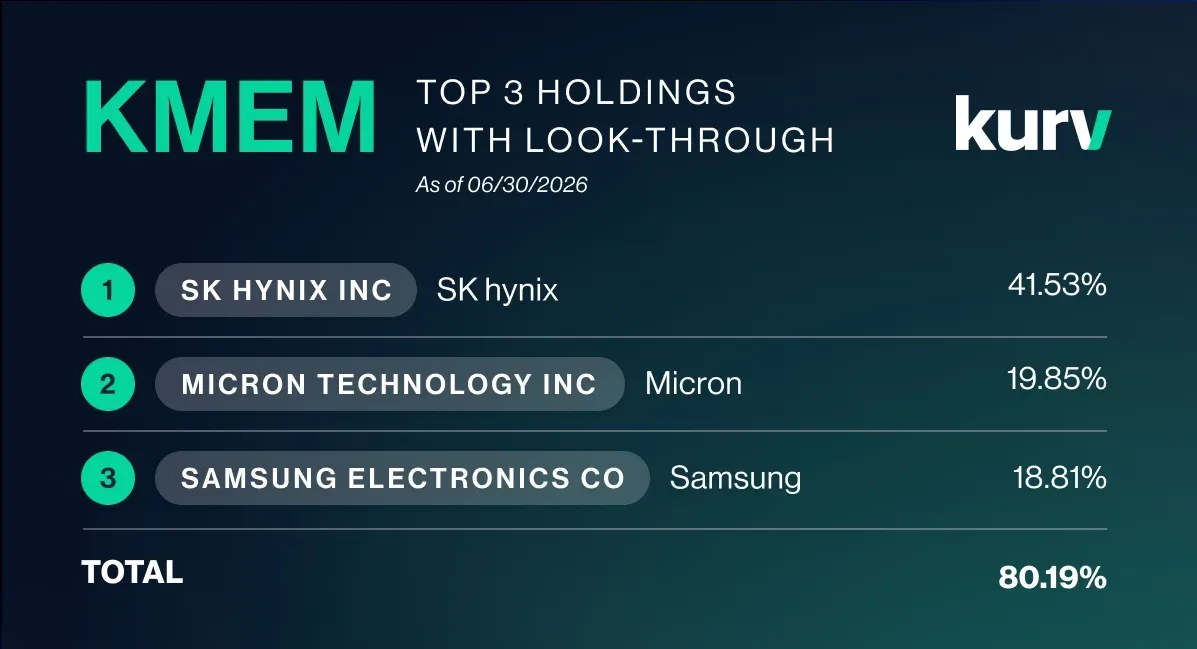
Kurv Investment Management announced the launch of the Kurv Memory Select ETF (CBOE BZX: KMEM), an actively managed fund that concentrates on companies producing memory chips. The ETF aims to give investors exposure to the “Big Three” memory manufacturers—SK hynix, Samsung, and Micron Technology—plus other firms involved in DRAM, SRAM, flash and emerging memory technologies, a segment the manager says is under pressure from AI‑driven demand.
Kurv Launches the KMEM ETF
The new fund is positioned as a “pure play” on memory production, according to Howard Chan, Founder and CEO of Kurv Investment Management. Chan explained that AI infrastructure relies heavily on memory capacity and speed, and that current demand is outpacing supply. He added that “names that are merely ancillary to this theme could in fact become hindrances to performance as the current leaders consolidate their positions and upstarts work to obtain market share,” underscoring the rationale for a focused strategy. The ETF is listed on the CBOE BZX exchange under the ticker KMEM.
Target Companies and Exposure
KMEM’s portfolio will include domestic and international firms that design, manufacture, and distribute a range of memory chips, covering DRAM, SRAM, RAM, flash memory, and other emerging types. In addition to the three dominant manufacturers—SK hynix, Samsung, and Micron Technology—the manager indicated that the fund will hold “additional companies playing a major role in this space,” though specific holdings were not disclosed. Chan noted that SK hynix appears “cheaper compared to its competitors,” suggesting a valuation tilt within the fund’s active management approach.
Relevance for Enterprise Technology Leaders
For CIOs and CTOs overseeing AI workloads, memory availability directly influences system performance and model scalability. The ETF’s focus on memory producers reflects the broader industry concern that “the ongoing AI build‑out stalls if the production of memory chips… doesn’t keep pace.” While the fund does not provide a direct procurement solution, it offers a market‑based signal of where capital is being allocated to address the memory bottleneck that many enterprise data centers face today.
Key Takeaways
- Kurv Investment Management launched the actively managed Kurv Memory Select ETF (KMEM) on the CBOE BZX exchange.
- KMEM targets the “Big Three” memory manufacturers—SK hynix, Samsung, and Micron Technology—and other firms involved in DRAM, SRAM, flash and emerging memory types.
- The manager expects the memory supply‑demand imbalance to persist for “at least the next 3‑4 years,” influencing the fund’s long‑term exposure strategy.
TechInsyte's Take
KMEM provides a concentrated vehicle for investors tracking the memory segment that underpins AI hardware, a niche that may attract tech‑focused portfolios. However, the fund’s performance will hinge on how quickly the industry resolves the projected supply constraints, a factor that remains uncertain. Enterprise leaders should monitor memory pricing trends and capacity expansions, as these will affect both the ETF’s outlook and the hardware costs of their AI initiatives.
Source: Businesswire