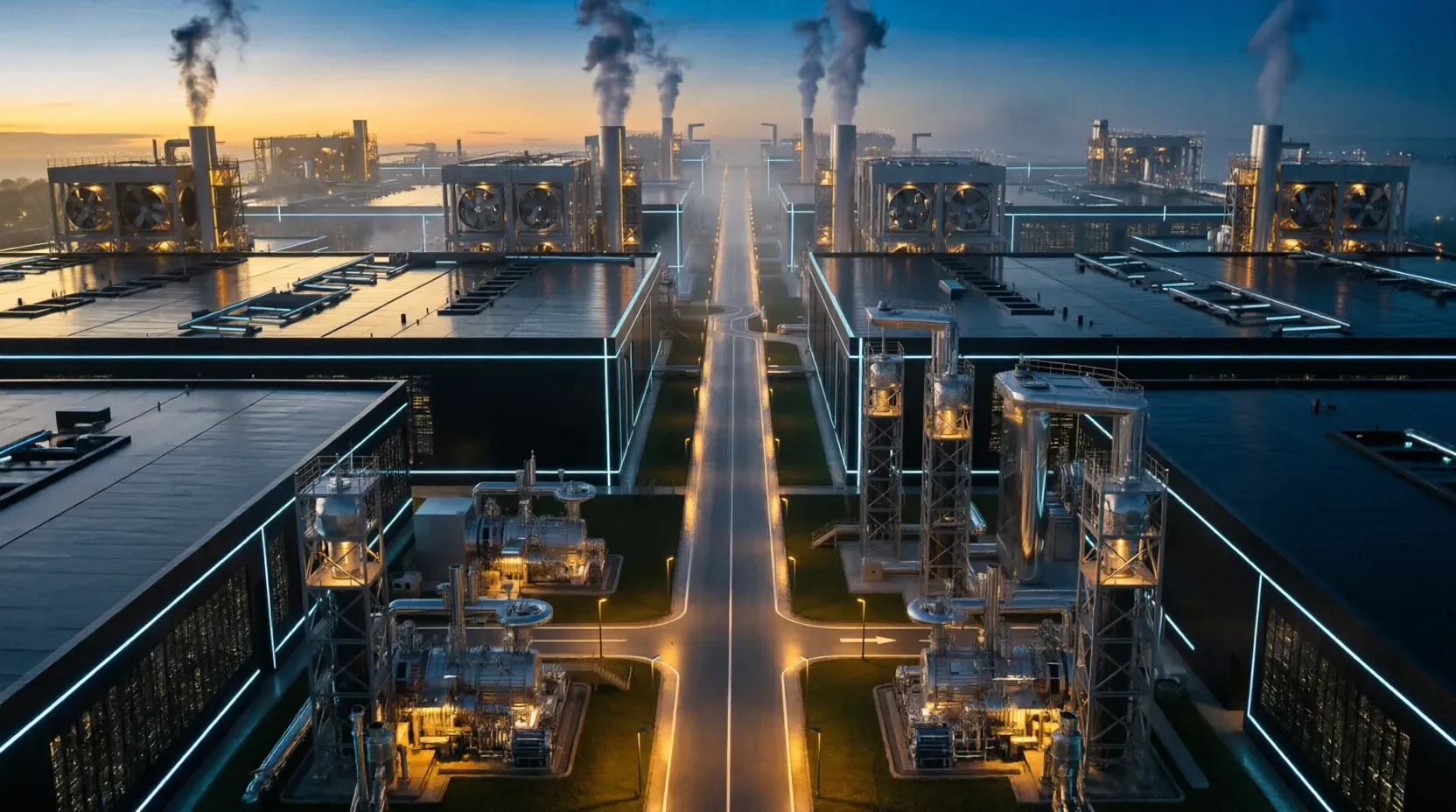
Nixxy, Inc. (NASDAQ: NIXX) and Tachyon 9 Corporation announced that their proposed strategic combination will advance the $1 billion Nakota Data Campus project. The campus is planned on roughly 620 acres in North Dakota and aims to deliver up to one gigawatt of AI computing capacity using on‑site hydrogen‑capable power, closed‑loop liquid cooling and a carbon‑neutrality pathway. The first 120–150 MW of compute is slated for operation in Q2 2027, pending financing and regulatory approvals.
Nakota Campus Announcement and Timeline
The companies described Nakota as a “power‑first, climate‑aligned AI infrastructure platform” that integrates behind‑the‑meter generation, Baker Hughes hydrogen‑capable turbine technology, optional pre‑combustion decarbonization and a closed‑loop liquid cooling system. The energy strategy will employ hydrogen‑rich fuel blends derived from natural‑gas flares, converting otherwise wasted gas into reliable power for AI workloads.
Located in North Dakota’s energy corridor, the site benefits from abundant natural gas, scalable land, cooler ambient temperatures, existing transmission infrastructure and an experienced industrial workforce. The project is expected to qualify under the U.S. Government’s Fourth State Initiative (FSI) Section 45V Clean Hydrogen Qualification, positioning it as a strategic enabler for U.S. data‑center and power‑generation capabilities.
The initial 120–150 MW of computing capacity is targeted for Q2 2027, with a long‑term plan to scale to one gigawatt. Completion of the campus is contingent on financing, regulatory approvals and the closing of the Nixxy‑Tachyon 9 strategic combination.
Technical Design and Energy Approach
Nakota’s design departs from conventional hyperscale data centers by prioritizing on‑site firm power and low‑water cooling. The closed‑loop liquid cooling system requires only an initial water fill and then continuously recirculates the fluid, dramatically reducing long‑term freshwater consumption compared with evaporative cooling.
Hydrogen‑capable turbines supplied by Baker Hughes will run on blends that include hydrogen produced from flared natural‑gas streams. This “pre‑combustion decarbonization optionality” creates a pathway toward lower‑carbon operations while leveraging domestic energy resources. The campus’s architecture is intended to lessen strain on regional power grids, a concern highlighted as AI, high‑performance computing and hyperscale data‑center demand accelerate.
Relevance for Enterprise AI Buyers
For CIOs and CTOs evaluating AI compute capacity, Nakota offers a model that directly addresses three operational constraints: grid reliability, carbon intensity and water usage. The on‑site power generation reduces dependence on external grid capacity, potentially improving uptime for latency‑sensitive AI workloads. The low‑water cooling design aligns with sustainability mandates that many enterprises now face, especially in jurisdictions with strict water‑use regulations.
The project’s positioning under the Clean Hydrogen Qualification may also simplify compliance for organizations that track Scope 1 and Scope 2 emissions, as the campus’s carbon‑neutrality pathway is built into its core infrastructure. However, the campus’s availability will not occur until at least 2027, and its scaling to one gigawatt remains subject to financing and regulatory outcomes.
Key Takeaways
- Nakota Data Campus is a $1 billion project on ~620 acres in North Dakota, targeting up to 1 GW of AI compute capacity with on‑site hydrogen‑capable power and closed‑loop liquid cooling.
- The first 120–150 MW of compute is planned for Q2 2027, contingent on financing, regulatory approvals and the Nixxy‑Tachyon 9 strategic combination.
- The campus aims to qualify under the U.S. Fourth State Initiative Section 45V Clean Hydrogen Qualification, positioning it as a low‑carbon, low‑water AI infrastructure solution.
TechInsyte's Take
Nakota illustrates a concrete effort to embed energy security and water stewardship into AI infrastructure, a combination that may appeal to enterprises with strict ESG and reliability requirements. The project’s success hinges on the pending financing and regulatory steps, as well as the broader market’s adoption of hydrogen‑based power for data centers. Buyers should monitor the progress of the Nixxy‑Tachyon 9 transaction and any updates to the campus’s certification under the Clean Hydrogen Initiative.
Source: Businesswire