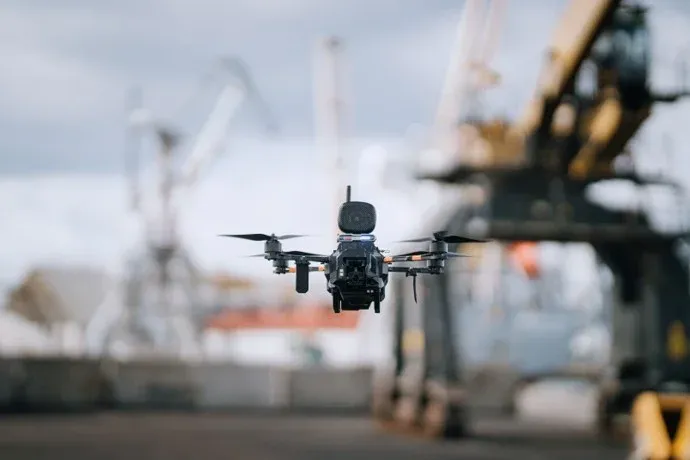
XTEND AI Robotics, Inc. (NYSE: XTND) is attempting to shift the paradigm of robotic autonomy by moving decision-making logic from the central platform to the specialized hardware it carries. The company announced that the United States Patent and Trademark Office has granted U.S. Utility Patent No. 12,743,960, which covers a system allowing a "smart payload" to provide real-time navigation and behavioral instructions to a robotic platform. This development, managed through the company's proprietary XTEND Operating System (XOS), aims to automate complex field adaptations that previously required manual reconfiguration by human operators. By protecting this specific architecture, XTEND is positioning its software as the critical intelligence layer that translates sensor data into immediate flight-control responses.
The XOS Mechanism for Payload-Driven Navigation
The patented architecture relies on a specialized payload adaptor that establishes both a physical and a communications link between a smart payload and the platform's controller. According to the company, the XOS operating system functions as the translator in this ecosystem, converting signals from the payload into actionable navigation instructions. For example, if a payload detects an obstacle, XOS can turn that signal into a specific flight-control response, such as avoiding a road or another unmanned aerial vehicle (UAV). This capability allows the payload to actively direct the mission's trajectory in real time.
Beyond simple obstacle avoidance, XTEND is positioning XOS to manage broader in-field behaviors. The company claims the system can allow a payload to trigger changes in the operator's display view or initiate defense-oriented modes, including interception, evasion, or countermeasures. While the payload provides the tactical intelligence to steer the platform, XTEND emphasizes that the human operator remains in command of all critical decisions. This approach seeks to bridge the gap between fully autonomous systems and manual remote piloting by allowing the hardware to handle micro-adjustments based on the specific mission requirements of the attached sensor or module.
Scaling via the XOS Marketplace and Generic Payload Hub
XTEND is leveraging this patented architecture to build an open ecosystem designed to attract third-party developers and hardware manufacturers. Through the XOS Marketplace, the company intends to offer an "app store" model for robotics, where external partners can provide new software and hardware capabilities to existing customers. A central component of this strategy is the XTEND Generic Payload Hub, which provides a common interface across the entire XTEND fleet. This hub is intended to allow manufacturers of cameras, sensors, communications systems, and mission modules to design a single payload that can be installed across various airframes without requiring individual integration for every different robotic platform.
This modularity is a strategic move to move away from the traditional model where adapting a platform to a new mission required an operator to stop and reconfigure the hardware by hand. By enabling payloads to act as active mission directors rather than passive accessories, XTEND is attempting to create a standardized infrastructure for "Physical AI." This architecture suggests a move toward highly interoperable robotic fleets where the intelligence of the platform is dynamically updated by the specific mission module currently attached, potentially reducing the complexity of maintaining diverse robotic inventories in high-threat or complex operational environments.
Key Takeaways
- XTEND secured U.S. Utility Patent No. 12,743,960 for a system where smart payloads provide real-time navigation and behavioral instructions to a platform via the XOS operating system.
- The patented architecture enables payloads to trigger specific flight responses, such as obstacle avoidance, interception, or evasion, while maintaining human operator command.
- The XTEND Generic Payload Hub provides a common interface intended to allow third-party manufacturers to deploy sensors and modules across the entire XTEND fleet without individual airframe integration.
TechInsyte's Take
In our view, XTEND is not just selling robots; they are attempting to own the "operating layer" of the physical AI market. By securing a patent on the mechanism that allows a payload to dictate platform behavior, they are moving to prevent a future where robotic platforms are merely "dumb" shells for expensive sensors. This architecture is a calculated attempt to create high switching costs through the XOS Marketplace. If XTEND can successfully establish the Generic Payload Hub as an industry standard, they will control the interface through which all third-party hardware must communicate with robotic airframes. This shifts the value proposition from the hardware itself to the software-defined intelligence that manages the interaction between the sensor and the motor. For enterprise and defense buyers, this could mean significantly faster mission deployment, but it also means a heavy reliance on the XTEND software ecosystem for interoperability.
Questions & Answers
How does the patented XOS architecture change the role of the human operator during a mission?
The architecture is designed to automate tactical micro-adjustments, such as obstacle avoidance or switching display views, based on payload data. However, XTEND maintains that the operator remains in command of every decision that matters, effectively shifting the human role from manual flight control to high-level mission oversight.
What is the strategic purpose of the XTEND Generic Payload Hub?
The hub serves as a common interface intended to allow third-party manufacturers of sensors, cameras, and communications systems to design payloads that work across the entire XTEND fleet. This aims to eliminate the need for separate, costly integration processes for every different robotic airframe.
How does the new patent impact XTEND's intellectual property strategy?
The patent moves XTEND's IP focus from protecting individual robotic platforms to protecting the underlying mechanisms that allow a platform's behavior to be shaped by its payload. This suggests a strategy centered on protecting the software-driven intelligence and the modularity of the system rather than just the physical hardware.
Can third-party developers contribute to the XTEND ecosystem?
Yes, through the XOS Marketplace, which XTEND describes as an open ecosystem similar to an app store. This allows third-party developers and manufacturers to offer both hardware and software capabilities to XTEND's customer base.
Source: XTEND AI Robotics