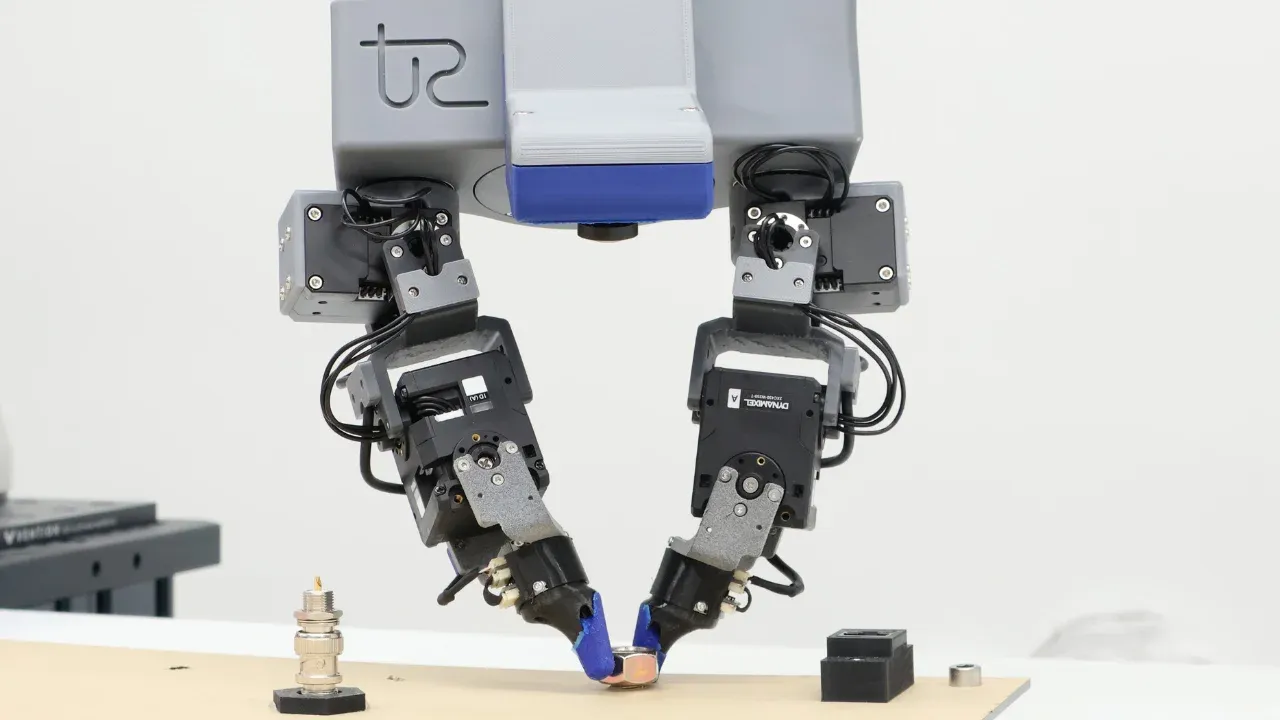
Tangent Robotics is targeting a critical bottleneck in industrial automation by attempting to accelerate the development of robotic fine motor skills. The Columbia University spinoff announced a $4.5 million pre-seed funding round led by Fly Ventures and Toyota Ventures to bridge the gap between abstract AI intelligence and physical execution. By integrating specialized hand hardware, light-based touch sensing, and motor learning, the company aims to enable robots to perform delicate, high-precision tasks that current grippers and suction cups cannot manage in demanding manufacturing environments.
Tangent Robotics Pre-Seed Funding and Strategic Goals
The $4.5 million investment, which also includes participation from Logos Fund and Sparked Ventures, supports the development of a "fine motor skill layer" for autonomous dexterity. Tangent Robotics intends to use these funds to move beyond simple pick-and-pack operations toward complex manipulation tasks such as connector mating, gear meshing, and gasket seating. Unlike traditional approaches that focus on mechanical compliance, the company is positioning its strategy around engineering compliance into the sensor stack. This approach aims to provide the high-fidelity touch necessary for "physical AI," potentially reducing the time required for robots to learn these intricate skills from years to mere hours or days.
Hardware-Centric Approach to Robotic Manipulation
Spun out of Columbia Engineering's Robotic Manipulation and Mobility Lab, the company is building a specialized stack to handle the "last mile" of skilled manipulation. This includes precise light-based touch sensors for robot fingers and hands designed to track human fingertips. Co-founder Matei Ciocarlie, a Columbia Engineering professor, notes that the company is not attempting to clone the human hand, but rather to build hands capable of dexterity through non-human-like articulation. The founding team brings significant pedigree, including experience with NASA's Assistive Free Flyer robots and the development of the DISCO robot finger, which utilizes light to sense touch.
Key Takeaways
- Tangent Robotics raised $4.5 million in pre-seed funding led by Fly Ventures and Toyota Ventures.
- The company is developing a fine motor skill layer combining light-based touch sensors, specialized hand hardware, and motor learning.
- The technology targets complex manufacturing tasks including assembly, threading, and electrical wiring that current grippers cannot perform.
TechInsyte's Take
In our view, Tangent Robotics is addressing the most significant physical limitation of the current AI revolution: the "embodiment gap." While Vision-Language-Action models are rapidly advancing semantic intelligence, they remain ineffective without the hardware capable of executing precise physical movements. By focusing on the sensor stack rather than just mechanical mimicry, Tangent is making a pragmatic bet on "physical AI." This shift suggests that the next frontier of enterprise robotics will not be defined by better "brains," but by the high-fidelity tactile feedback loops that allow those brains to interact with unstructured, delicate environments.
Questions & Answers
How does Tangent Robotics differentiate its hardware from standard industrial grippers?
Unlike standard grippers or suction cups used for simple sorting, Tangent is developing hands equipped with light-based touch sensors and specialized motor learning capabilities. This allows for "fine motor skills" required for intricate tasks like snap fitting and gear meshing, which standard hardware cannot execute.
What is the strategic significance of the "sensor stack" approach mentioned by Toyota Ventures?
By engineering compliance into the sensor stack rather than relying solely on mechanical design, Tangent aims to provide the high-fidelity touch sensing required for physical AI. This approach seeks to solve the technical challenge of delicate manipulation without needing to perfectly replicate human anatomy.
Which specific industrial applications is Tangent Robotics targeting?
The company is targeting demanding manufacturing and maintenance environments. Specific tasks include unstructured part sequencing, exacting assemblies, electrical wiring, and the disassembly, inspection, and reassembly of mechanical equipment.
What is the technical origin of the Tangent Robotics founding team?
The team is a spinoff from Columbia Engineering's Robotic Manipulation and Mobility Lab. The founders include Matei Ciocarlie, who co-led the manipulation team at Willow Garage, and Pedro Piacenza, alongside electronics expert Ioannis Kymissis.
Source: Tangent Robotics