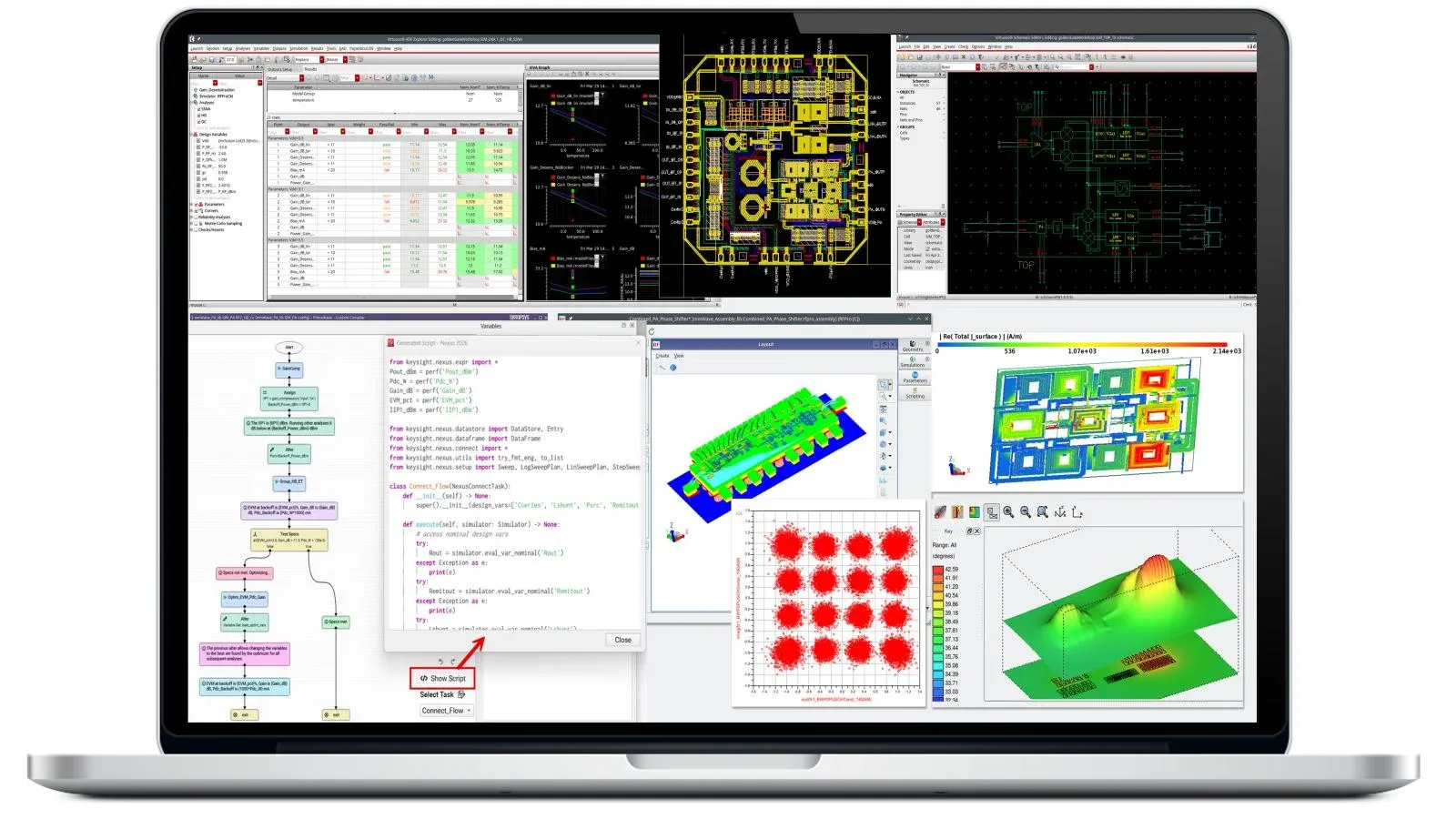
PLDT is attempting to redefine the operational baseline for telecommunications providers by transitioning from traditional automation to a fleet of in-house agentic AI agents. By deploying these intelligent workflows across enterprise sales, risk management, and lead generation, the Philippine digital services provider aims to eliminate systemic manual bottlenecks. This strategic shift, supported by the UiPath Platform™, has resulted in the company receiving a Silver Award at the 2026 UiPath AI Breakthrough Awards. The implementation focuses on reclaiming tens of thousands of hours of manual labor annually, signaling a move toward an "agentic enterprise" model where AI agents handle complex reasoning and orchestration tasks to support a human workforce.
PLDT Implementation of Agentic AI Agents
The company is utilizing a specific technical stack, including UiPath Agent Builder™, Integration Service, and Robots, to power its new AI-driven initiatives. These agents are not merely performing repetitive tasks but are functioning as intelligent layers within the enterprise. For instance, the sales-focused assistant, Ellie (Enablement & Intelligence Engine), aggregates scattered enterprise knowledge and integrates live CRM data to provide actionable intelligence. This capability allows the sales support team to automatically generate tailored, customer-ready proposals and presentations.
According to the company, this specific deployment has reclaimed an estimated 18,000 to 25,000 hours per year within the sales division alone. Beyond time savings, the implementation has reportedly led to a 40% to 60% reduction in time spent developing standard materials and a 40% to 50% decrease in proposal error rates. Furthermore, PLDT has observed a 20% to 50% increase in upsell rates, which the company attributes to sales teams having more time for high-value customer engagements. Ellie also functions as a predictive tool, monitoring customer health indicators to detect churn risks based on declining product utilization or delayed payments, subsequently prompting relationship managers with proactive alerts and retention recommendations.
Scaling Intelligence via KAI and ERICA
To expand its agentic capabilities beyond sales, PLDT has introduced two additional specialized agents: KAI and ERICA. KAI (Knowledge, Automation, Intelligence) is designed for instant knowledge retrieval, aiming to transform manual research processes that previously took up to five days into contextual responses delivered within one to three seconds. By grounding the agentic AI assistant exclusively in approved sources, PLDT expects to reduce manual effort by an estimated 25,000 to 30,000 hours annually, creating approximately 12 FTE-equivalent annual productivity capacity.
The third pillar of this transformation is ERICA (Enterprise Risk Intelligence Companion Agent), which targets the risk management function. ERICA automates the creation of structured risk statements and scoring against compliance standards. The company reports that this agent has reduced manual effort in this domain by 97% to 99%. This compression significantly alters the timeline for risk assessments, which previously required two to 10 days, now potentially taking between five minutes and one day. Through these three agents—Ellie, KAI, and ERICA—PLDT is positioning itself to scale operations without necessarily increasing headcount, shifting its workforce from repetitive information gathering toward consultative roles.
Key Takeaways
- PLDT reclaimed an estimated 18,000 to 25,000 hours annually in sales support through the Ellie AI assistant.
- The KAI knowledge retrieval agent aims to reduce manual research time from up to five days to one to three seconds.
- The ERICA risk agent has reduced manual effort in risk assessment by 97% to 99%, compressing timelines to as little as five minutes.
TechInsyte's Take
In our view, PLDT’s deployment represents a significant pivot from "task automation" to "agentic orchestration." While many enterprises are still struggling to move beyond basic Robotic Process Automation (RPA), PLDT is testing whether a multi-agent architecture—where specialized agents like Ellie, KAI, and ERICA handle distinct business domains—can provide a measurable return on investment. The reported 20% to 50% increase in upsell rates suggests that the value of agentic AI may lie not just in cost reduction, but in revenue enablement. However, the success of this model depends heavily on the "grounding" of these agents in approved data sources to prevent hallucinations. If PLDT can maintain the accuracy levels required for risk management and sales proposals, they will provide a blueprint for how highly regulated telecommunications firms can integrate generative AI into core operational workflows without compromising compliance.
Questions & Answers
How does the Ellie AI assistant impact PLDT's sales conversion and accuracy?
Ellie assists sales teams by integrating live CRM data and enterprise knowledge to automate proposal and presentation creation. This has resulted in a 40% to 60% reduction in development time, a 40% to 50% reduction in proposal error rates, and a reported 20% to 50% increase in upsell rates.
What specific technical capabilities does the KAI agent provide for enterprise knowledge management?
KAI (Knowledge, Automation, Intelligence) provides contextual responses grounded in approved sources, reducing knowledge retrieval times from up to five days to between one and three seconds. This is intended to reduce manual effort by 25,000 to 30,000 hours annually.
In what way does the ERICA agent change the risk assessment lifecycle at PLDT?
ERICA (Enterprise Risk Intelligence Companion Agent) automates structured risk statements and compliance scoring. This has reduced manual effort by 97% to 99%, compressing the assessment window from a range of two to 10 days down to between five minutes and one day.
What is the underlying technology stack used to build these AI agents?
PLDT utilizes the UiPath Platform™, specifically leveraging UiPath Agent Builder™, Integration Service, and Robots to orchestrate the fleet of in-house AI agents.
Source: UiPath