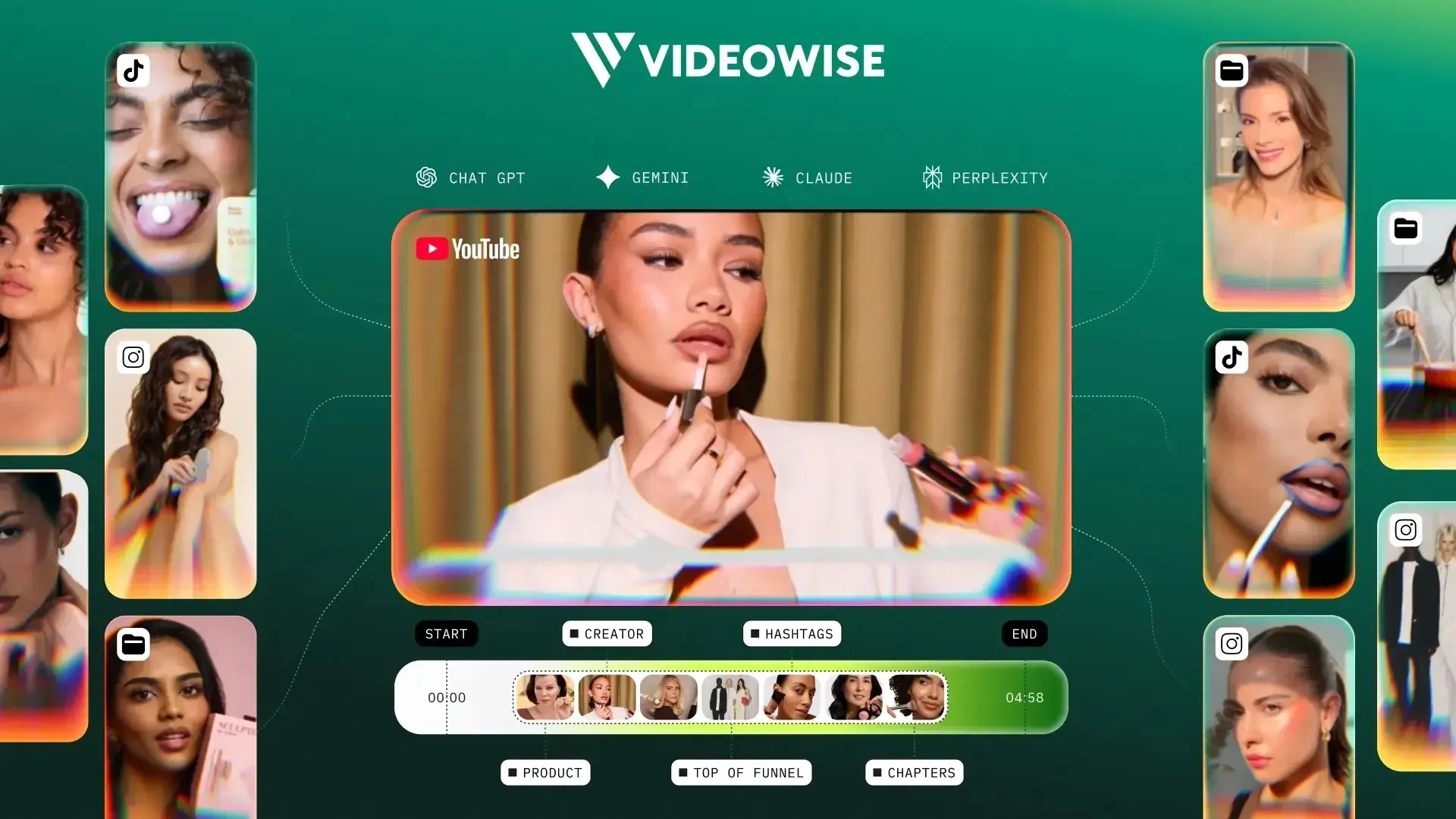
Videowise is attempting to solve a growing visibility gap for direct-to-consumer (DTC) brands by making user-generated content (UGC) readable by large language models (LLMs). The company announced the launch of AI Visibility, a suite designed to transform video assets from platforms like TikTok and Instagram into structured data that AI engines can process. This move targets the shift in consumer behavior where shoppers increasingly rely on AI-driven answers rather than traditional search engine results pages.
Bridging the Gap Between Video and LLMs
The company is positioning AI Visibility as a way to capture the "invisible" value of authentic video content. Currently, most short-form video, creator reviews, and UGC remain inaccessible to AI engines. To address this, Videowise is deploying a solution that extracts and analyzes both audio and image data, frame by frame, using vector video search. This process converts raw video into structured content that models like ChatGPT, Perplexity, and Google Gemini can potentially read, cite, and rank. By doing so, Videowise aims to move brand content upstream to the point where consumers first interact with generative AI interfaces.
AEO and YouTube GEO Product Architecture
The AI Visibility suite consists of two primary components: Answer Engine Optimization (AEO) and YouTube Generative Engine Optimization (GEO). Through AEO, Videowise intends to build a "UGC Wiki" directly on a brand's storefront. This wiki uses hyper-optimized, structured information derived from real customer and creator videos to answer specific consumer questions. Simultaneously, the YouTube GEO component utilizes existing brand video clips to generate new YouTube content featuring LLM-optimized metadata. This strategy leverages the fact that YouTube serves as a highly cited source for AI models, particularly Google Gemini, allowing brands to align their video assets with broader AI search visibility strategies.
Key Takeaways
- Videowise is launching AI Visibility, featuring AEO and YouTube GEO, exclusively for Shopify brands.
- The platform uses vector video search to analyze audio and image frames to make video content readable by LLMs.
- Videowise reports that its core conversion engine currently drives an average 5-35% conversion uplift for DTC brands.
TechInsyte's Take
In our view, Videowise is making a calculated bet on the transition from traditional SEO to generative search environments. By introducing "Authentic Generated Content" (AGC), the company is attempting to differentiate itself from the rising tide of synthetic, AI-generated UGC that threatens brand authenticity. This strategy suggests that the next frontier of e-commerce competitiveness will not just be about having the best video content, but about ensuring that content is mathematically discoverable by the algorithms governing AI answers. If successful, this could shift the DTC marketing playbook from simple social engagement to a sophisticated technical discipline of structured video data management.
Questions & Answers
How does AI Visibility technically enable LLMs to access video content?
The technology employs vector video search to perform frame-by-frame analysis of both audio and visual components. This process extracts structured data from the video, turning unstructured media into a format that AI engines can read, cite, and rank.
What is the strategic distinction between Videowise's AGC and standard AI content?
Videowise is positioning its "Authentic Generated Content" (AGC) as the opposite of AI-generated fake UGC. While many tools use AI to create synthetic content, Videowise uses AI to structure and optimize the "real voices" found in existing customer and creator videos.
Which specific AI platforms is this technology targeting?
The company has identified ChatGPT, Perplexity, and Google Gemini as the primary engines that the AI Visibility suite aims to make brand content visible to and citable by.
What is the primary target market for this new suite?
The launch of the AEO and YouTube GEO products is being released exclusively for brands operating on the Shopify platform.
Source: Businesswire