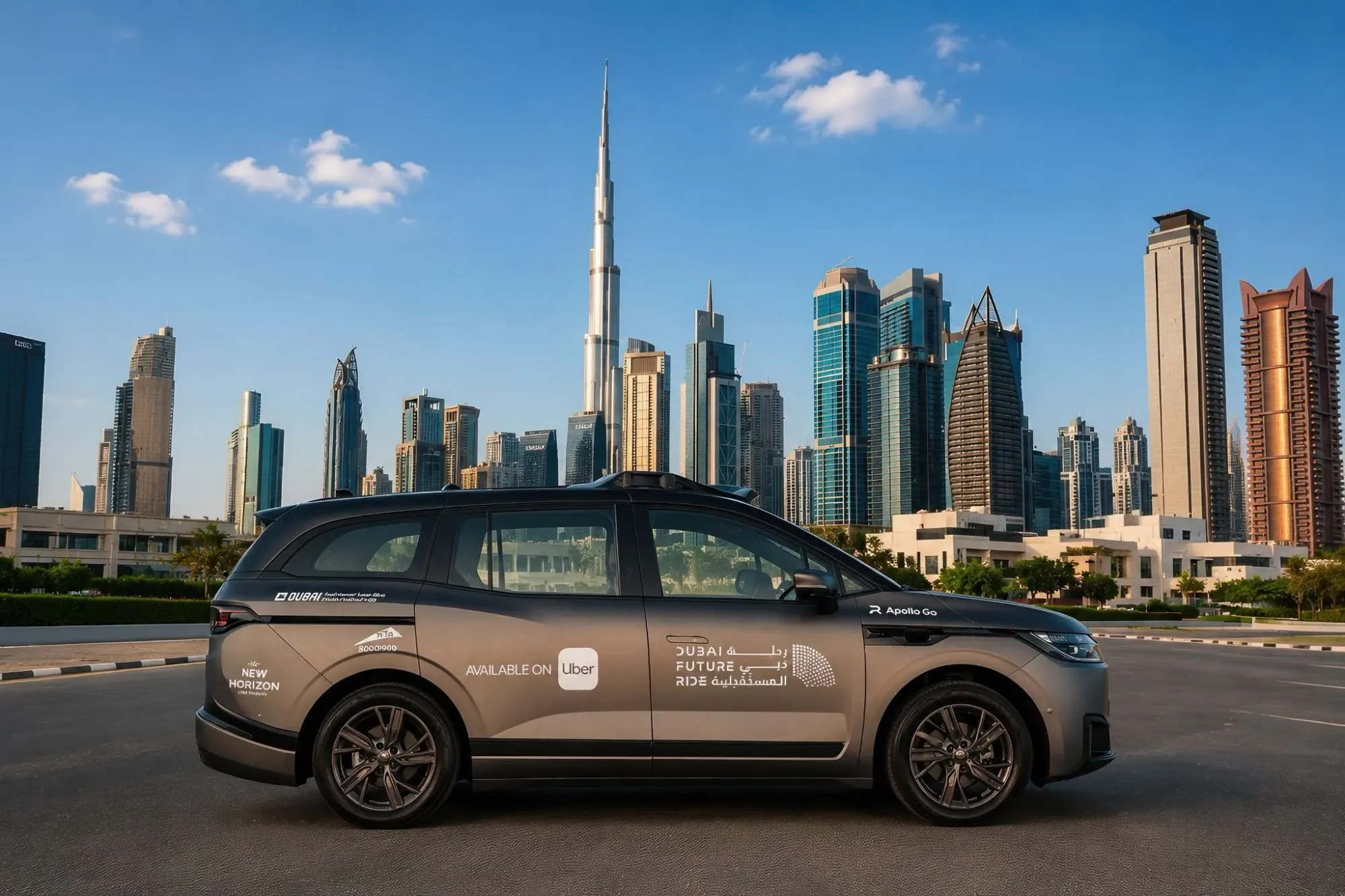
Uber is testing a multi-partner autonomous vehicle model by integrating Baidu’s fully driverless Apollo Go fleet into its Dubai marketplace. This deployment marks the first real-world application of a strategic partnership designed to scale thousands of autonomous vehicles across Uber’s global network. By combining Baidu’s hardware and AI with Uber’s existing ride-hailing infrastructure, the companies are attempting to validate a hybrid network where autonomous technology and human drivers coexist to expand the reach of shared mobility services.
Baidu Apollo Go Integration in Dubai
The service launch in Dubai introduces riders to Baidu’s sixth-generation RT6, a purpose-built, fully electric robotaxi designed for driverless operations. These vehicles can accommodate up to three passengers and utilize more than 30 sensors for environmental perception and real-time data processing. In the Dubai market, New Horizon Luxury Transport will act as the fleet operator. Currently, the autonomous service is restricted to select locations within Umm Suqeim and Jumeirah, though the companies have indicated plans to expand the operating territory in the future.
Users can access these driverless rides by booking UberX or Uber Comfort services, or by selecting a dedicated “Autonomous” option within the Uber app. This rollout represents a significant milestone for Baidu, which is using Dubai to establish a dual-model offering that includes both self-operated and partner-based autonomous ride-hailing services internationally. For Uber, the move is a component of a broader strategy involving more than 30 autonomous vehicle partners to build a massive, hybrid transportation network.
Scaling the Apollo Go Global Footprint
Baidu is leveraging significant operational data to support this international expansion, noting that Apollo Go has already operated across 28 cities globally. The company claims its fleets have accumulated over 350 million autonomous kilometers, which includes more than 240 million kilometers of fully driverless operation. This scale is intended to provide the technical foundation necessary for the multi-year partnership with Uber to move from a localized pilot to a global deployment.
Uber is positioning this integration as a way to accelerate the transition toward electric and autonomous mobility. To maintain network integrity, all autonomous vehicles, including the Apollo Go units, must adhere to Uber's specific Safety Guidelines before they are permitted to operate. The company is banking on this hybrid approach—mixing autonomous fleets with traditional drivers—to increase the affordability and accessibility of its platform. As the partnership progresses, the goal is to scale these autonomous assets across Uber's wider global network, using the Dubai launch as a primary testing ground for international operations.
Key Takeaways
- Uber has integrated Baidu’s sixth-generation RT6 fully electric robotaxis into its Dubai platform via New Horizon Luxury Transport.
- The Apollo Go fleet has accumulated over 350 million autonomous kilometers globally, including 240 million fully driverless kilometers.
- Riders in Dubai can access autonomous rides through UberX, Uber Comfort, or a dedicated “Autonomous” app selection.
TechInsyte's Take
In our view, this partnership signals a pivot in the autonomous vehicle race from pure hardware competition to ecosystem integration. By acting as the marketplace for Baidu’s Apollo Go, Uber is avoiding the massive capital expenditure of building its own AV stack while instead positioning itself as the essential orchestration layer for the industry. This "hybrid network" strategy is a pragmatic response to the high costs and regulatory hurdles of full autonomy. If Uber can successfully manage a diverse fleet of third-party AVs alongside human drivers, it will create a formidable moat that makes it difficult for single-stack AV companies to compete on scale.
Questions & Answers
How does the Uber app facilitate the selection of autonomous rides in Dubai?
Riders can be matched with an Apollo Go vehicle when booking standard UberX or Uber Comfort services, or they can specifically select a dedicated “Autonomous” option within the app to increase their chances of a robotaxi match.
What technical specifications define the Baidu RT6 robotaxi used in this launch?
The RT6 is a sixth-generation, fully electric, purpose-built robotaxi that accommodates up to three passengers and is equipped with more than 30 sensors for environmental perception and real-time onboard data processing.
What is the strategic significance of the Dubai market for the Uber-Baidu partnership?
Dubai serves as the inaugural launchpad for a multi-year strategic partnership intended to eventually scale thousands of Apollo Go vehicles across Uber’s global network and tests Baidu's dual-model international service offering.
How is Uber managing safety requirements for third-party autonomous fleets?
Uber requires all autonomous vehicles, including those from Baidu, to adhere to the company's stringent Safety Guidelines before they are allowed to operate on the Uber network.
Source: Businesswire