The global race to dominate the artificial intelligence landscape has undergone a fundamental shift in focus. While the initial phase of the AI revolution was characterized by a frantic scramble for semiconductor procurement and GPU availability, the industry has reached a new, more physical bottleneck: the critical necessity of power and thermal management. As high-density AI workloads push power requirements far beyond the operational limits of legacy air-cooled facilities, the ability to deliver efficient, reliable, and scalable infrastructure has become the primary determinant of success for hyperscale providers.
In a strategic move to address these intensifying demands, Bitzero Holdings Inc. (Nasdaq: AIBZ), a developer specializing in sustainable high-performance-compute (HPC) and AI data-center infrastructure, has announced a major collaboration with Vertiv (NYSE: VRT), a global leader in critical digital infrastructure. This partnership is designed to integrate advanced thermal management and power distribution directly into Bitzero’s deployment platform. By deepening its engineering bench and strengthening its supply-chain capabilities, Bitzero aims to accelerate project execution and support the extreme scalability required by modern hyperscale and AI workloads, positioning itself as a serious contender alongside established industry giants in the critical infrastructure sector.
Engineering the "Execution Imperative" in AI Scaling
The collaboration between Bitzero and Vertiv is not merely a vendor agreement; it is a strategic integration of deep expertise into Bitzero’s development lifecycle. The partnership is specifically engineered to support the design and delivery of AI, high-performance-compute (HPC), and hyperscale data centers. Rather than a singular event, this collaboration represents the latest addition to a deliberately assembled ecosystem of technical and supply-chain providers that Bitzero is cultivating to meet the unique demands of the AI era.
A central focus of this collaboration is the "execution imperative" currently facing the AI buildout. As compute density rises, the industry is increasingly obsessed with "reducing time to token"—the critical metric representing the speed at which a new compute cluster moves from the initial construction phase to producing useful, revenue-generating AI output. In a market where speed-to-market can determine market leadership, Bitzero is prioritizing the ability to deploy functional, high-density environments rapidly.
Mohammed Bakhashwain, Founder & CEO of Bitzero, emphasized that the company is intentionally building an ecosystem of leading providers across every critical layer of data center delivery. He noted that the integration of Vertiv’s technologies will enhance Bitzero's technical depth and strengthen its supply-chain capabilities as the company advances its platform for hyperscale and HPC applications.
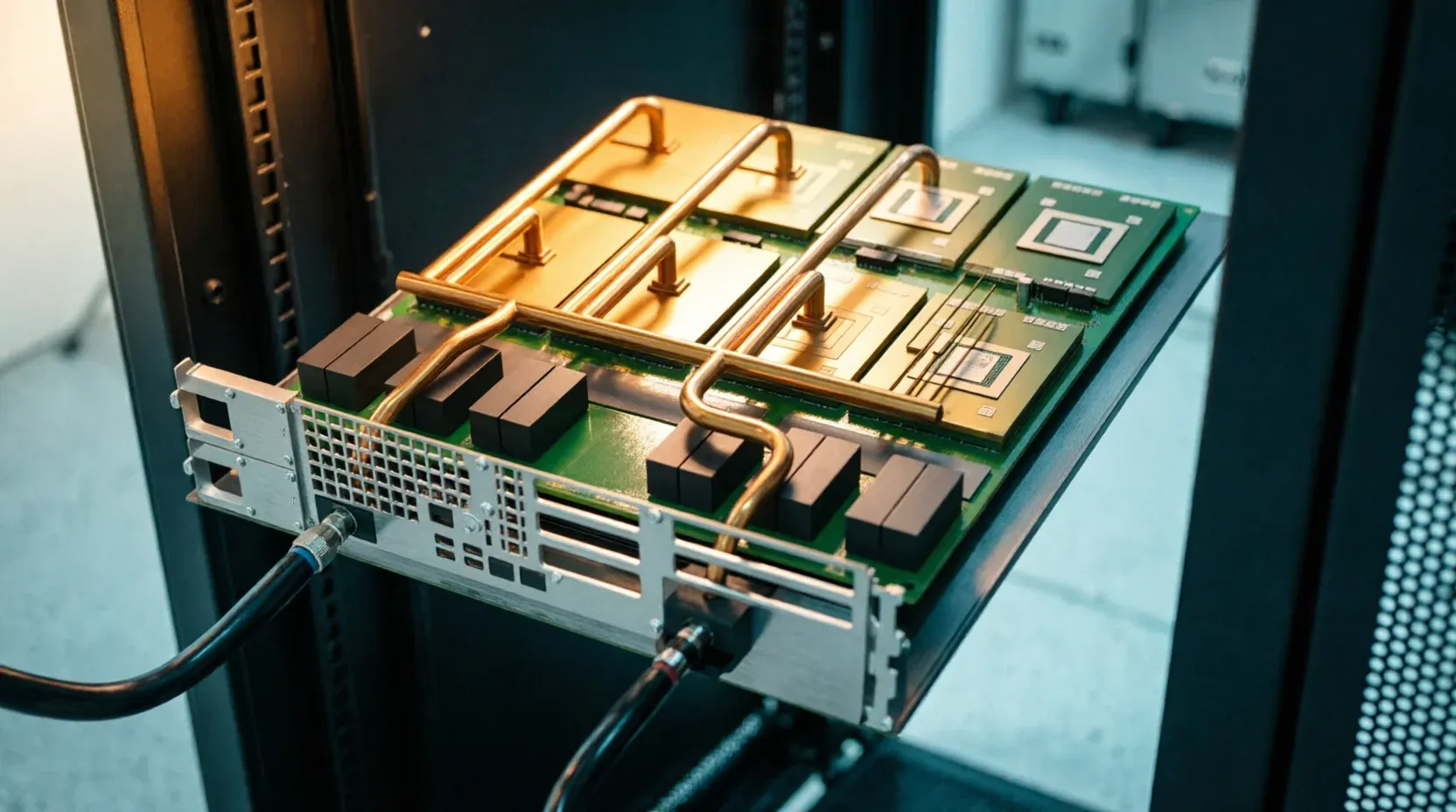
Supporting this vision, Paul Ryan, President for Europe, Middle East, and Africa at Vertiv, highlighted that scaling AI requires more than just advanced compute silicon; it requires end-to-end infrastructure capable of supporting increasingly demanding power and thermal profiles. By leveraging Vertiv's decades of experience, Bitzero aims to provide the robust power and cooling systems that underpin modern AI environments. This integration is essential for managing the high-density requirements of modern GPU racks, which frequently exceed the cooling capabilities of traditional air-cooled facilities.
Strategic Integration within the AI Infrastructure Ecosystem
For a small-cap developer like Bitzero, aligning with a multi-billion-dollar industry leader like Vertiv provides significant third-party validation. As GPU racks push power densities to unprecedented heights, the ability to manage extreme thermal loads through liquid cooling has transitioned from a luxury to a critical requirement. By partnering with Vertiv, Bitzero strengthens its practical engineering and supply-chain muscle, allowing it to compete for massive hyperscale and AI workloads against much larger, established incumbents.
Bitzero’s business model is predicated on acting as a sophisticated integrator. Rather than attempting to own every technical capability in-house, the company is assembling a network of specialized providers to deliver high-performance compute environments. This strategy positions Bitzero to address the specific, highly technical needs of AI and HPC workloads through integrated, end-to-end infrastructure and modular solutions. The Vertiv collaboration deepens the most critical layer of this network: the physical power and cooling systems upon which all compute operations depend.
The company's current operational footprint includes four data-center locations spanning North America and the Nordic regions. Notably, Bitzero’s Nordic assets are powered by clean, low-carbon energy sources. This focus on sustainability addresses the growing intersection of massive AI electricity demands and increasingly stringent global sustainability mandates. To fund this capital-intensive development, Bitzero has recently closed a US$25 million private placement and has announced intentions to prepay a loan. Ultimately, the company's ability to convert these capital and partnership investments into operational capacity will depend on its ability to execute complex, high-density builds within a volatile global market.
Key Takeaways
- Advanced Thermal Management: Bitzero's collaboration with Vertiv focuses on integrating advanced liquid-cooling and critical power management to support high-density AI and HPC workloads.
- Accelerated Deployment: The partnership aims to reduce "time to token," accelerating the transition from data center construction to active AI output production.
- Integrator Strategy: Bitzero's infrastructure strategy utilizes a network of specialized providers to act as an integrator for hyperscale and high-performance compute environments.
TechInsyte's Take
In our view, Bitzero's move to partner with Vertiv signals a strategic pivot from simple data center development to specialized infrastructure integration. For decision-makers in the AI space, this highlights a critical reality: the bottleneck for AI scaling has moved from the silicon layer to the physical power and cooling layer. Bitzero is attempting to bypass the traditional limitations of small-cap developers by "renting" the credibility and engineering depth of a global leader like Vertiv.
This approach is a calculated attempt to mitigate the risks of high-density deployments. By leveraging Vertiv's liquid-cooling expertise, Bitzero is positioning itself to handle the thermal profiles of next-generation GPUs that legacy facilities simply cannot support. However, the success of this strategy hinges entirely on execution. While the partnership provides the technical blueprint, Bitzero must still navigate the intense capital requirements and market volatility inherent in the AI infrastructure sector. For the broader market, this underscores that the "gatekeepers" of the AI era are increasingly those who control the thermal and electrical limits of the data center.
Source: PRNEWSWIRE