The Pentagon is prioritizing the expansion of resilient edge networks to ensure command and control remains stable for uncrewed systems during link degradation. Somewear Labs has been selected to support this effort, specifically contributing to the Department of War's Multi-Domain Collaborative Autonomy (MDCA) program. This contract aims to integrate advanced networking capabilities across a broader range of uncrewed systems (UxS) platforms and diverse mission sets.
Pentagon MDCA Program Expansion
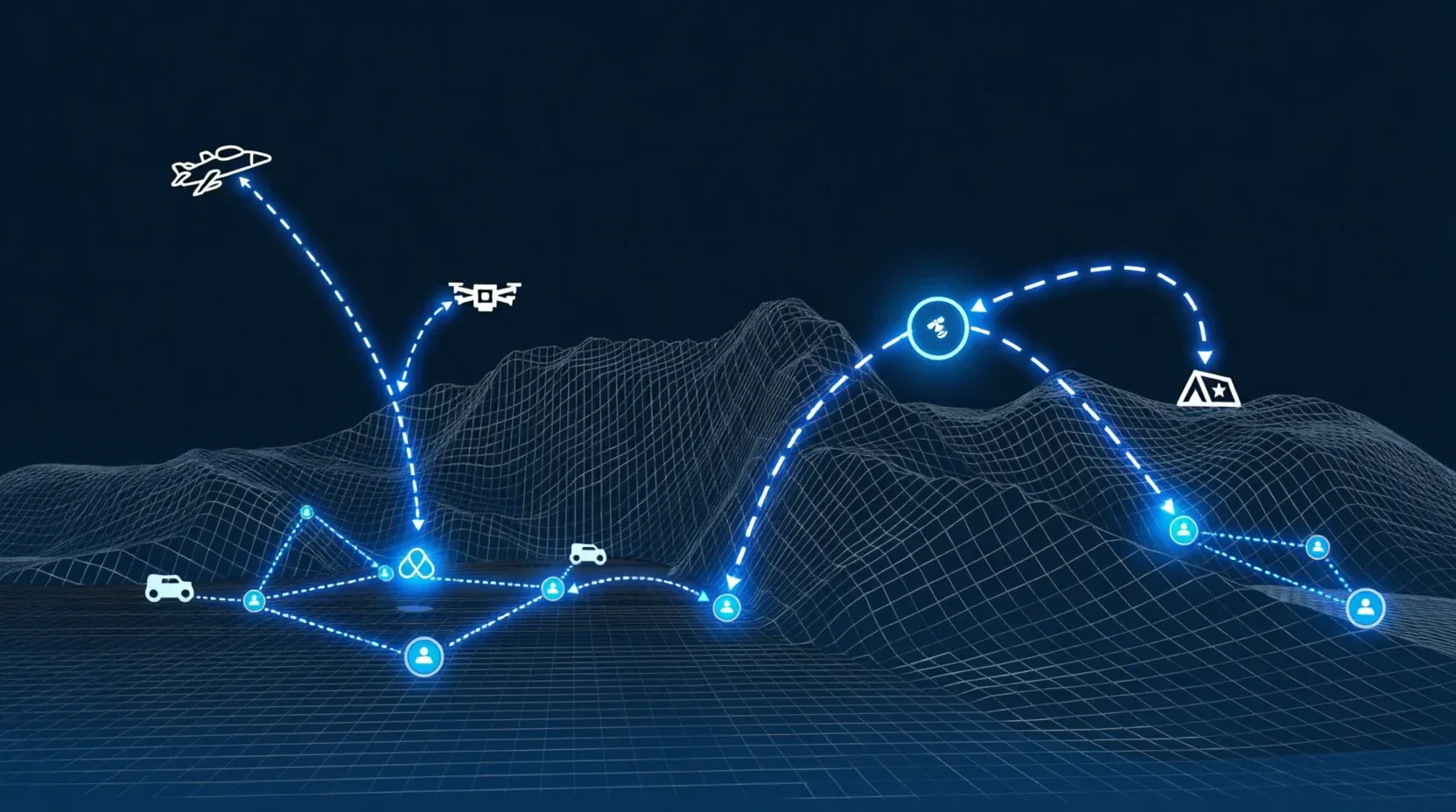
Somewear Labs will deploy its hardware and software solutions to enhance network resilience through secure satellite communication (SATCOM) links and intelligent networking software. The company is positioning these tools to allow mission data to move across multiple heterogeneous networks. According to the announcement, the technology is designed to automatically adapt as links degrade, preventing the disruption of critical applications and systems used by operators. This capability provides the Department of War and original equipment manufacturers (OEMs) with increased flexibility to integrate new communications technologies and platforms at what the company describes as the speed of relevance.
Horizon Radio and Low-SWaP Integration
The award accelerates the integration of Somewear’s software-defined network, building on the development of Horizon, its low-SWaP (Size, Weight, and Power), multi-network (LOS/BLOS) radio. Somewear developed Horizon to address the operational need for beyond-line-of-sight command and control. The company claims the technology moved from concept to downrange deployment within months by working with UxS manufacturers to test against real-world mission requirements. James Kubik, co-founder and CEO of Somewear, stated that as the Pentagon fields more capable UxS at scale, the networking architecture must evolve alongside the platforms to provide operators with flexibility as mission conditions change.
Key Takeaways
- Somewear Labs will support the Department of War's Multi-Domain Collaborative Autonomy (MDCA) program.
- The company is utilizing its Horizon low-SWaP, multi-network radio to enable beyond-line-of-sight connectivity.
- The technology aims to automate network adaptation across heterogeneous links to maintain command and control during degradation.
TechInsyte's Take
In our view, this contract highlights a critical shift in defense procurement toward software-defined resilience. As uncrewed platforms scale, the primary bottleneck is no longer just the vehicle itself, but the reliability of the data link in contested environments. By focusing on low-SWaP, multi-network integration, Somewear is targeting the "connectivity gap" that often renders autonomous systems vulnerable. This move suggests that the Pentagon is moving away from rigid, single-link hardware in favor of agile, software-driven architectures that can navigate degraded communications environments.
Questions & Answers
How does Somewear Labs address the challenge of degrading communication links?
The company utilizes intelligent networking software and secure SATCOM links to allow mission data to move across multiple heterogeneous networks, automatically adapting to link degradation to prevent system disruption.
Which specific government program is this contract supporting?
The award is intended to support the Department of War's Multi-Domain Collaborative Autonomy (MDCA) program and other uncrewed systems (UxS) platforms.
What is the strategic advantage of the Horizon radio technology?
Horizon is a low-SWaP, multi-network (LOS/BLOS) radio designed to provide beyond-line-of-sight command and control, allowing for rapid integration across various uncrewed platforms.
Source: Somewear Labs