Odyssey is attempting to bridge the gap between digital reasoning and physical execution by launching Odyssey-3, its most advanced foundation world model to date. The Palo Alto-based AI research company is positioning this technology as a general-purpose intelligence layer capable of understanding, predicting, and interacting with both physical and virtual environments. By providing a shared understanding of physics, dynamics, and cause-and-effect, Odyssey aims to allow intelligent systems to adapt to new tasks with minimal additional training, rather than learning every new environment or machine from scratch.
Odyssey-3 Deployment Across Six Domains
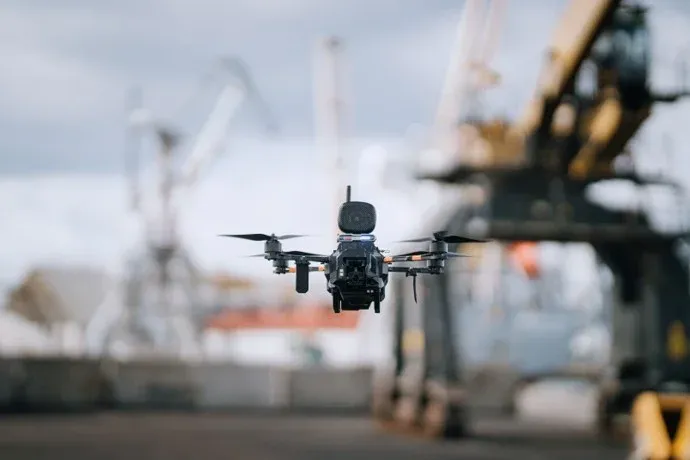
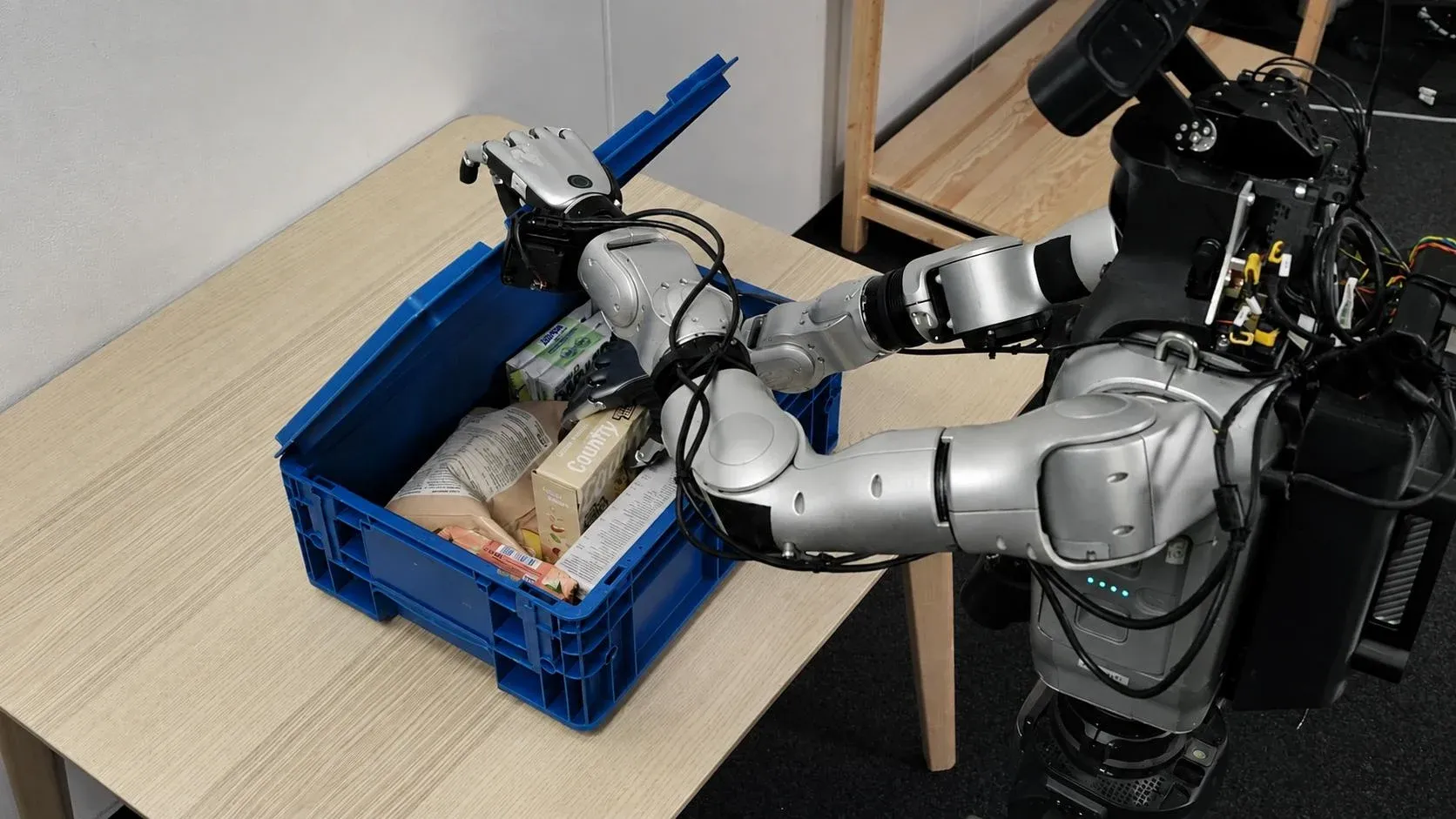
The company is testing the versatility of Odyssey-3 by deploying it across six distinct operational domains to prove its utility as a cross-platform foundation. In the robotics sector, the model has controlled multiple robot arms and demonstrated recovery behaviors that were not explicitly part of its training set. For humanoid autonomy, Odyssey is working with Flexion to develop control policies that perform tasks in real time and generalize to environmental changes more effectively than tested baselines. In the automotive space, the model successfully drove autonomously on roads in India using a policy trained on approximately 20 hours of simulated driving data. Additionally, the model powers aerial navigation for drones in indoor environments, generates interactive training environments for AI agents, and has demonstrated the ability to play Grand Theft Auto V, showing early signs of transferring learned behaviors to other games without new policy training.
Building General Physical Intelligence via Pretraining
Odyssey-3 functions by learning from vast datasets of visual observations to build representations of human behavior and physical laws. This approach seeks to create "physical agents"—intelligent systems that carry a foundational knowledge base across different machines and tasks. Rather than optimizing for a single application, the model is designed to learn common representations of how environments behave and how specific actions alter those environments. This architecture is supported by a research team with backgrounds at DeepMind, Tesla, Waymo, Meta, Apple, and Wayve, focusing on the intersection of multimodal systems and long-horizon prediction. By establishing this pretrained foundation, Odyssey intends to enable machines to draw on a broader model of the world, allowing them to adapt to novel situations with relatively little additional experience, which the company identifies as the primary path toward achieving increasingly general physical intelligence.
Key Takeaways
- Odyssey-3 has been adopted by Flexion to power humanoid autonomy and real-time control policies.
- The model achieved autonomous driving on Indian roads using only approximately 20 hours of simulated driving data.
- Odyssey-3 demonstrates cross-domain capabilities including robotics, humanoids, vehicles, drones, AI training, and video games.
TechInsyte's Take
In our view, Odyssey is making a calculated bet that the future of AI lies in "world models" rather than just large language models. By focusing on the causal relationship between actions and environmental outcomes, Odyssey is targeting the massive technical hurdle of "brittleness" in robotics and autonomous systems. If Odyssey-3 can truly transfer knowledge from a simulated environment to a physical road or a humanoid body with minimal retraining, it addresses a core scalability issue for enterprise automation. This signals a shift in the AI race from pure generative text toward high-fidelity physical reasoning, which is essential for the next generation of industrial and autonomous infrastructure.
Questions & Answers
How does Odyssey-3 reduce the training burden for new autonomous tasks?
The model utilizes a pretrained foundation of physics, dynamics, and cause-and-effect. This allows physical agents to draw on a shared understanding of the world to adapt to new situations with relatively little additional experience, rather than learning every task from scratch.
What specific evidence supports the model's ability to generalize across environments?
Odyssey has demonstrated that its humanoid control policies, developed with Flexion, generalize to environmental changes better than tested baselines. Furthermore, the model showed early transfer of behaviors from Grand Theft Auto V into other games without additional policy training.
Can Odyssey-3 be used for training other AI systems?
Yes. The company uses Odyssey-3 to generate interactive environments where AI agents can act and learn from the consequences of their actions, which helps expose weaknesses within the world model itself.
What is the technical origin of the Odyssey research team?
The team consists of researchers from several major AI and autonomous driving organizations, including DeepMind, Tesla, Waymo, Meta, Apple, and Wayve, with experience contributing to systems like Gemini, Veo, GAIA, and Tesla FSD.
Source: Odyssey