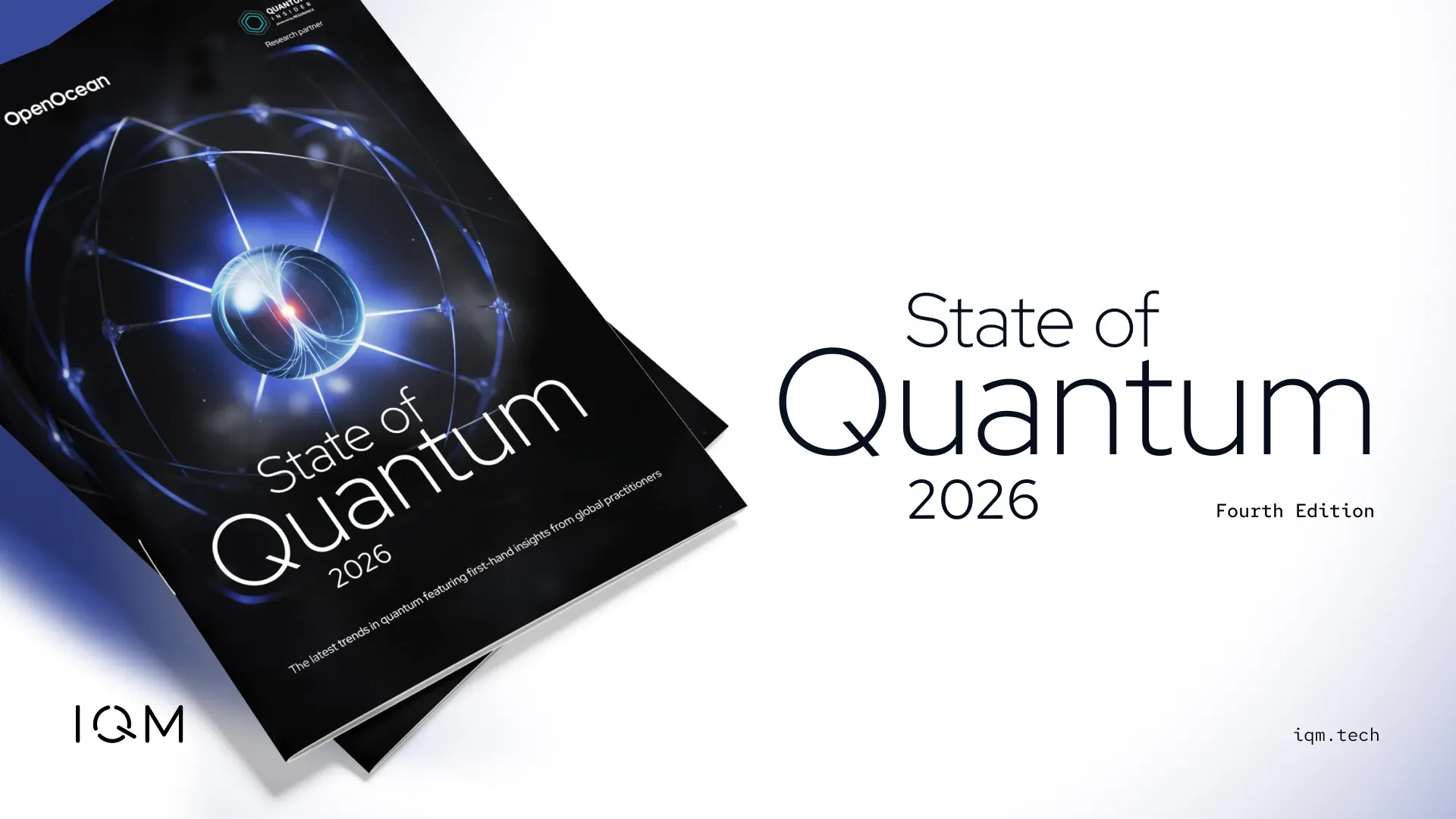
Enterprises are now “hands‑on” with quantum technology, but only a handful have moved beyond pilots to scaled deployment. The State of Quantum 2026 study—produced by IQ Quantum Computers and independently analyzed by The Quantum Insider—reveals that 89 % of surveyed firms are experimenting with quantum systems, while a mere 3 % have achieved production‑scale use. This stark contrast marks a decisive shift: the market is moving from the simple question of whether organizations can access a quantum machine to the far more demanding challenge of how they can build usable capability around it. Early adopters that have begun to assemble talent, develop proprietary algorithms, and integrate quantum hardware with existing IT stacks are already positioning themselves for a competitive advantage that later entrants will find increasingly difficult to close.
Quantum Adoption Landscape: Hands‑On Work Dominates, Scaled Use Remains Rare
The State of Quantum 2026 is the fourth annual industry benchmark and combines three core data sources: tracked transaction data from 2021 through Q1 2026, a validated survey of 107 senior practitioners across the Americas, EMEA, and APAC, and 19 in‑depth interviews with leaders from organizations such as Airbus, BMW, Moderna, Deutsche Bahn, Argonne National Laboratory, and the Oxford Quantum Institute.
The survey results paint a clear picture:
- 89 % of respondents report hands‑on quantum work—meaning they are actively running experiments, developing proof‑of‑concepts, or otherwise engaging with quantum hardware or simulators.
- 10 % report limited production use, indicating that a small slice of the market has moved beyond experimentation to apply quantum methods to specific, repeatable business problems.
- Only 3 % have reached scaled deployment, where quantum solutions are integrated into regular production pipelines and deliver measurable business value at enterprise scale.
To contextualize these figures, the report introduces a Quantum Readiness Index (QRI), a composite metric that evaluates four dimensions—Workforce, Innovation, Investment, and Adoption. The global cohort scores 58 out of 100, placing the market in the “Developing” tier. This tier signals that while awareness and early exploration have matured, the ecosystem is not yet prepared for widespread, large‑scale adoption.
The QRI also uncovers internal imbalances: hiring, budgeting, and pilot initiatives are noticeably ahead of proprietary intellectual‑property (IP) development, with only 9 % of organizations reporting a resourced IP program. This suggests that many firms are still building the foundational capabilities—people, processes, and early‑stage use cases—required before they can generate defensible, market‑ready quantum IP.
The interview component of the study reinforces the quantitative findings. Executives from Airbus and BMW, for example, describe a “gap between access and capability” that is now the central tension for enterprises. They note that while cloud‑based quantum access is abundant, the real competitive edge will belong to those who can translate that access into repeatable, value‑creating solutions.
Overall, the landscape is one of broad engagement but shallow depth. The majority of firms are experimenting; a modest minority are beginning to produce limited outcomes; and a very small group has cracked the code for full‑scale, production‑grade quantum computing.
Shifting Priorities: From Qubit Counts to Integrated Capability
For much of quantum’s commercial history, buyers measured progress by qubit counts and raw hardware specifications. The 2026 data demonstrates a decisive pivot toward integration, operational readiness, and capability building.
- Approximately 46 % of buyers now anticipate that on‑premises quantum infrastructure will form part of their access model within the next three years. This reflects a growing desire for tighter control, lower latency, and the ability to “see into a machine,” calibrate it, and embed it directly into existing enterprise workflows.
- By contrast, 24 % still favor a public‑cloud‑only approach, indicating that a significant minority continue to rely on the flexibility and lower upfront cost of cloud‑based quantum services.
The report highlights a qualitative shift in the questions enterprises ask. Rather than asking “how many qubits does this system have?” they are now asking whether they can monitor the hardware in real time, calibrate it for optimal performance, integrate it with legacy ERP or data‑analytics platforms, and retain the know‑how they develop internally. This evolution mirrors the maturation of other emerging technologies, where the focus moves from raw capability to usable, repeatable outcomes.
A critical driver of this shift is the skills shortage. The study identifies skills as the most consistent barrier, cited by 66 % or more of large enterprises, universities, and government buyers. Algorithm design follows as the second‑most‑frequent constraint, while hardware limitations have receded in importance. Workforce development is not a short‑term fix; the report estimates that training a quantum‑ready workforce takes two to five years, and the pipeline will not expand unless organizations begin investing now.
Capital markets have responded to this changing priority landscape. In 2025, quantum computing attracted $8.3 billion in investment—nearly five times the total raised in 2024. The surge was driven by larger deal sizes rather than a higher number of transactions, indicating that investors are rewarding demonstrated execution over speculative roadmaps. Moreover, seven quantum firms have completed SPAC mergers since 2021, with a second wave extending through 2025‑2026, underscoring a move toward public‑market financing for companies that can show tangible progress.
Collectively, these trends illustrate a market that is no longer content with “being on the list” of quantum users. Enterprises are demanding integrated, calibrated, and transparent quantum solutions that can be woven into their existing technology stacks, and they are willing to allocate significant capital and talent to achieve that integration.
Implications for Enterprise Leaders: Building Capability Before Fault‑Tolerance Arrives
Vendor roadmaps across all major quantum modalities converge on a 2029‑2031 window for the arrival of fault‑tolerant quantum computers. The State of Quantum 2026 report argues that the intervening years are the critical period for capability development—the time when organizations must cultivate talent, refine algorithms, and gain operational experience with noisy intermediate‑scale quantum (NISQ) systems.
Jan Goetz, Co‑Founder and CEO of IQM Quantum Computers, emphasizes this point in the report’s foreword: “The work of being ready for it starts now,” and organizations that wait for a clear, market‑ready signal may find that the signal and the deadline arrive simultaneously. In practice, this means that procurement teams should prioritize openness, calibration access, and co‑development quality over “black‑box” offerings that hide the underlying hardware and limit learning opportunities.
Sovereignty requirements are also reshaping procurement. In Europe and the Gulf, local data residency and host‑country control are becoming formal conditions, pushing vendors to offer on‑premises or region‑specific deployment models. This regulatory pressure further incentivizes enterprises to develop in‑house expertise rather than relying solely on external, opaque services.
IQM’s market position illustrates the advantage of early capability building. Transaction data shows that IQM accounts for 19 % of quantum computing contracts from 2021 to Q1 2026 and leads all tracked vendors in national HPC‑quantum deployments—nine installations across six countries during the same period. This dominance reflects IQM’s focus on full‑stack solutions, on‑premises deployment options, and a clear roadmap toward fault tolerance.
For CIOs and technology leaders, the actionable takeaways are:
- Invest in talent now—launch graduate‑level training programs, partner with academic institutions, and create internal quantum labs to shorten the two‑to‑five‑year skill development horizon.
- Prioritize integration capability—select vendors that provide calibration APIs, transparent hardware diagnostics, and co‑development frameworks that enable your teams to embed quantum workloads into existing data pipelines.
- Balance cloud and on‑premises strategies—while 46 % of peers anticipate on‑premises models, a hybrid approach can mitigate risk, provide flexibility, and satisfy emerging sovereignty mandates.
By focusing on these areas, enterprises can ensure they are not merely “hands‑on” but are actually building the reusable, production‑grade quantum capability that will become a decisive differentiator once fault‑tolerant machines become commercially viable.
Key Takeaways
- 89 % of surveyed enterprises are hands‑on with quantum, but only 3 % have achieved scaled deployment (State of Quantum 2026).
- The Quantum Readiness Index places the global market at 58 / 100, categorizing it as “Developing” rather than “Leading.”
- Skills shortages affect 66 % or more of large buyers, and workforce training is estimated to require two to five years.
TechInsyte's Take
Enterprises that begin building quantum capability now—through talent development, algorithm design, and system integration—will be better positioned when fault‑tolerant machines arrive around 2029‑2031. The study stops short of predicting market share shifts, so CIOs should monitor skill pipelines and procurement criteria while evaluating on‑premises versus cloud access models.
Source: Businesswire