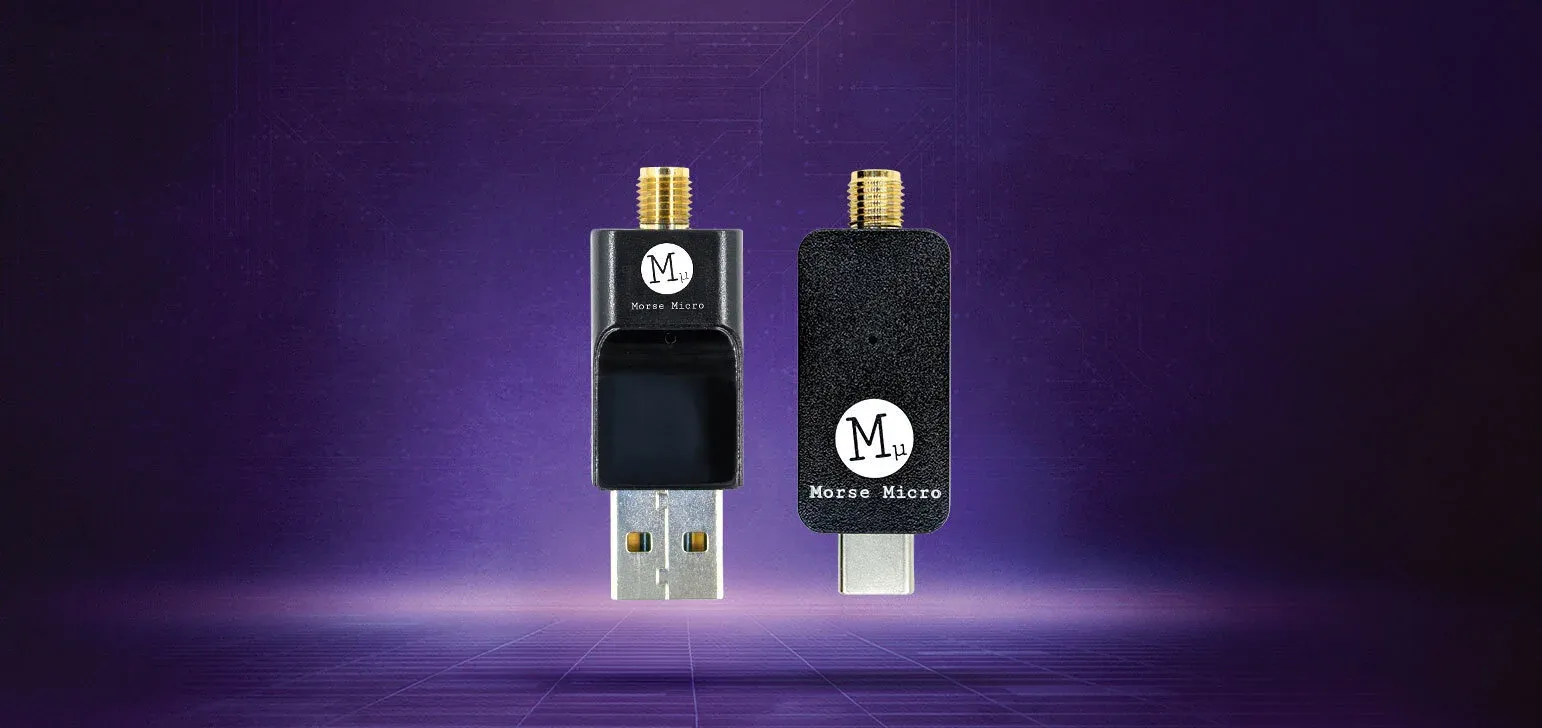
Morse Micro is attempting to accelerate the adoption of long-range IoT connectivity by lowering the barrier to entry for hardware integration. The company has launched a new series of Wi-Fi HaLow USB network adapters designed to bridge the gap between specialized silicon and standard computing hardware. These adapters, available in USB-A and USB-C, aim to provide immediate connectivity for laptops, PCs, and access points.
MM8108 Chipset Integration for Developers
The new adapters utilize the Morse Micro MM8108 Wi-Fi HaLow chipset, leveraging the same reference design found in the MM8108-EKH19 evaluation kit. By offering these tools in both USB-A and USB-C form factors, Morse Micro is providing a direct path for developers to connect computers and access points to existing Wi-Fi HaLow networks across various operating systems. The company is positioning these adapters as a way for device makers to simplify the integration of HaLow technology into their own product lines. This move suggests a strategy to grow the broader ecosystem by providing a proven, plug-and-play hardware foundation that reduces the complexity typically associated with implementing new wireless standards into standard enterprise or consumer computing environments.
Expanding Connectivity for Industrial and Remote Use
Morse Micro is targeting specific operational gaps where traditional Wi-Fi coverage often fails. The company suggests these adapters can facilitate connectivity for laptops and PCs across large industrial properties or businesses. Furthermore, the technology is intended to support remote work scenarios from outbuildings, garages, or sheds, and provide portable, temporary connectivity for field work and events. According to the company, Wi-Fi HaLow technology can achieve ten times the range and cover 100 times the area compared to traditional Wi-Fi networks. By moving this capability into the USB ecosystem, Morse Micro is testing whether making long-range, low-power connectivity accessible via standard ports can drive wider deployment in smart cities, industrial automation, and smart home sectors.
Key Takeaways
- Morse Micro released Wi-Fi HaLow USB network adapters in both USB-A and USB-C form factors.
- The adapters are built on the MM8108 chipset and the MM8108-EKH19 evaluation kit reference design.
- The technology is marketed as providing ten times the range and 100 times the area coverage of traditional Wi-Fi.
TechInsyte's Take
In our view, this launch represents a calculated move to bypass the slow cycle of native hardware integration. By utilizing the USB interface, Morse Micro is effectively decoupling the long-range benefits of Wi-Fi HaLow from the need for specialized internal radio components. This enables enterprise IT leaders to deploy long-range IoT connectivity using existing laptop and PC fleets almost immediately. This strategy signals that Morse Micro is prioritizing ecosystem breadth and rapid developer testing over waiting for the next generation of integrated silicon.
Questions & Answers
How does this hardware simplify the integration of Wi-Fi HaLow for enterprise developers?
The adapters use a proven reference design from the MM8108-EKH19 evaluation kit, allowing developers to connect standard computers and access points to HaLow networks without designing custom internal wireless hardware.
What specific operational environments is Morse Micro targeting with these USB adapters?
The company is targeting large-scale industrial properties, remote work locations like outbuildings or sheds, and temporary field work or event scenarios where traditional Wi-Fi range is insufficient.
What are the primary technical advantages of Wi-Fi HaLow over traditional Wi-Fi?
According to Morse Micro, the technology can achieve ten times the range and cover 100 times the area of traditional Wi-Fi networks while maintaining low power consumption.
Source: Businesswire