
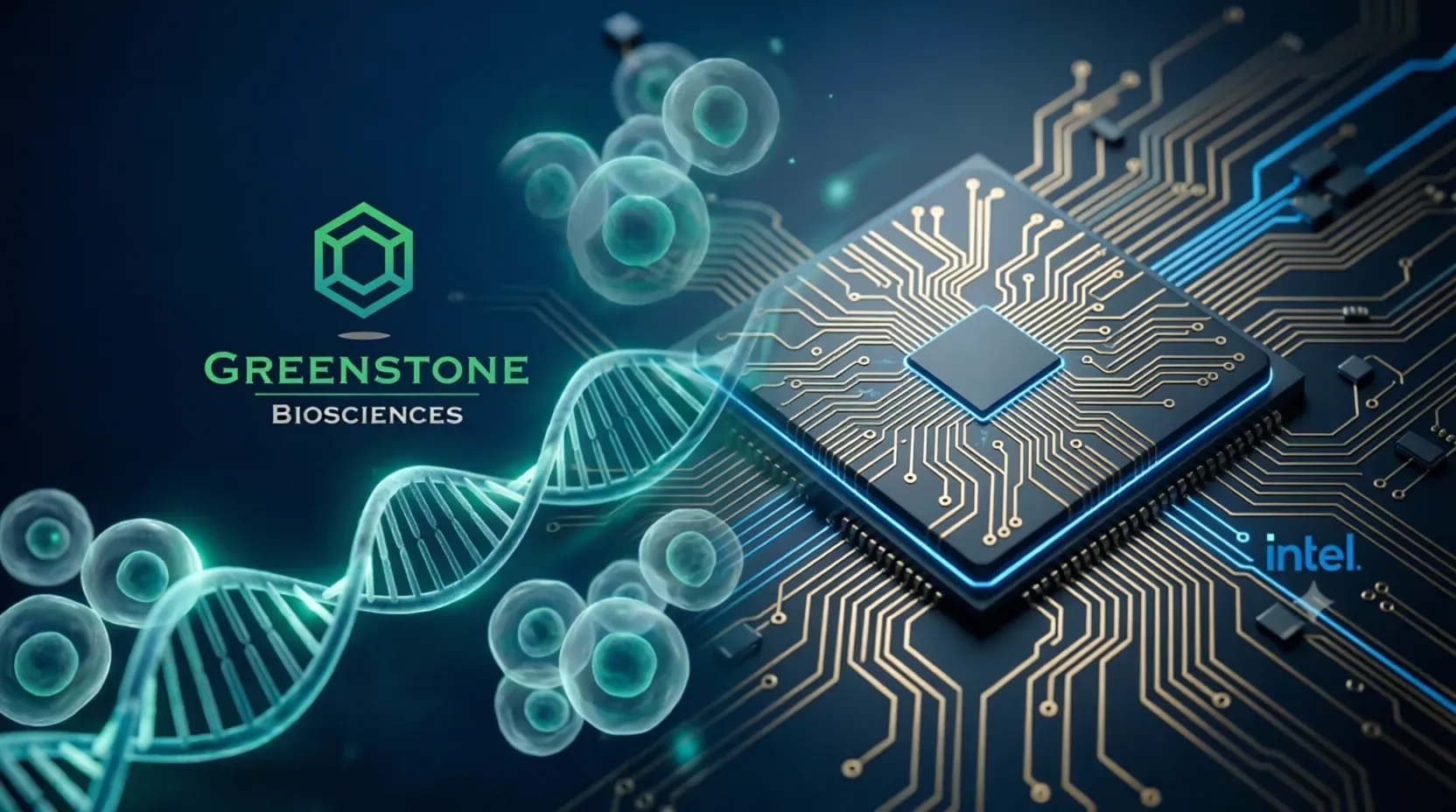
Intel Corp. and Greenstone Biosciences, Inc. announced a strategic collaboration that unites Greenstone’s massive human induced pluripotent stem cell (iPSC) biobank with Intel’s Edge AI computing platform and broader AI infrastructure. By pairing the world’s largest collection of patient‑derived iPSC lines with purpose‑built silicon designed for high‑throughput analytics, the partnership seeks to compress the timeline for discovering and developing new medicines. Both companies emphasize that the joint effort will improve data processing speed, expand storage capacity for population‑scale datasets, and deliver more accurate, human‑centric insights that can replace or augment traditional animal models in pre‑clinical testing.
Intel and Greenstone Launch Strategic Collaboration
The two firms will work together to “accelerate AI‑enabled drug discovery” by directly linking Greenstone’s iPSC platform with Intel’s Edge AI hardware. Greenstone describes its biobank as the world’s largest collection of human iPSC lines, encompassing diverse genetic backgrounds and disease phenotypes. Intel’s role focuses on delivering edge‑optimized processors, AI accelerators, and a scalable software stack that can ingest, store, and analyze the massive cellular‑omics data generated by the biobank. Joseph C. Wu, M.D., Ph.D., co‑founder of Greenstone and director of the Stanford Cardiovascular Institute, said the collaboration “represents an important step toward more human‑centered drug development.” He highlighted three concrete benefits: the ability to identify patient‑specific response patterns, improve prediction of adverse drug effects, and lower overall development costs by reducing reliance on costly animal studies.
Platform Integration of iPSC Biobank and Edge AI
The joint effort merges state‑of‑the‑art human genetics and biology from Greenstone with Intel’s silicon architecture. By coupling human cellular models with AI‑enabled analytics, the partners intend to scale the processing, storage, and analysis required for population‑scale studies. The integration will allow researchers to run complex machine‑learning pipelines directly on edge devices, shortening the latency between data generation and insight. This technical approach aligns with the growing U.S. FDA regulatory momentum toward New Approach Methodologies (NAMs) under the FDA Modernization Act 3.0, which encourages alternatives to traditional animal testing. Intel highlighted the partnership in its Computex 2026 keynote, and Greenstone referenced recent scientific publications (Wu et al., 2026; Liu et al., 2026; Herron et al., 2025) to illustrate the robustness of the underlying data and models.
Implications for Drug Discovery and Regulatory Landscape
The combined platform is positioned to support biotech and pharmaceutical companies seeking more translationally relevant preclinical testing. By leveraging human iPSC models and AI‑driven analytics, the collaboration aims to advance drug safety assessment and the development of new medicines. The announcement notes that the effort “helps advance the next generation of drug safety assessment and new medicines,” but does not provide specific timelines or financial terms. Greenstone’s funding sources include Walden Catalyst, Mayfield, and Prosperity 7 Ventures; Intel’s involvement is limited to technology provision, underscoring a clear division of responsibilities that may simplify regulatory review.
Key Takeaways
- Intel and Greenstone announced a collaboration to merge Greenstone’s iPSC biobank with Intel’s Edge AI computing for drug discovery.
- The partnership aligns with FDA Modernization Act 3.0, supporting New Approach Methodologies that complement traditional animal studies.
- Greenstone’s biobank is described as the world’s largest collection of human iPSC lines, and Intel will supply purpose‑built silicon to scale data processing and analysis.
TechInsyte's Take
The alliance provides a concrete example of how AI hardware can be applied to human‑centric biotech workflows, potentially shortening preclinical cycles. However, details on deployment timelines, integration challenges, and cost structures remain unclear, so CIOs and R&D leaders should monitor pilot results and any forthcoming regulatory guidance.
Source: Businesswire