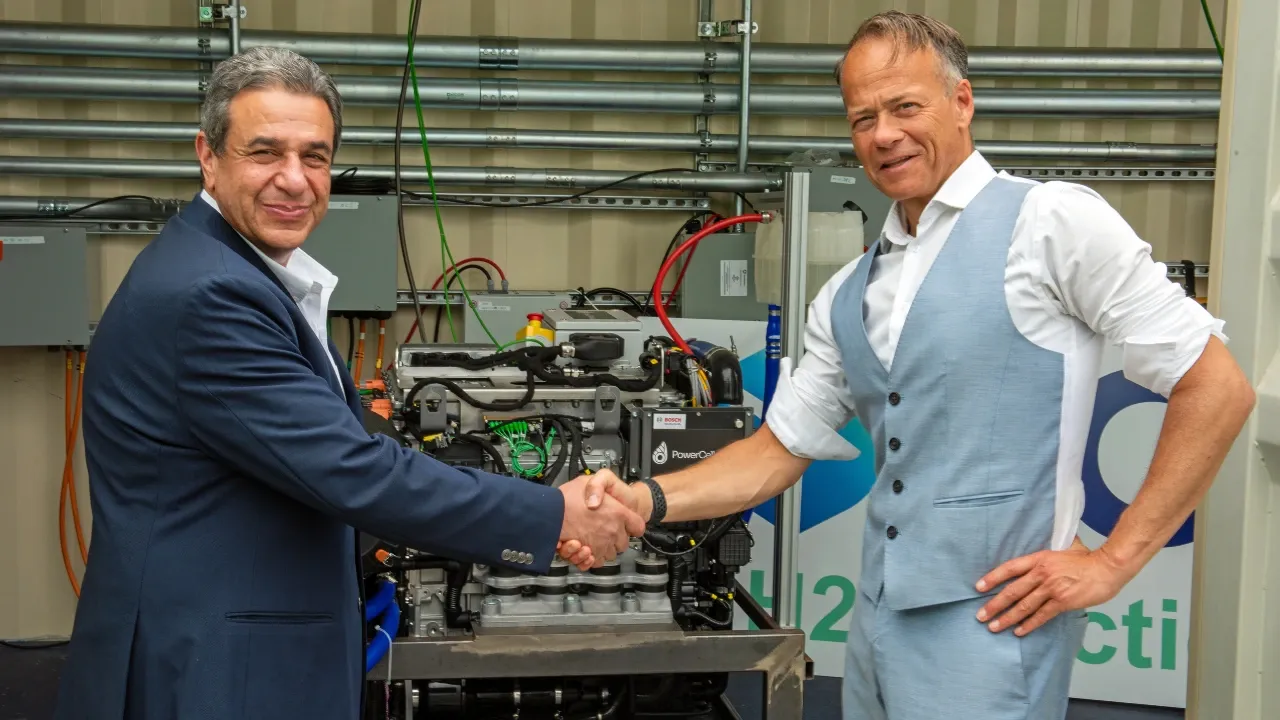
ECL and PowerCell Group AB have entered a strategic partnership to deploy industrial-grade hydrogen fuel cell power across ECL’s AI data center platform. The agreement includes a firm purchase order for PowerCell PS190 fuel cell systems and a non-binding memorandum of understanding for approximately 300 MW of additional hydrogen capacity. Supported by Bosch, this collaboration aims to address the intense power demands of AI operators in markets where grid connections are increasingly constrained. The initiative marks a transition from experimental hydrogen use toward large-scale, industrial-grade data center energy infrastructure.
ECL Deploys PS190 Systems at California Campuses
The initial deployment focuses on ECL’s 35MW CSC-1 campus located in Santa Clara, California. At this site, containerized PowerCell PS190 fuel cell systems will integrate into ECL’s FlexGrid microgrid architecture. This architecture manages power through a combination of the electrical grid, natural gas, and battery storage. This move builds upon existing operations at ECL’s MV-1 facility in Mountain View, California, where hydrogen has served as the primary power source for over two years. ECL CEO Yuval Bachar noted that the selection of PowerCell and Bosch followed a two-year evaluation of multiple technologies under real operating conditions. The partnership is bolstered by Bosch, PowerCell’s largest shareholder and manufacturing partner, which provides the industrial-scale production and U.S.-based service infrastructure necessary for these deployments. This framework is designed to support ECL as it expands its FlexGrid footprint to meet rising AI infrastructure requirements.
Integrating PowerCell and Bosch for Microgrid Management
Technical integration is central to the partnership, utilizing PowerCell’s Distributed Master Controller platform alongside ECL’s Lightning real-time management system. This combination enables dynamic load balancing across fuel cells, batteries, natural gas, and the grid at each FlexGrid site. PowerCell brings over 25 years of experience and one million hours of field data from automotive, marine, and stationary applications to this deployment. Bosch provides the manufacturing discipline and lifecycle support required to scale these systems. Thilo Müller, Bosch Senior Vice President of Fuel Cell Business, emphasized that scaling hydrogen requires predictable quality and dependable support. As ECL prepares for tenant inquiries regarding AI infrastructure deployments for 2027-2028, the technical focus remains on orchestrating hydrogen intelligently within an integrated energy system. This approach seeks to provide reliable, long-term infrastructure for high-density computing environments that require more power than traditional single grid connections can typically deliver to a single site.
Key Takeaways
- ECL has signed a firm purchase order for PowerCell PS190 fuel cell systems and a non-binding MOU for 300 MW of additional capacity.
- The first deployment will occur at ECL's 35MW CSC-1 campus in Santa Clara, California, utilizing a microgrid architecture.
- Bosch serves as PowerCell's largest shareholder and manufacturing partner, providing U.S.-based service infrastructure for the project.
TechInsyte's Take
In our view, this partnership signals a critical shift in how AI infrastructure providers approach energy scarcity. By moving beyond pilot programs to a 300 MW framework, ECL is addressing the fundamental bottleneck of AI scaling: the inability of existing power grids to meet localized demand. The integration of PowerCell’s controllers with ECL’s Lightning system suggests that the future of data center resilience lies in sophisticated, multi-source microgrids rather than simple backup generators. Furthermore, involving Bosch as a manufacturing and service backbone provides the industrial credibility necessary for enterprise-grade adoption. This move positions hydrogen not just as a green alternative, but as a pragmatic solution for high-density power constraints.
Source: Businesswire