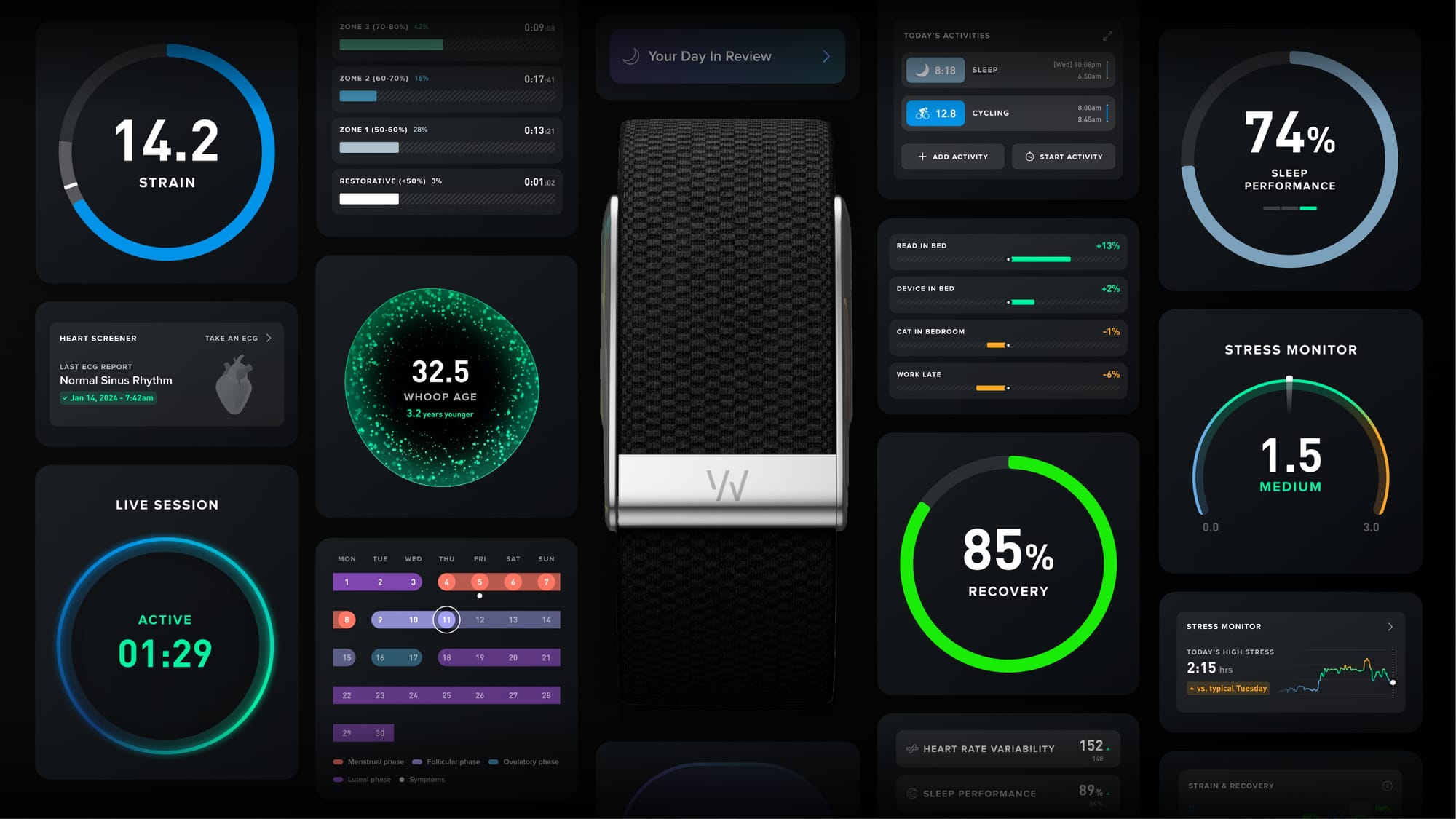
WHOOP's latest platform updates introduce on-demand clinician access and enhanced AI capabilities that extend beyond consumer fitness into clinical-grade health services. For enterprise technology leaders managing employee wellness programs and digital health initiatives, these developments highlight evolving expectations around integrated health data, real-time clinical support, and AI-driven personalization.
Clinical Integration Meets Continuous Health Data
The introduction of live video consultations with licensed clinicians represents WHOOP's most significant move toward clinical health services. By leveraging months of continuous biometric data as a foundation for these consultations, the platform addresses a persistent challenge in traditional healthcare: the gap between episodic clinical visits and continuous health monitoring.
The EHR syncing capability through HealthEx partnership adds another enterprise-relevant dimension. Organizations managing employee health benefits must consider how such integrations affect data governance, privacy compliance, and the broader digital health ecosystem. The ability to incorporate diagnoses, medications, and procedures into performance insights creates opportunities for more comprehensive wellness programs, though it also raises questions about data ownership and security protocols that enterprise IT teams will need to evaluate.
AI Personalization Moves Beyond Generic Recommendations
The My Memory and Proactive Check-Ins features demonstrate a maturation in AI-driven health coaching. Rather than relying on static algorithms, these tools create persistent context layers that adapt to individual circumstances and goals. For enterprise applications, this evolution suggests that effective digital health platforms require sophisticated data management architectures that can handle continuous learning while maintaining privacy boundaries.
The redesigned WHOOP Journal, with voice and text logging capabilities, illustrates how user experience design impacts data quality. When employees can easily capture contextual information about stress, travel, or lifestyle factors, the resulting insights become more actionable for both individuals and organizational wellness programs. Behavior Trends visualization helps identify which interventions actually drive improvement—a critical metric for enterprise buyers evaluating ROI on wellness investments.
Enterprise Considerations for Health Platform Adoption
Several factors should influence enterprise decision-making around similar platforms. First, the integration complexity increases significantly when connecting continuous biometric data with clinical systems and EHRs. Organizations will need robust API management and data governance frameworks to support these connections securely.
Second, the regulatory landscape for digital health platforms continues evolving. While WHOOP mentions FDA-cleared ECG capabilities, enterprise buyers should verify compliance requirements specific to their industries and jurisdictions. The distinction between wellness tools and medical devices carries different liability and implementation considerations.
Third, employee adoption rates will ultimately determine program success. Features that reduce friction—like automatic workout detection and voice logging—tend to improve engagement, which directly impacts the business case for enterprise wellness investments.
Key Takeaways
- WHOOP's clinician integration bridges continuous biometric monitoring with real-time clinical interpretation, creating new models for enterprise wellness programs
- EHR syncing capabilities through HealthEx partnership introduce both opportunities for comprehensive health insights and complex data governance challenges for enterprise IT teams
- AI features like My Memory and Proactive Check-Ins demonstrate the shift toward persistent context layers that enable more personalized, adaptive health coaching
- Enterprise adoption requires careful evaluation of integration complexity, regulatory compliance, and employee engagement factors beyond basic feature sets
Conclusion
WHOOP's expansion into clinical services and enhanced AI capabilities reflects broader trends reshaping enterprise health platforms. As organizations evaluate digital wellness solutions, the integration of continuous data streams with clinical expertise—and the AI systems that connect them—will become increasingly important differentiators. Success depends not just on feature completeness, but on how well these platforms align with existing enterprise data architectures, security requirements, and employee engagement strategies.
Source: Businesswire