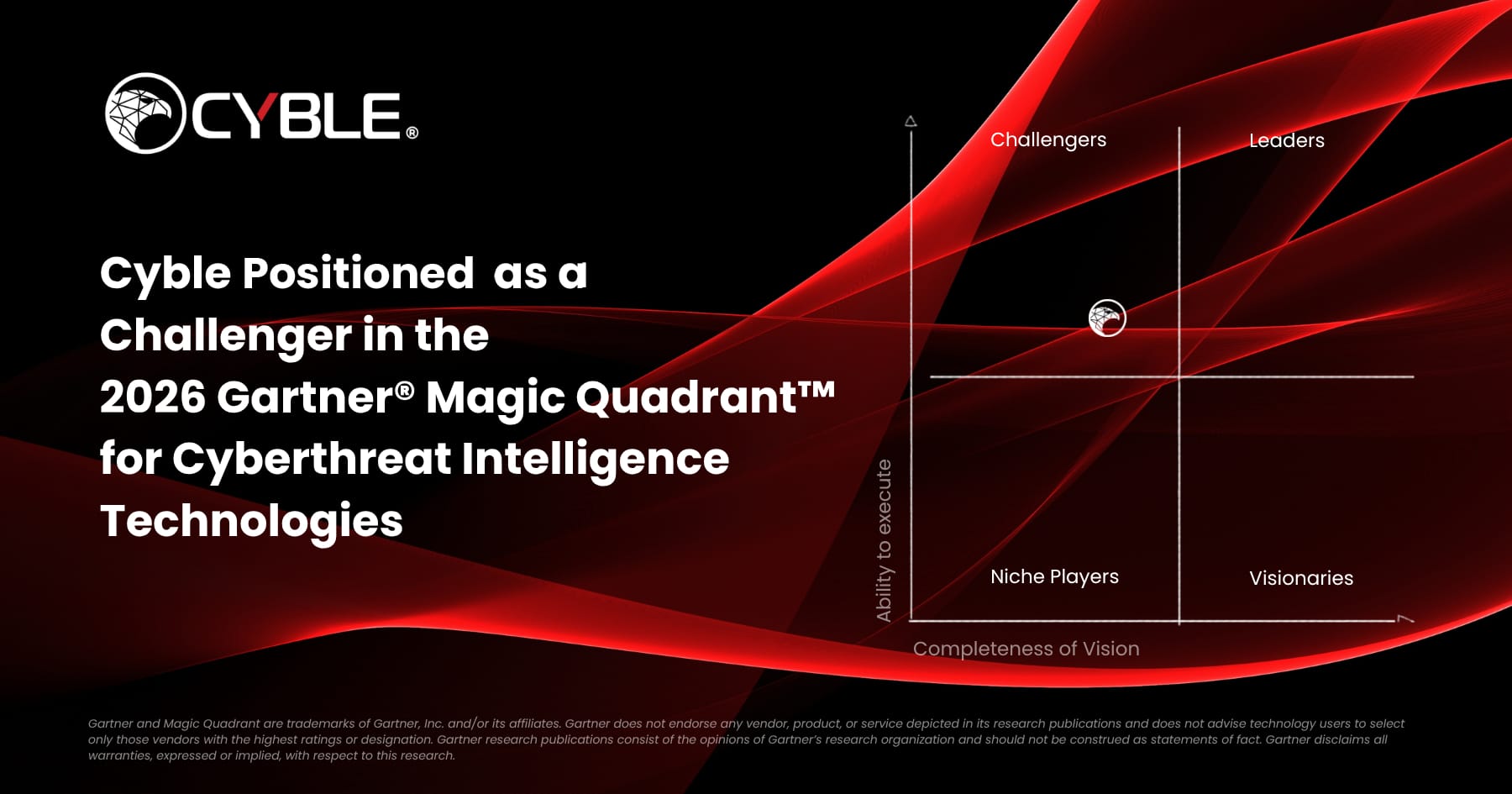
Cyble’s recent recognition as a Challenger in Gartner’s 2026 Magic Quadrant for Cyberthreat Intelligence Technologies is more than a vanity metric; it reflects a growing industry need for intelligence that moves beyond static feeds and delivers real‑time, actionable insights. For CIOs, CISOs, and security architects, the announcement underscores a trend toward integrated, AI‑driven platforms that can be woven into existing SIEM, SOAR, and case‑management workflows without forcing a wholesale migration.
From Noise to Action: The Value of Continuous, Contextual Intelligence
Traditional threat feeds often overwhelm analysts with volume and lack context, forcing teams to spend disproportionate time triaging false positives. Cyble’s platform claims to filter billions of signals from the surface, deep, and dark web, prioritizing them in real time. The core of this capability is Cyble Vision, which maps threat actors, campaigns, and exposed credentials directly to an organization’s attack surface. By providing a continuous, contextual view, the platform reduces the time analysts spend hunting for relevance and increases the speed at which they can move from detection to containment.
For enterprises, this translates into measurable operational gains: faster incident response, lower mean time to containment, and a clearer picture of risk exposure across the entire attack surface. The ability to see emerging vulnerabilities mapped to specific assets also supports proactive patching and risk mitigation, aligning security operations with broader IT governance objectives.
AI‑Native Automation: Blaze AI and the Decision Loop
Cyble’s AI layer, Blaze AI, is positioned as the engine that drives automation and decision‑making. By reasoning across adversary behavior in real time, Blaze AI can trigger automated playbooks, adjust alert thresholds, and recommend remediation steps. In practice, this means that a security team can rely on the platform to surface the most critical alerts and suggest the next best action, rather than manually sifting through raw data.
From a vendor perspective, the integration of Blaze AI into existing SIEM and SOAR environments is critical. Cyble claims seamless interoperability, allowing organizations to embed intelligence directly into their existing workflows. This reduces the friction that often accompanies the adoption of new threat intelligence solutions and ensures that the platform can scale with the organization’s security operations center (SOC) without requiring a complete overhaul of existing processes.
End‑to‑End Coverage: From Endpoint to Business Impact
Cyble’s portfolio extends beyond threat intelligence into endpoint protection (Titan) and business risk translation (Saratoga). Titan offers real‑time visibility and proactive detection at the endpoint level, while Saratoga quantifies cyber risk in business terms, enabling leaders to prioritize investments. This holistic approach aligns with the modern enterprise’s need to connect security outcomes to business metrics, a requirement increasingly emphasized in board‑level security discussions.
The integration of these components into a single platform offers a unified view of risk that can be leveraged by both technical teams and executive stakeholders. For instance, a CISO can use Saratoga to demonstrate the financial impact of a detected threat, while the SOC can deploy Titan to contain the incident in real time.
What the Gartner Designation Means for Buyers
Gartner’s Magic Quadrant is respected for its rigorous methodology, but it is not a definitive endorsement. Cyble’s Challenger status indicates that the company is positioned to deliver strong capabilities, though it may not yet have the market share or breadth of a Leader. For buyers, this signals that Cyble offers a compelling solution that can be evaluated against more established vendors, especially when the focus is on AI‑native intelligence and operational integration.
Key considerations for procurement teams include:
- Integration depth: Verify that Cyble’s APIs and connectors can ingest data from existing SIEM, SOAR, and ticketing systems without custom development.
- Scalability: Assess how the platform handles large volumes of data and whether it can support the organization’s growth trajectory.
- Vendor maturity: Evaluate Cyble’s customer base, support structure, and roadmap to ensure long‑term viability.
Risks and Constraints to Watch
While the platform’s AI capabilities promise automation, they also introduce potential blind spots. Overreliance on automated playbooks can lead to missed nuances in complex incidents. Additionally, the breadth of data sources—surface, deep, and dark web—requires robust data governance to avoid privacy violations and ensure compliance with regulations such as GDPR and CCPA.
Finally, the integration of endpoint protection (Titan) and risk translation (Saratoga) into a single ecosystem may create a single point of failure if not architected with redundancy and failover mechanisms.
Key Takeaways
- Cyble’s Challenger status in Gartner’s 2026 Magic Quadrant highlights its AI‑native, continuous threat intelligence that prioritizes actionable insights over raw data.
- Blaze AI enables real‑time automation, reducing analyst toil and accelerating incident response within existing SIEM/SOAR workflows.
- The platform’s end‑to‑end coverage—from threat detection to business impact translation—supports both technical and executive decision‑making.
- Buyers should evaluate integration depth, scalability, and vendor maturity before adopting Cyble, especially in regulated environments.
- Potential risks include overautomation, data governance challenges, and the need for robust redundancy in the integrated ecosystem.
Conclusion
Cyble’s Gartner recognition is a signal that the market is moving toward intelligence platforms that not only collect data but also transform it into operational decisions at scale. For enterprise security leaders, the practical value lies in the ability to embed AI‑driven insights into existing workflows, thereby tightening the feedback loop between detection, response, and business impact. As organizations grapple with increasingly sophisticated threat actors, solutions that can deliver contextual, actionable intelligence in real time will become essential components of a resilient security posture.
Source: Businesswire