Ventiva announced a strategic partnership with ASUS at Computex 2026 to explore next‑generation thermal architectures for compact AI computing. The collaboration will evaluate Ventiva’s solid‑state ionic cooling technology for future ASUS NUC and Mini‑PC designs, beginning with a demonstration platform shown at the trade show.
Ventiva‑ASUS Collaboration Unveiled at Computex 2026
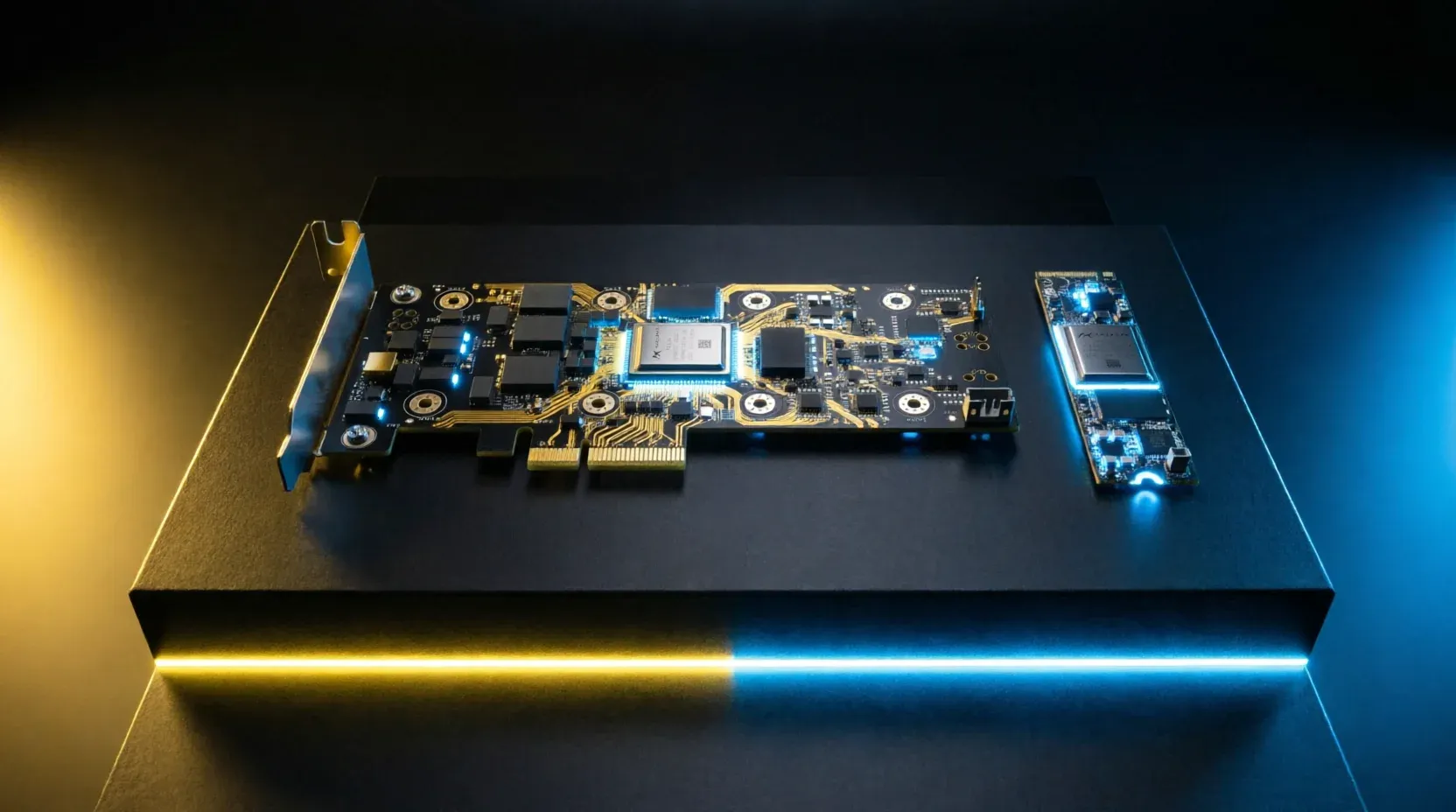
Ventiva, a provider of solid‑state cooling solutions, and ASUS revealed their partnership during Computex 2026. The two companies will jointly assess how Ventiva’s ionic cooling can be integrated into upcoming ASUS NUC and Mini‑PC products. A prototype ASUS NUC platform featuring the Ventiva cooling subsystem was displayed at the event to illustrate the collaboration’s direction.
Christian Schlachte, Director of Product Management at Ventiva, said thermal management is shifting from a component‑level decision to a “platform architecture decision.” Alex Gilpin, Senior Manager of NUC Advanced Engineering at ASUS, added that the partnership will focus on prototype development and technical evaluation to determine what is possible for future compact AI systems.
Technical Basis of Ventiva’s Ionic Cooling
Ventiva’s technology uses electrohydrodynamic (EHD) flow to move ionized air molecules within an electric field, eliminating the need for mechanical fans. The system consists of a self‑contained air blower, fin stack, and vapor chamber or heat pipe, delivering up to 1.1 CFM per device. Because the blower can be placed adjacent to heat sources such as SoCs, memory, or power delivery components, it avoids the board‑space constraints of traditional fan‑based coolers.
Ventiva reports that its ionic cooling produces less than 15 dBa sound pressure in anechoic testing, a level described as “imperceptible.” The air‑blower module can be as thin as 5 mm, enabling lower internal heights for customer applications and supporting “side‑in / side‑out” airflow that does not require an air gap.
Potential Impact on Compact AI Computing
The partnership targets AI workloads that generate concentrated heat at processors, memory, and accelerators. Ventiva’s modular approach allows independent cooling of each thermal zone, which the company claims can sustain continuous high‑performance operation without adding bulk or noise. ASUS plans to use the evaluation results to inform design choices for future NUC and Mini‑PC models that aim to combine high AI performance with a small footprint.
Key Takeaways
- Ventiva and ASUS announced a partnership at Computex 2026 to explore ionic cooling for future ASUS NUC and Mini‑PC designs.
- Ventiva’s ionic cooling moves air via electrohydrodynamic flow, delivering up to 1.1 CFM per device with less than 15 dBa sound pressure and a module thickness as low as 5 mm.
- The initial phase focuses on prototype development and technical evaluation to determine how the technology can support compact AI workloads.
TechInsyte's Take
The collaboration signals a move toward treating thermal management as a core architectural consideration for dense AI hardware. While the partnership is still in the prototype stage, its outcomes could influence how OEMs balance performance, form factor, and acoustic constraints in future compact systems. Buyers should monitor the technical evaluation results for indications of scalability and integration readiness.
Source: Businesswire