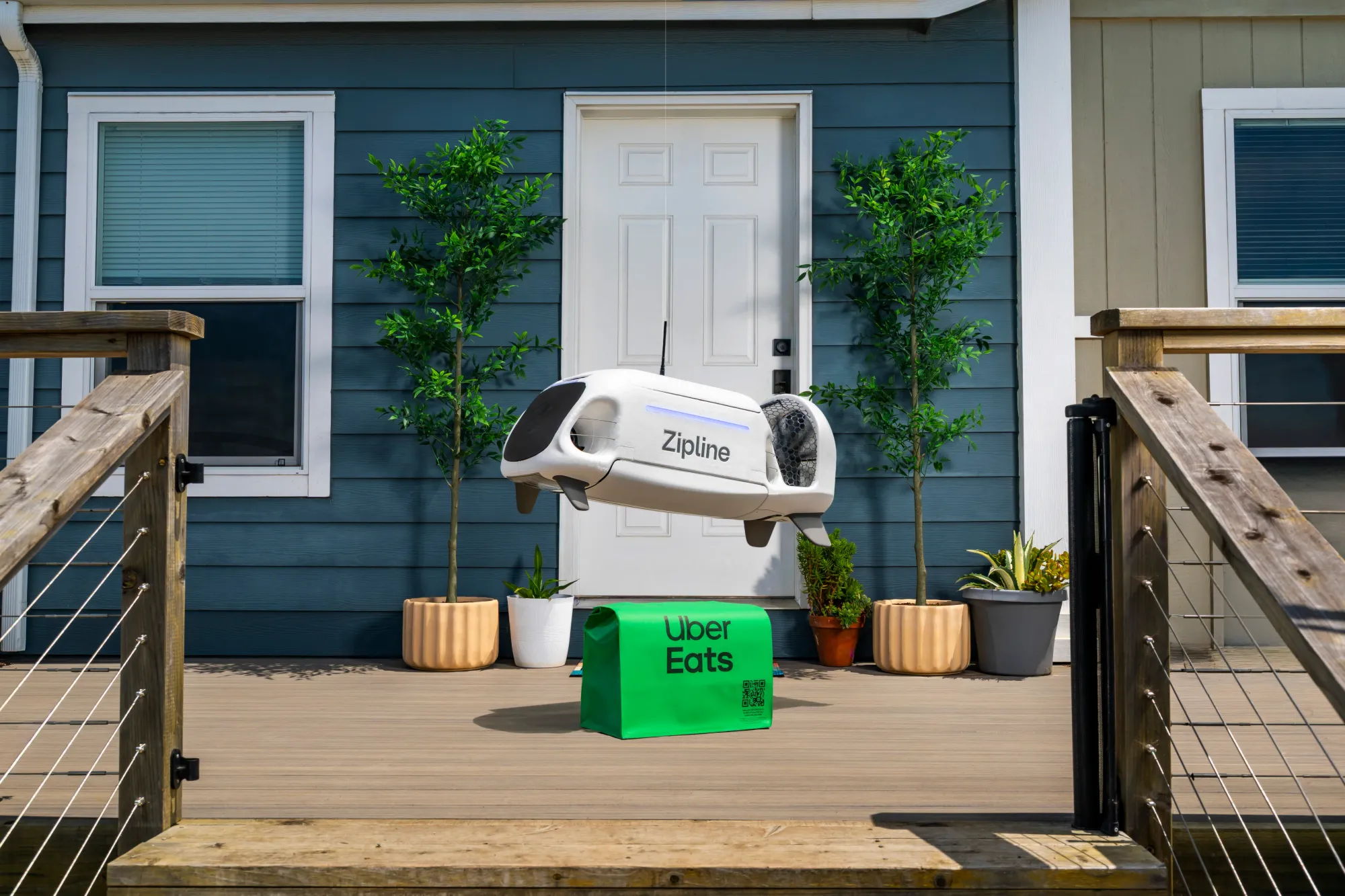
Uber Technologies and Zipline are attempting to scale autonomous logistics by integrating drone delivery directly into the Uber Eats ecosystem. This strategic partnership, which includes a capital investment from Uber into Zipline, aims to reach a massive operational milestone of one million drone deliveries per day by the end of 2029. The companies plan to begin initial deployments later this year, targeting rapid expansion across dozens of U.S. cities.
Uber and Zipline Scaling Autonomous Logistics
The partnership focuses on merging Uber’s massive consumer merchant network with Zipline’s established autonomous flight infrastructure. Uber is positioning this move as part of a broader strategy to build a hybrid delivery network that integrates human couriers, sidewalk robots, and drones to optimize transportation modes. Zipline, which currently operates across four continents and has completed over 135 million autonomous miles, intends to leverage its existing logistics expertise to provide 5-to-10-minute delivery windows for Uber Eats customers. The companies are targeting a significant increase in delivery volume, aiming for the aforementioned one million daily deliveries within the next five years.
Zipline Infrastructure and U.S. Expansion
Zipline is bringing a technology stack that has already facilitated over 2.7 million deliveries of more than 20 million items globally. The company currently serves more than 5,000 hospitals and reports making a delivery every 20 seconds within its existing markets. By integrating with Uber Eats, Zipline aims to transition from specialized medical logistics into a broader consumer market, delivering "anything people need" in minutes. The rollout will first occur in existing Zipline markets before expanding into dozens of U.S. cities. This expansion is intended to provide small businesses and millions of consumers with a faster, more precise, and potentially more sustainable alternative to traditional ground-based delivery methods.
Key Takeaways
- Uber will make a strategic investment in Zipline to accelerate drone delivery scaling.
- The partnership targets a volume of one million drone deliveries per day by the end of 2029.
- Initial Uber Eats drone deliveries are scheduled to begin later this year.
TechInsyte's Take
In our view, this partnership represents a calculated attempt to solve the "last-mile" efficiency problem by moving beyond human-centric logistics. By combining Uber's merchant access with Zipline's proven autonomous flight data, the companies are testing whether drone technology can transition from niche medical use to mass-market consumer utility. If they hit their 2029 targets, it would signal a fundamental shift in urban logistics, moving the industry toward a multi-modal autonomous infrastructure that prioritizes speed and reduced carbon emissions over traditional vehicle-based delivery.
Questions & Answers
How does this partnership impact Uber's delivery model?
Uber is integrating Zipline's autonomous drones into a hybrid network that includes couriers and sidewalk robots, aiming to match specific orders with the most efficient transportation mode available.
What are the specific operational goals for the Uber-Zipline alliance?
The primary objective is to scale autonomous operations to reach one million drone deliveries per day by the end of 2029, starting with initial deployments later this year.
What technical expertise does Zipline bring to this collaboration?
Zipline brings an established international logistics network that has flown over 135 million autonomous miles and currently manages a delivery frequency of one delivery every 20 seconds.
Which markets will see the first drone deployments?
Initial deployments will launch later this year within existing Zipline markets, with subsequent plans to expand into dozens of cities across the United States.
Source: Businesswire