Summary
TotalEnergies is preparing a major upgrade to its high-performance computing infrastructure with Pangea 5, a next-generation supercomputer being developed with Dell Technologies and NVIDIA.
The system is expected to multiply the company’s computing power by six, support AI and scientific workloads, and improve energy efficiency compared with previous systems. For the enterprise technology market, the announcement is another signal that advanced computing is no longer limited to cloud providers, research labs, or pure technology companies. Large industrial groups are now investing directly in supercomputing capacity to run complex simulations, accelerate AI research, and make faster operational decisions.
TotalEnergies Pushes Deeper Into High-Performance Computing
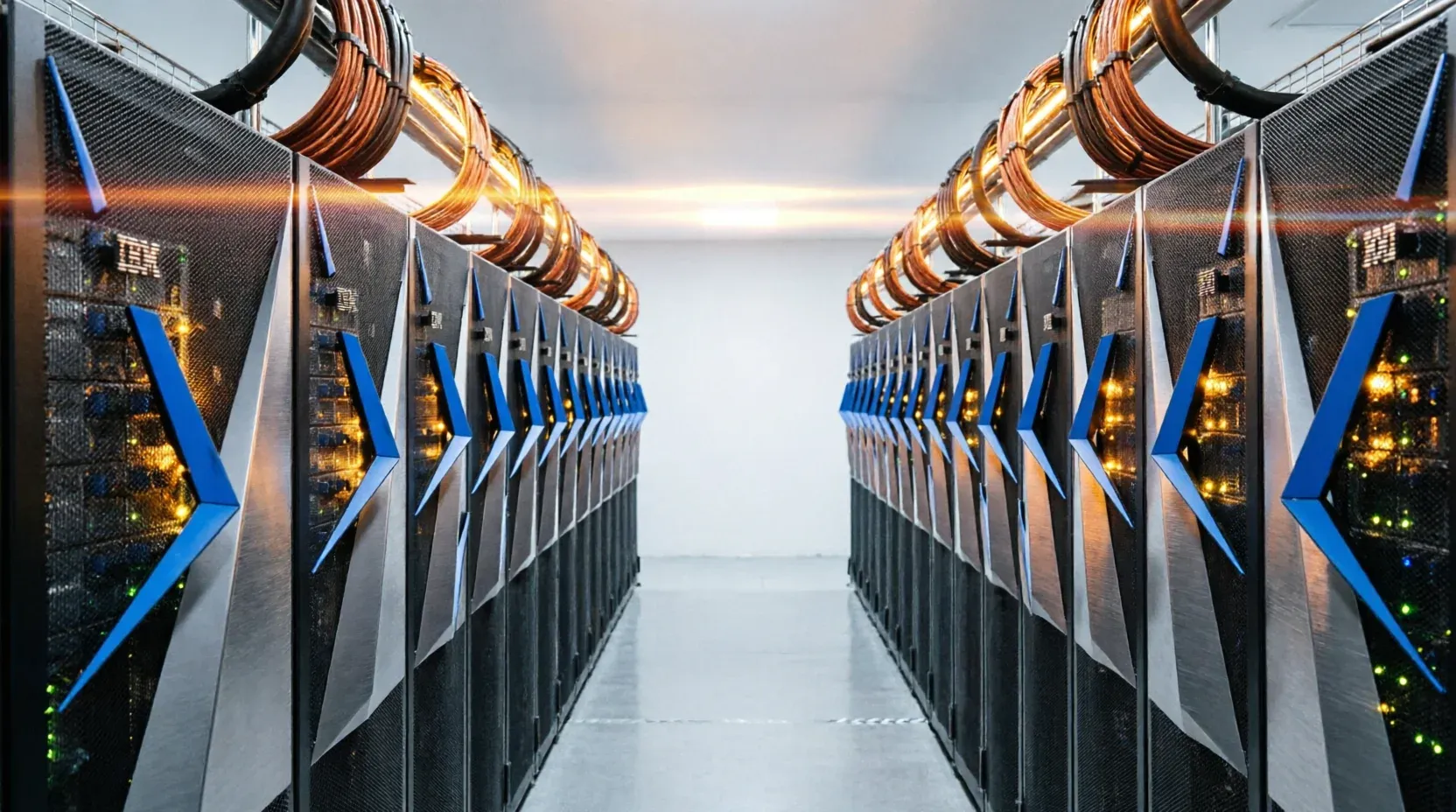
TotalEnergies has signed a contract with Dell Technologies and NVIDIA for the design and installation of Pangea 5, its next high-performance supercomputer. The system will be hosted at the company’s Jean Féger Scientific and Technical Center in Pau, southern France, and represents an investment of more than €100 million.
The company says Pangea 5 will increase its computing power by a factor of six. That matters because industrial energy operations depend heavily on complex modelling, data processing, and simulation. In sectors such as energy, manufacturing, climate modelling, life sciences, and advanced engineering, computing capacity has become a strategic asset rather than a back-office technology function.
For TotalEnergies, the new supercomputer will support advanced seismic engineering, improve subsurface imaging, and help accelerate exploration linked to low-cost and lower-emission hydrocarbon production. It will also support AI research and development, reduce computing times, and help model complex systems such as integrated power networks.
Why This Is a Tech Story, Not Just an Energy Story
At first glance, Pangea 5 looks like an energy-sector announcement. But the larger story is about enterprise AI infrastructure.
As companies move from AI pilots to operational AI systems, they need more than software subscriptions. They need compute capacity, specialized processors, high-speed networking, data pipelines, and governance around how these resources are used. Pangea 5 reflects that shift.
The involvement of Dell and NVIDIA also shows how the enterprise infrastructure stack is evolving. Dell brings large-scale systems integration and infrastructure deployment capability, while NVIDIA’s compute, networking, and software platforms are positioned for parallel workloads, scientific computing, and AI acceleration.
For industrial companies, this type of infrastructure can support simulations that are too complex or time-sensitive for traditional computing environments. It can also reduce dependency on external compute availability when workloads involve sensitive operational data or highly specialized scientific models.
Energy Efficiency Becomes Part of the Infrastructure Equation
One of the most important parts of the announcement is not only the increase in performance, but the focus on efficiency.
TotalEnergies says Pangea 5 will use specialized processors designed for massively parallel computations. At equal performance, the system is expected to reduce energy consumption by around 40%, while the cooling system’s consumption is expected to be cut by a factor of five. The company also plans to recover residual heat from the supercomputer and use it to help heat buildings at the CSTJF site, which hosts more than 2,500 people.
This is important because AI infrastructure is facing growing scrutiny over power demand, cooling requirements, and data center sustainability. Enterprises investing in AI and high-performance computing will increasingly need to show not only that their systems are powerful, but also that they are efficient and operationally sustainable.
Pangea 5 is expected to be first commissioned in 2027.
The Bigger Enterprise Signal
The Pangea 5 project shows how AI and high-performance computing are becoming core to industrial strategy.
For years, supercomputing was mainly associated with national laboratories, weather forecasting, academic research, and the world’s largest technology companies. That is changing. Enterprises in energy, automotive, healthcare, manufacturing, finance, and logistics are increasingly using advanced compute infrastructure to model risk, optimize operations, train AI systems, and compress decision cycles.
This does not mean every enterprise will build its own supercomputer. But it does suggest that compute strategy is becoming more important at the board level. Companies will need to decide which workloads belong in the public cloud, which can run on hybrid infrastructure, and which may require dedicated high-performance systems.
For vendors, the opportunity is also clear. AI infrastructure demand is expanding beyond hyperscalers. Industrial enterprises may become a stronger market for GPU-accelerated systems, high-speed networking, storage, cooling technology, and workload optimization software.
Why It Matters for B2B Technology Leaders
Pangea 5 highlights three lessons for enterprise technology leaders.
First, AI infrastructure is becoming industry-specific. A general-purpose AI stack may not be enough for companies dealing with seismic data, energy modelling, industrial simulations, or scientific computing.
Second, performance and efficiency must move together. Faster systems that dramatically increase power demand may create cost and sustainability problems. The next phase of AI infrastructure will be judged on output per watt, cooling design, and reuse of generated heat.
Third, digital capability is becoming a competitive differentiator in traditional industries. Companies that can simulate faster, analyze more accurately, and deploy AI across technical workflows may move faster than competitors that rely on slower computing environments.
TechInsyte Take
TotalEnergies’ Pangea 5 project is a clear example of how enterprise AI infrastructure is moving beyond the technology sector. The announcement is not only about a new supercomputer. It is about the future of industrial computing, where AI, simulation, and high-performance infrastructure become essential to how large companies operate.
For TechInsyte readers, the key takeaway is simple: the AI infrastructure race is no longer only between cloud giants. Industrial enterprises are now building serious compute capacity of their own.
FAQs
What is Pangea 5?
Pangea 5 is TotalEnergies’ next-generation high-performance supercomputer. It is being developed with Dell Technologies and NVIDIA and will be hosted at the company’s Jean Féger Scientific and Technical Center in Pau, France.
Why is TotalEnergies building a new supercomputer?
The company plans to use Pangea 5 to increase computing power, support advanced seismic engineering, improve subsurface imaging, accelerate AI research and development, and run complex industrial simulations.
How powerful will Pangea 5 be?
TotalEnergies says Pangea 5 will multiply the company’s computing power by six.
When will Pangea 5 be commissioned?
Pangea 5 is expected to be first commissioned in 2027.
Why does this matter for enterprise AI?
The project shows that advanced AI and high-performance computing infrastructure are becoming important for large industrial companies, not only cloud providers and technology firms.
Source link: Business Wire