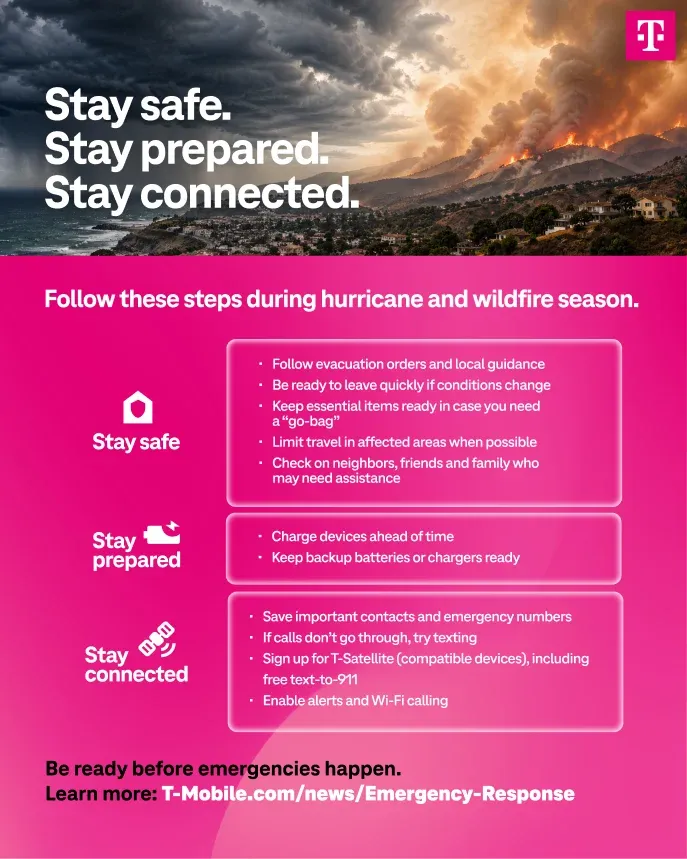
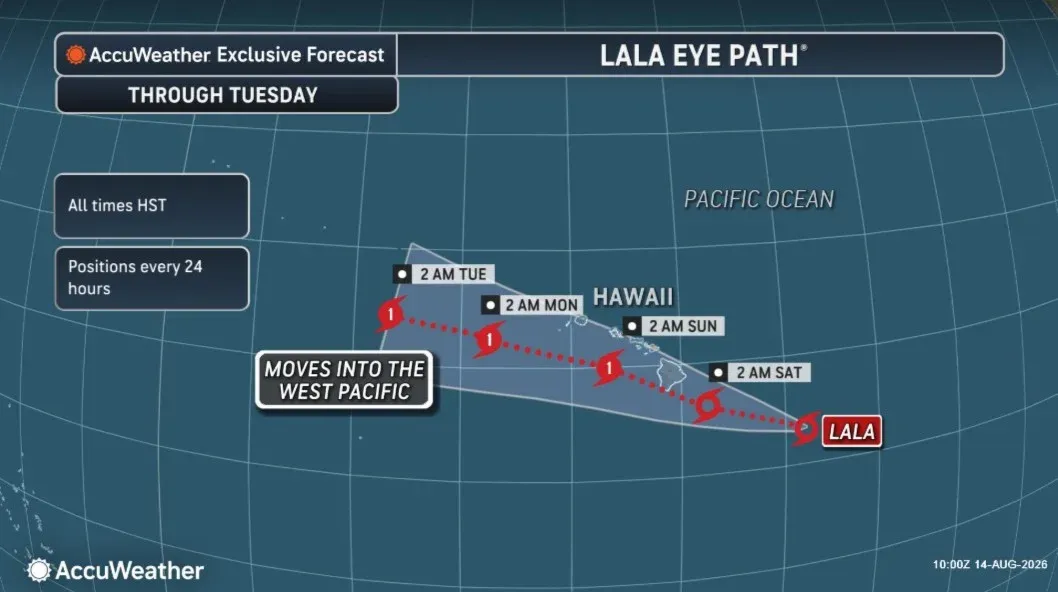
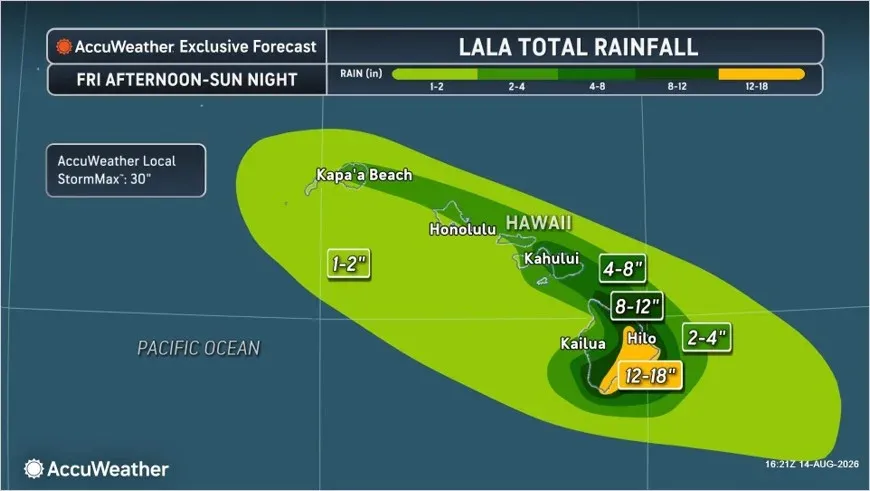
As Tropical Storm Lala approaches the Hawaiian Islands, T-Mobile is deploying a multi-layered connectivity strategy to mitigate the risks of heavy rainfall, flooding, and damaging winds. The company has activated T-Satellite, powered by Starlink, to provide essential text messaging and Text-to-911 capabilities for customers with compatible devices if terrestrial cellular networks fail. Beyond consumer satellite access, T-Mobile is mobilizing field engineering teams, securing backup power via fixed generators, and coordinating with federal and local agencies like FEMA and CISA. This proactive mobilization aims to ensure that both the general public and critical first responders maintain communication channels during the storm's impact, particularly on the Big Island where the potential for severe weather is highest.
T-Satellite and Network Resilience Deployments
T-Mobile is addressing potential terrestrial network failures by extending T-Satellite access to compatible devices across the Hawaiian Islands. This satellite-based service is designed to facilitate basic text messaging and Text-to-911 functionality, providing a critical communication fallback if traditional cellular coverage is disrupted by the storm. Additionally, T-Satellite will broadcast Wireless Emergency Alerts to compatible devices in the affected areas. To maintain the integrity of the existing terrestrial infrastructure, the company is utilizing Self-Optimizing Network (SON) technology, which automatically adjusts network performance as environmental conditions shift.
On the operational front, T-Mobile has mobilized field engineering teams and secured additional technicians and equipment across the islands to accelerate post-storm restoration. The company is also implementing energy-saving technologies to manage power consumption and preserve backup energy at critical network sites. To ensure continuity during power outages, fixed generators have been inspected, backup power is prepared at essential facilities, and refueling plans are in place. Furthermore, T-Mobile is positioning community support resources statewide, including the deployment of hundreds of additional power banks to the Big Island to assist with device charging and connectivity needs during the weather event.
T-Priority and Emergency Agency Coordination
To support public safety, T-Mobile is leveraging T-Priority to provide eligible first responders with priority network access, preemption, and advanced 5G capabilities. This service is intended to keep data-intensive tools—such as mapping software, drones, and cameras—operational even when networks are under significant stress. This ensures that law enforcement, firefighters, and EMS personnel can coordinate responses effectively during the storm.
Simultaneously, T-Mobile is integrating its operations into the broader emergency response ecosystem. The company is coordinating directly with the Hawaiʻi Emergency Management Agency (HIEMA), Maui Emergency Management Agency (MEMA), Hawaiʻi County Civil Defense, and the City and County of Honolulu. These efforts extend to regional coordination with the Federal Emergency Management Agency (FEMA) and the Cybersecurity and Infrastructure Security Agency (CISA). By proactively reaching out to public safety agencies and government organizations, T-Mobile aims to identify specific connectivity requirements, align restoration priorities with critical infrastructure needs, and mitigate potential roadblocks to recovery efforts across the islands.
Key Takeaways
- T-Mobile has activated T-Satellite with Starlink to enable text messaging and Text-to-911 for compatible devices if terrestrial coverage is lost.
- The company is deploying T-Priority to provide first responders with network preemption and 5G capabilities for tools like drones and mapping software.
- Field teams have secured additional equipment, generators, and hundreds of power banks, specifically targeting the Big Island for enhanced support.
TechInsyte's Take
In our view, T-Mobile’s response to Tropical Storm Lala demonstrates a sophisticated shift from traditional disaster recovery to a proactive, multi-modal connectivity model. By integrating Starlink-powered satellite texting with terrestrial 5G and T-Priority preemption, T-Mobile is addressing the specific failure points of cellular infrastructure during extreme weather. This approach signals that for enterprise and public safety leaders, "resilience" is no longer just about backup generators; it is about ensuring data-intensive workflows—like drone telemetry and real-time mapping—can persist through network congestion. The coordination with CISA and FEMA further suggests that carrier-level disaster preparedness is becoming increasingly intertwined with national security and critical infrastructure protocols. For decision-makers, this highlights the growing importance of selecting service providers who offer integrated satellite-to-terrestrial failover capabilities as a standard component of their continuity planning.
Questions & Answers
How does T-Satellite specifically assist users when terrestrial networks fail?
T-Satellite, utilizing Starlink technology, provides a fallback for customers with compatible devices, allowing them to send basic text messages and utilize Text-to-911 services. It also serves as a channel for broadcasting Wireless Emergency Alerts to ensure users receive critical safety information even without standard cellular service.
What role does T-Priority play in maintaining public safety operations?
T-Priority provides eligible first responders with priority network access and preemption. This ensures that critical, data-heavy tools used by law enforcement and EMS—such as drones, cameras, and mapping software—remain functional and connected even when the network is under heavy load or experiencing stress due to the storm.
How is T-Mobile managing power contingencies at its network sites?
T-Mobile is using a combination of checked fixed generators, prepared backup power at critical facilities, and established refueling plans. Additionally, the company employs energy-saving technologies to manage power consumption and preserve existing backup energy during potential outages.
Which agencies is T-Mobile coordinating with to align restoration priorities?
T-Mobile is coordinating with local agencies including HIEMA, MEMA, Hawaiʻi County Civil Defense, and the City and County of Honolulu, as well as federal entities including FEMA and CISA to identify connectivity needs and support critical infrastructure.
Source: Businesswire