
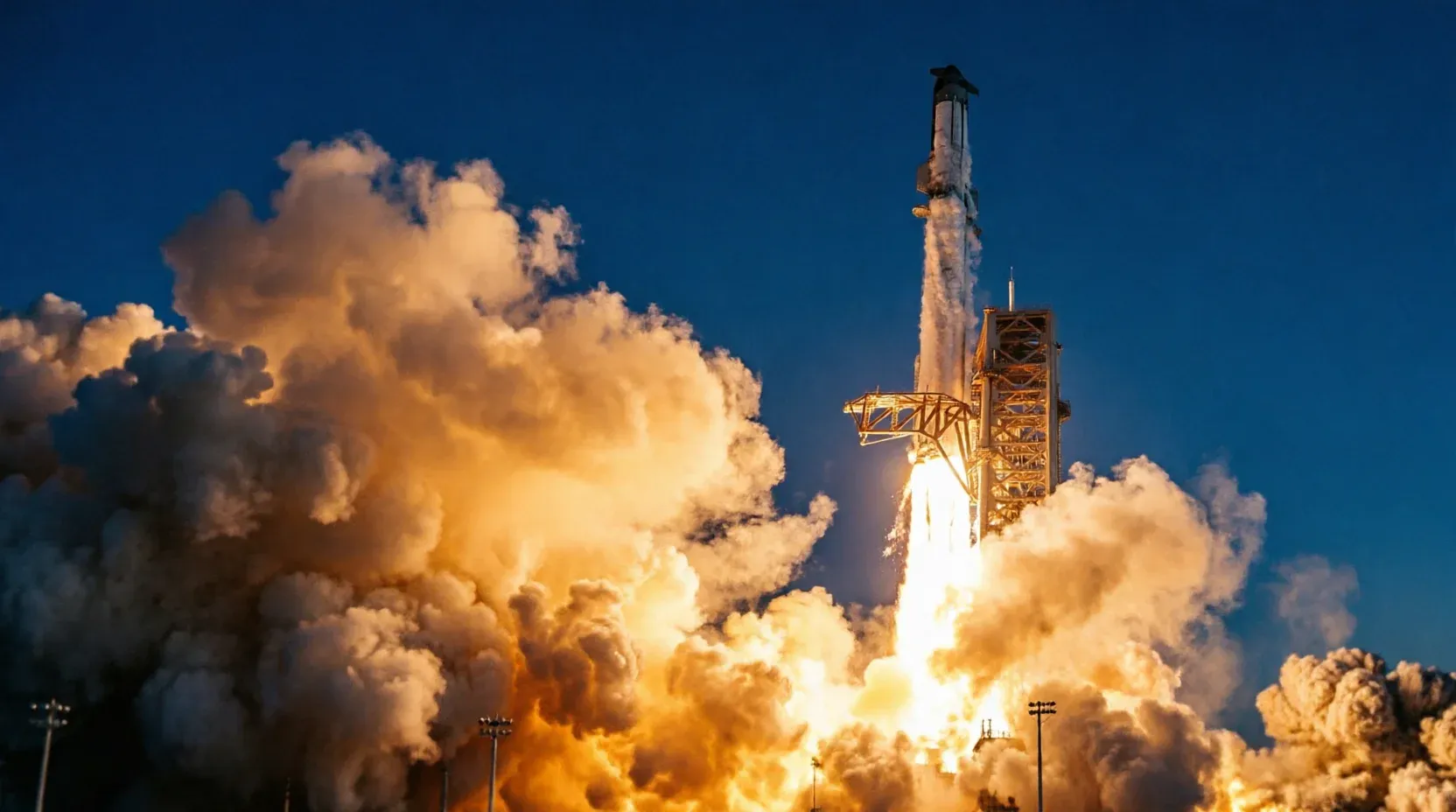
SpaceX is preparing for its 14th Starship flight test, aiming to achieve a critical milestone by attempting to catch the rocket's upper stage on land. CEO Elon Musk announced during the company's first earnings call that this mission could occur as early as the end of this month, pending regulatory approval. This flight represents a significant technical leap, as the company seeks to transition from ocean-based recoveries to land-based captures using mechanical tower arms. Success in this endeavor is foundational to SpaceX's long-term strategy for orbital infrastructure and satellite deployment.
Starship 14th Flight Test Objectives
The upcoming 14th Starship test flight focuses on two primary technical objectives: the land recovery of the upper stage and the deployment of upgraded satellite hardware. SpaceX intends to attempt a "ship catch" using giant mechanical arms attached to the launch tower in Texas. While the company has successfully used these arms to recover the Super Heavy booster three times—most recently in March 2025—catching the upper stage "ship" on land remains a new frontier. This maneuver is a prerequisite for Musk’s vision of a fully reusable orbital launch system. Currently, the company is still in the process of recovering the rocket stage from the 13th test via the ocean for inspection. The timing of this next mission remains contingent on receiving necessary regulatory approvals to perform the land-based catch.
V3 Starlink Deployment and Capacity Scaling
Beyond recovery mechanics, the 14th flight serves as a critical delivery platform for the first batch of V3 Starlink satellites. These upgraded satellites are engineered to provide a massive leap in performance, with Musk stating they are expected to deliver 10 times the broadband capacity and data density compared to current generations. SpaceX’s long-term operational model involves launching dozens of Starship missions to support the Starlink network, with the goal of deploying 60 V3 satellites per launch. This scaling is essential as Starlink revenue continues to outpace other SpaceX business units. As the company shifts more launch capacity toward its own satellite constellations, it is contributing to a tightening of U.S. launch availability for external customers. This increased launch frequency is intended to support the rapidly expanding global demand for high-density broadband connectivity.
Key Takeaways
- SpaceX aims to attempt catching the Starship upper stage with tower arms on land during its 14th flight.
- The mission will deploy the first V3 Starlink satellites, which offer 10 times the broadband capacity of previous generations.
- Elon Musk projects that Starship launch frequency could reach at least one flight per day within approximately one year.
TechInsyte's Take
In our view, the shift toward land-based recovery of the Starship upper stage is the most significant signal of SpaceX's transition from experimental testing to industrial-scale operations. By attempting to catch the "ship" with tower arms, SpaceX is moving toward a rapid-turnaround model that is essential for the projected goal of daily launches. Furthermore, the deployment of V3 Starlink satellites highlights a strategic pivot where launch capability is increasingly being optimized for internal data infrastructure rather than just external payload delivery. This vertical integration suggests that SpaceX is positioning itself as a primary utility provider for global high-density data, fundamentally altering the economics of orbital access.
Questions & Answers
How does the V3 Starlink deployment impact global data infrastructure?
The V3 satellites are expected to provide 10 times the broadband capacity and data density of current generations. This massive increase in capacity, delivered via Starship's ability to carry 60 satellites per launch, signals a significant scaling of global high-density broadband availability.
What is the strategic importance of the land-based "ship catch"?
Catching the upper stage on land using mechanical arms is a critical step toward creating the world's first fully reusable orbital launch system. This capability is necessary to achieve the rapid launch frequencies Musk envisions, which could reach one or more flights per day within a year.
What role does regulatory approval play in SpaceX's immediate launch timeline?
The exact timing of the 14th Starship flight and the decision to attempt a land-based recovery of the upper stage are both strictly dependent on receiving regulatory approval. Without this clearance, the planned transition from ocean recoveries to land catches cannot proceed.
How is SpaceX's internal satellite growth affecting the broader launch market?
As Starlink revenue grows and SpaceX prioritizes its own satellite deployments, the company's internal launch requirements are increasing. This shift is contributing to a tightening of U.S. launch scarcity, as more capacity is dedicated to the Starlink network rather than external customers.
Source: REUTERS