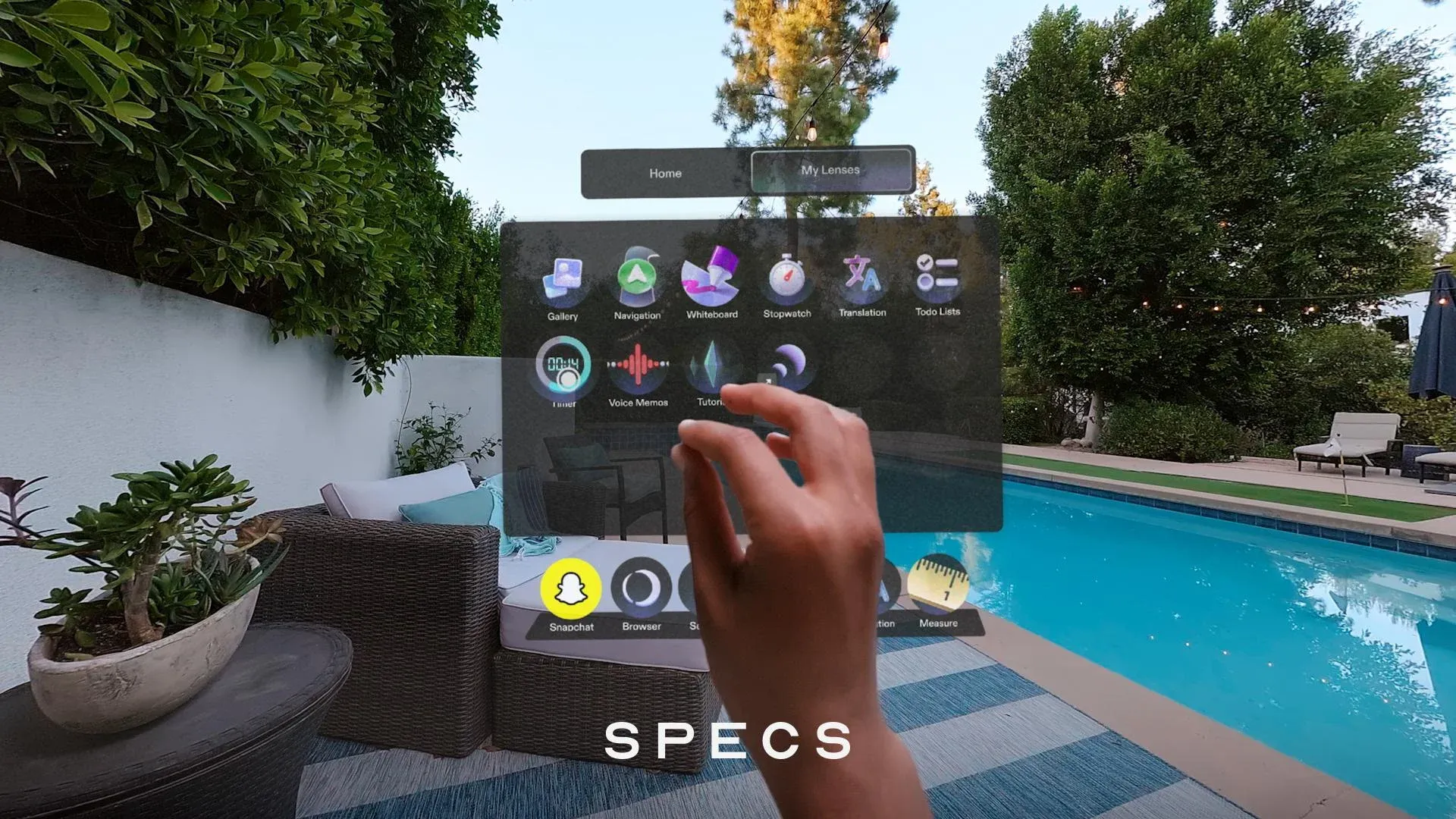
Snap Inc. is attempting to pivot from a social media platform to a primary computing hardware provider by integrating anticipatory artificial intelligence and enterprise-grade connectivity into its SPECS augmented reality (AR) glasses. The company is positioning its new SPECS Intelligence service as a cross-platform layer that operates across iPhone, Mac, and SPECS hardware to preemptively surface information based on user routines and goals. This strategic move, accompanied by new enterprise partnerships with firms like NVIDIA and AWS, signals an intent to move AR beyond consumer entertainment and into professional workflows. By launching a dedicated cellular charging case and establishing retail presence through Verizon, Snap is building a hardware ecosystem designed to function independently of traditional tethered computing environments.
SPECS Intelligence and the Anticipatory AI Layer
The core of Snap’s new software strategy is SPECS Intelligence, an AI-native service designed to move beyond reactive, prompt-based interactions. Instead of waiting for specific user commands, the service aims to build a contextual understanding of a user's priorities, relationships, and routines by connecting to selected apps and tools. On SPECS AR glasses, this intelligence is intended to project relevant digital information directly into the user's field of view, extending personal context into the physical environment. Snap has already released an iOS preview of the SPECS Intelligence service for users aged 18 and older in the U.S., while an invitation-only waitlist has been opened for a fuller experience on Mac.
This software layer is supported by the SPECS OS, a proprietary, context-aware operating system that prioritizes natural interactions via voice and hand gestures. To facilitate high-bandwidth utility, Snap is introducing a SPECS Charging Case with Cellular, which provides four additional charges and enables connectivity through wireless carriers when Wi-Fi is unavailable. In the United States, Snap is partnering with Verizon to offer custom data plans, with connected wearable plans starting at $10 per month for Verizon customers and $20 per month for non-Verizon users. The SPECS Connected Case bundle is priced at $2,395. This hardware-software integration suggests that Snap views continuous, un-tethered connectivity as a requirement for the utility of its AR ecosystem, particularly as users move between personal and professional settings.
Enterprise Integration and Hardware Capabilities
Snap is aggressively targeting the industrial and professional sectors by forming partnerships with Salesforce, Amazon Web Services (AWS), NVIDIA, Trifork, and Hololight. These collaborations are intended to bring SPECS into workplace environments, specifically targeting retail floors, factories, and field operations. The company is positioning the glasses to provide hands-free access to information, guidance, and collaboration, while simultaneously developing the management and security frameworks necessary for large-scale enterprise deployment. This move suggests that Snap sees a significant market in "spatial computing" where digital overlays assist in physical labor or complex technical tasks.
Beyond the enterprise, the hardware offers several high-fidelity consumer experiences. The SPECS browser can stream content from services like YouTube and HBO Max onto a virtual display that the company describes as feeling like a 115-inch cinema screen positioned 10 feet away. For productivity, the glasses can connect wirelessly to computers, effectively expanding a user's workstation. Features like "Whiteboard" allow for digital brainstorming and diagramming, while support for Bluetooth peripherals, such as keyboards, enables on-the-go document editing. To address privacy concerns inherent in wearable cameras, Snap has implemented a design where an external LED in the center of the frames flashes or lights up during any photo, video, or audio recording to alert bystanders.
Key Takeaways
- Snap is launching SPECS Intelligence, an anticipatory AI service that works across iPhone, Mac, and SPECS AR glasses to surface information based on user routines.
- The company has established enterprise partnerships with NVIDIA, AWS, and Salesforce to deploy SPECS in retail, factory, and field operation environments.
- SPECS AR glasses are available for pre-order at $2,195, with a specialized Cellular Charging Case bundle priced at $2,395.
TechInsyte's Take
In our view, Snap is making a high-stakes bet that the future of computing is not a screen in a pocket, but a layer over reality. By moving into the "anticipatory AI" space with SPECS Intelligence, Snap is attempting to solve the primary friction point of current AR: the need for constant, manual input. If the service can successfully bridge the gap between digital intent and physical context, it could redefine the user interface for the next decade.
However, the success of this ecosystem hinges on two critical factors: enterprise adoption and hardware autonomy. The partnerships with NVIDIA and AWS are essential, as they provide the necessary credibility and infrastructure to move SPECS from a consumer novelty to a legitimate tool for industrial field operations. Furthermore, the introduction of a cellular-enabled charging case suggests that Snap recognizes that "tethered" AR is a non-starter for professional utility. While the $2,195 entry price is significant, the strategic focus on un-tethered, AI-driven, and enterprise-ready hardware indicates that Snap is no longer just a social media company, but a serious contender in the spatial computing market.
Questions & Answers
How does SPECS Intelligence differ from standard AI assistants?
Unlike traditional assistants that require specific prompts, SPECS Intelligence is designed to be anticipatory. It builds a model of a user's goals, routines, and relationships through connected apps to surface relevant information and actions at the moment they are needed, rather than waiting for a command.
What specific enterprise use cases is Snap targeting with its new partnerships?
Through partnerships with companies like Salesforce and NVIDIA, Snap is targeting hands-free information access and collaboration within retail floors, factories, and field operations, while building the security capabilities required for enterprise-scale deployment.
How does Snap address the privacy implications of wearable AR glasses?
Snap has built privacy into the hardware by ensuring SPECS do not use facial recognition to identify people, nor do they continuously record the world to understand it. Additionally, a prominent external LED in the center of the frames flashes or lights up whenever a user records audio, video, or photos to notify others.
What is the pricing structure for the SPECS hardware and cellular connectivity?
The SPECS AR glasses are priced at $2,195 (with a $200 refundable deposit). A SPECS Charging Case with Cellular is available as a bundle for $2,395. In the U.S., Verizon customers can access connected wearable data plans starting at $10/month, while non-Verizon customers will pay from $20/month.
Source: Businesswire