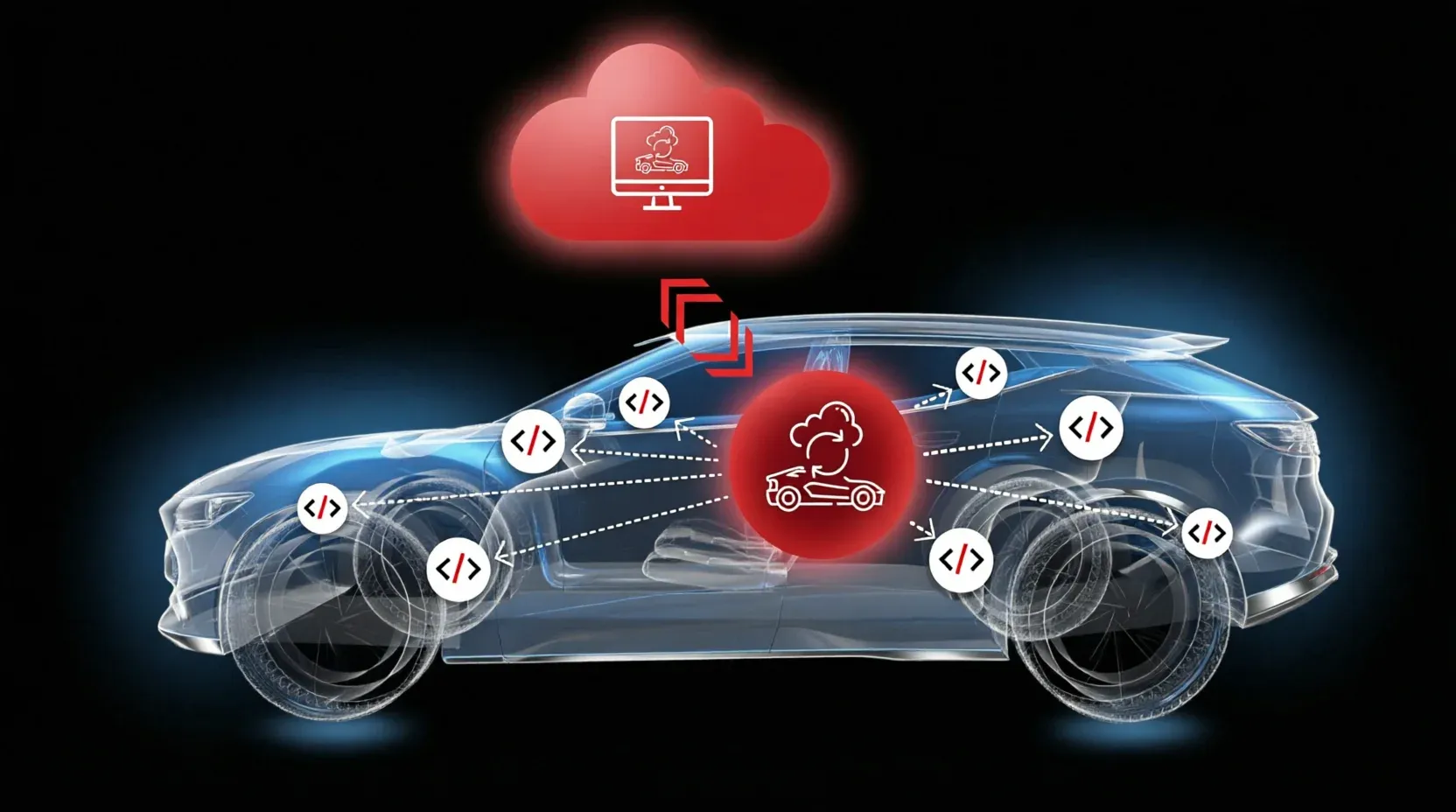
The automotive industry's shift toward software-defined vehicles (SDVs) is forcing a fundamental reassessment of how mission-critical code is written and validated. Red Hat and Ferrous Systems GmbH have announced a strategic collaboration to integrate Ferrocene—a safety-qualified Rust toolchain—into the Red Hat In-Vehicle Operating System. This move aims to provide automakers and Tier 1 suppliers with a memory-safe alternative to legacy codebases while meeting the rigorous functional safety requirements of modern electronic control units (ECUs). By bridging open-source language innovation with enterprise-grade automotive standards, the partnership seeks to lower the high barrier of entry for deploying Rust in safety-critical environments.
Integrating Ferrocene into Red Hat In-Vehicle OS
The collaboration addresses a specific technical tension in automotive engineering: the need for the high-performance, memory-safe benefits of the Rust programming language versus the strict necessity for ISO 26262 functional safety qualification. While Rust is gaining traction for its ability to improve software robustness and developer productivity, deploying it within safety-critical ECUs requires intensive toolchain verification and end-to-end traceability. Red Hat and Ferrous Systems are positioning this integration as a way to mitigate these complexities for OEMs and suppliers.
The joint solution utilizes Ferrocene, which is a quality-managed, TÜV SÜD-qualified toolchain. Ferrocene provides safety qualification under ISO 26262 up to ASIL D, alongside a certified subset of the Rust core library for ISO 26262 ASIL B workloads. By pre-aligning this toolchain with the Red Hat In-Vehicle Operating System, the companies intend to reduce the custom validation efforts and integration overhead that individual automotive manufacturers would otherwise face. This approach allows for "Day 1" application development, where engineers can begin writing and testing Rust-based workloads on the operating system immediately, even as the broader platform moves toward full certification.
Enabling Mixed-Language Automotive Architectures
A critical component of this development is the support for mixed C/C++ and Rust environments. Recognizing that automotive software stacks cannot be rewritten overnight, the collaboration enables a gradual migration path. This allows safety-critical Rust components to interoperate with existing legacy C and C++ architectures, providing a bridge rather than a forced, total replacement of established codebases. This interoperability is essential for engineering teams managing the transition to software-defined architectures without disrupting existing development cycles.
The technical availability of the solution is already partially realized; Ferrocene 26.05 currently supports the Red Hat In-Vehicle Operating System via a qualified aarch64-rhivos2-linux-gnu target. This allows software engineering teams to initiate development and testing of applications in the current cycle. However, the companies have set a long-term roadmap for the full integration, planning for full general availability of the joint solution in the second half of 2027. This timeline is intended to align with the release of safety-certified versions of the Red Hat In-Vehicle Operating System. Furthermore, the partnership maintains an "upstream-first" commitment, where Ferrocene contributes bug fixes and enhancements back to the community Rust project to ensure the broader ecosystem benefits from these automotive-specific innovations.
Key Takeaways
- Ferrocene provides a Rust toolchain qualified for ISO 26262 up to ASIL D and a certified core library subset for ASIL B workloads.
- The joint solution supports mixed Rust and C/C++ environments to facilitate the gradual migration of legacy automotive software stacks.
- Full general availability of the integrated solution is planned for the second half of 2027, coinciding with safety-certified Red Hat In-Vehicle Operating System releases.
TechInsyte's Take
In our view, this collaboration is a calculated move to capture the high-stakes transition toward software-defined vehicles by solving the "safety gap" that has long hindered Rust's adoption in the automotive sector. By pairing Red Hat’s enterprise operating system with Ferrous Systems’ specialized toolchain, the two companies are attempting to commoditize the complex qualification process that typically consumes massive engineering resources at the OEM level. This signals a broader trend where the value in automotive software is shifting from proprietary hardware-centric code to standardized, memory-safe, and highly verifiable software layers. If the 2027 rollout meets its safety-certification milestones, this partnership could establish a dominant blueprint for how open-source languages are hardened for regulated, mission-critical industrial applications.
Questions & Answers
How does this collaboration reduce the cost of functional safety certification for automakers?
The partnership reduces costs by pre-aligning Ferrocene’s qualified Rust tooling with the Red Hat In-Vehicle Operating System. This reduces the custom validation effort and integration overhead that individual OEMs would typically have to undertake to prove the safety of their specific software stacks.
Can engineers use Rust alongside existing C and C++ code in this environment?
Yes. The solution is designed to support mixed Rust and C/C++ architectures, allowing safety-critical Rust components to interoperate with existing automotive software stacks. This enables a gradual migration rather than requiring a complete rewrite of legacy code.
What is the current availability of the Ferrocene and Red Hat integration?
While full general availability is planned for the second half of 2027, developers can begin working immediately. Ferrocene 26.05 currently supports a qualified aarch64-rhivos2-linux-gnu target for the Red Hat In-Vehicle Operating System, allowing for early application development and testing.
What specific safety standards does the Ferrocene toolchain meet?
Ferrocene is qualified for safety-related development according to ISO 26262 (up to ASIL D), IEC 61508 (SIL 3), and IEC 62304 (Class C). It also supports customer certification efforts toward SIL 4 and DO-178C (DAL C).
Source: Red Hat