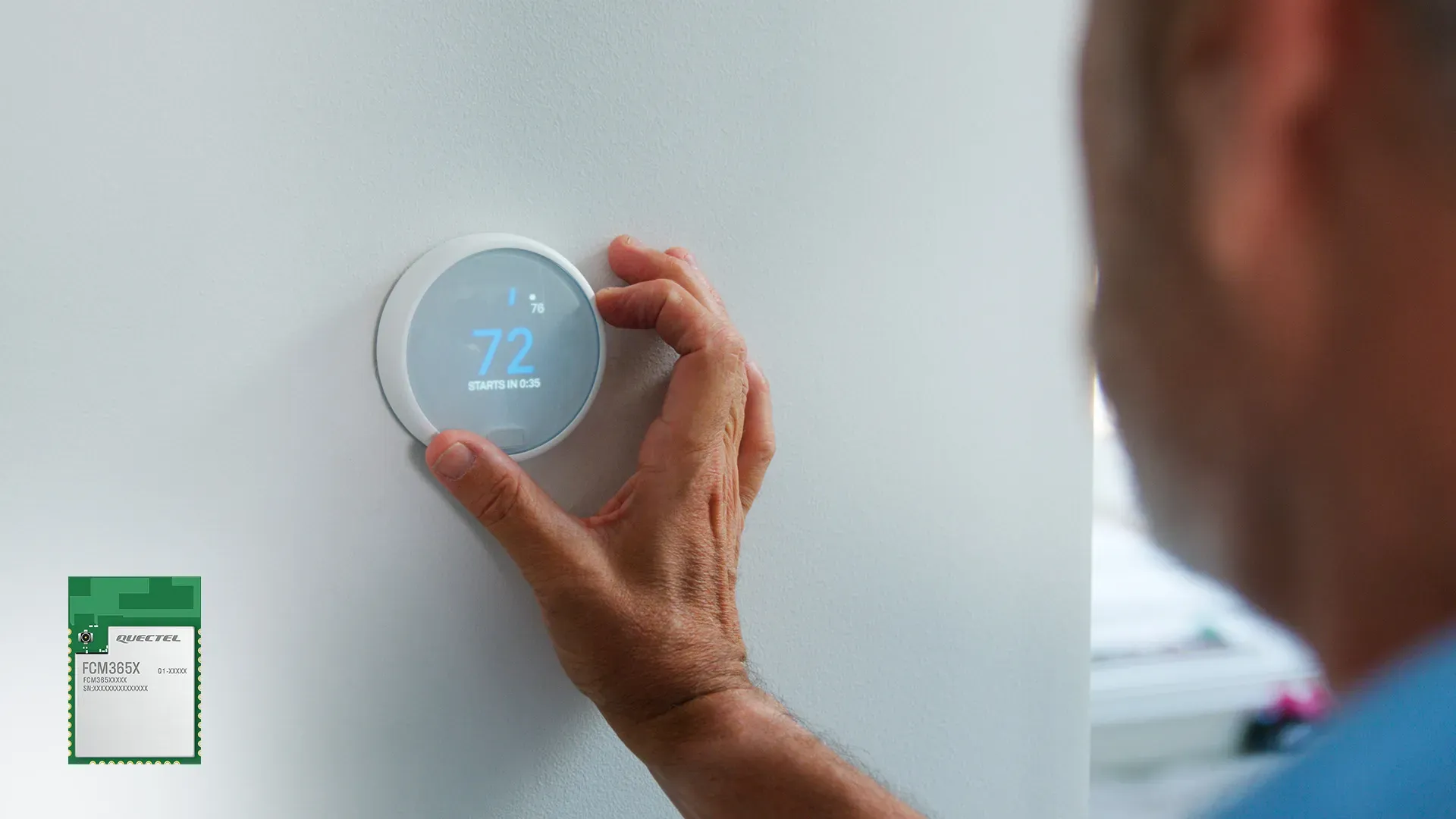
Quectel Wireless Solutions, a global end‑to‑end IoT provider, has unveiled the FCM365X, a compact dual‑band Wi‑Fi 6 and Bluetooth LE 5.4 module that is built around NXP’s RW612 wireless MCU. The module not only supports Wi‑Fi and Bluetooth but also integrates Zigbee and Thread, giving designers a single‑chip solution for the increasingly heterogeneous connectivity demands of modern smart‑home and industrial IoT ecosystems. By consolidating four wireless protocols into a 25.5 mm × 18.0 mm × 3.16 mm footprint, the FCM365X promises to reduce bill‑of‑materials, simplify board layout, and accelerate time‑to‑market for devices that must meet stringent power, security, and temperature requirements while remaining cost‑effective.
Quectel Announces FCM365X Multi‑Protocol Module
In its launch announcement, Quectel describes the FCM365X as a “dual‑band Wi‑Fi 6 and Bluetooth Low Energy (BLE) 5.4 module” that also supports Zigbee and Thread. The company emphasizes the module’s relevance for “smart home and industrial IoT ecosystems,” where interoperable standards are becoming essential. Lazaros Kapsias, EMEA Product Manager at Quectel, highlighted that the module’s “compact form factor” and “wide range of supported interfaces” are engineered to meet the needs of “compact, low‑power devices that offer secure, short‑range connectivity.” He added that the breadth of supported protocols—particularly Thread, which is gaining momentum as the backbone for Matter‑enabled devices, and Zigbee, still widely used in building‑automation—makes the FCM365X a versatile building block for future‑ready products.
Technical Specifications of the FCM365X
The heart of the FCM365X is NXP’s RW612 wireless MCU, which runs an Arm® Cortex‑M33 processor with TrustZone® technology at frequencies up to 260 MHz. Memory resources include 1.2 MB of SRAM and 8 MB of Flash, with an optional PSRAM expansion path for applications that demand larger buffers or more complex firmware. Connectivity is truly multi‑protocol:
- Wi‑Fi – Dual‑band 2.4 GHz and 5 GHz operation via a 1 × 1 antenna configuration, with both an RF coaxial connector and an optional PCB antenna.
- Bluetooth LE – Version 5.4, enabling higher data rates and improved range for peripheral devices.
- Zigbee & Thread – Mesh networking support that delivers low‑power, reliable communication across dense device deployments.
Standard peripheral interfaces are GPIO, SDIO, UART, USB, and JTAG. Through QuecOpen, developers can also access I²C, I²S, ADC, LCD, and PWM interfaces, expanding the module’s applicability to sensor hubs, displays, and audio‑enabled nodes. Security compliance covers WPA‑PSK, WPA2‑PSK, WPA3‑SAE, and AES‑128 encryption, aligning with industry best practices for data protection.
Physically, the module measures 25.5 mm × 18.0 mm × 3.16 mm, weighs 1.51 g, and is rated for operation from –40 °C to +85 °C. These dimensions and environmental tolerances make it suitable for both space‑constrained consumer gadgets and rugged industrial edge nodes.
Potential Enterprise Use Cases
Quectel positions the FCM365X for “power‑constrained use cases such as smart home and industrial IoT devices.” The module incorporates several low‑power consumption modes and keep‑alive mechanisms that help extend battery life in devices that must remain operational for months or years without frequent recharging. By unifying Wi‑Fi, Bluetooth, Zigbee, and Thread, manufacturers can dramatically simplify the bill‑of‑materials and reduce PCB real‑estate, a critical advantage when designing Matter‑compatible smart‑home products, building‑automation sensors, or rugged industrial edge nodes that require both high‑throughput Wi‑Fi for cloud back‑haul and mesh networking for local device‑to‑device communication.
Typical scenarios include:
- Smart‑home hubs and lighting controllers that need Wi‑Fi for OTA updates, Bluetooth for local provisioning, and Thread/Zigbee for mesh‑based lighting or sensor networks.
- Industrial monitoring stations where Wi‑Fi provides gateway connectivity, while Thread or Zigbee creates a resilient mesh for temperature, vibration, or gas sensors in harsh environments.
- Wearable or portable IoT devices that benefit from Bluetooth LE for smartphone pairing and Wi‑Fi for high‑speed data bursts, all while maintaining a tiny footprint and low power draw.
Key Takeaways
- The FCM365X combines dual‑band Wi‑Fi 6, Bluetooth LE 5.4, Zigbee and Thread in a single NXP‑based module.
- It is powered by an Arm Cortex‑M33 processor at up to 260 MHz, with 1.2 MB SRAM, 8 MB Flash and optional PSRAM.
- The module measures 25.5 mm × 18.0 mm × 3.16 mm, weighs 1.51 g, and operates from –40 °C to +85 °C.
TechInsyte's Take
Quectel’s FCM365X offers a tightly integrated connectivity solution that could reduce design complexity for manufacturers of secure, low‑power IoT devices. Buyers should verify the module’s certification status for their target markets and evaluate the optional PSRAM option against their memory requirements. Monitoring early adoption in Matter‑enabled smart‑home products may indicate broader enterprise uptake.
Source: Businesswire