Quantum Machines is attempting to bridge the gap between specialized quantum hardware and mainstream supercomputing by integrating NVIDIA’s CUDA-Q platform and NVQLink architecture. This development aims to transform quantum processing units (QPUs) from isolated research tools into integrated components of a unified computing system. By enabling end-to-end execution across live qubits and classical processors, the company is positioning its orchestration platform to handle the hybrid workloads essential for scalable, application-driven quantum deployments in enterprise environments.
CUDA-Q and NVQLink Integration
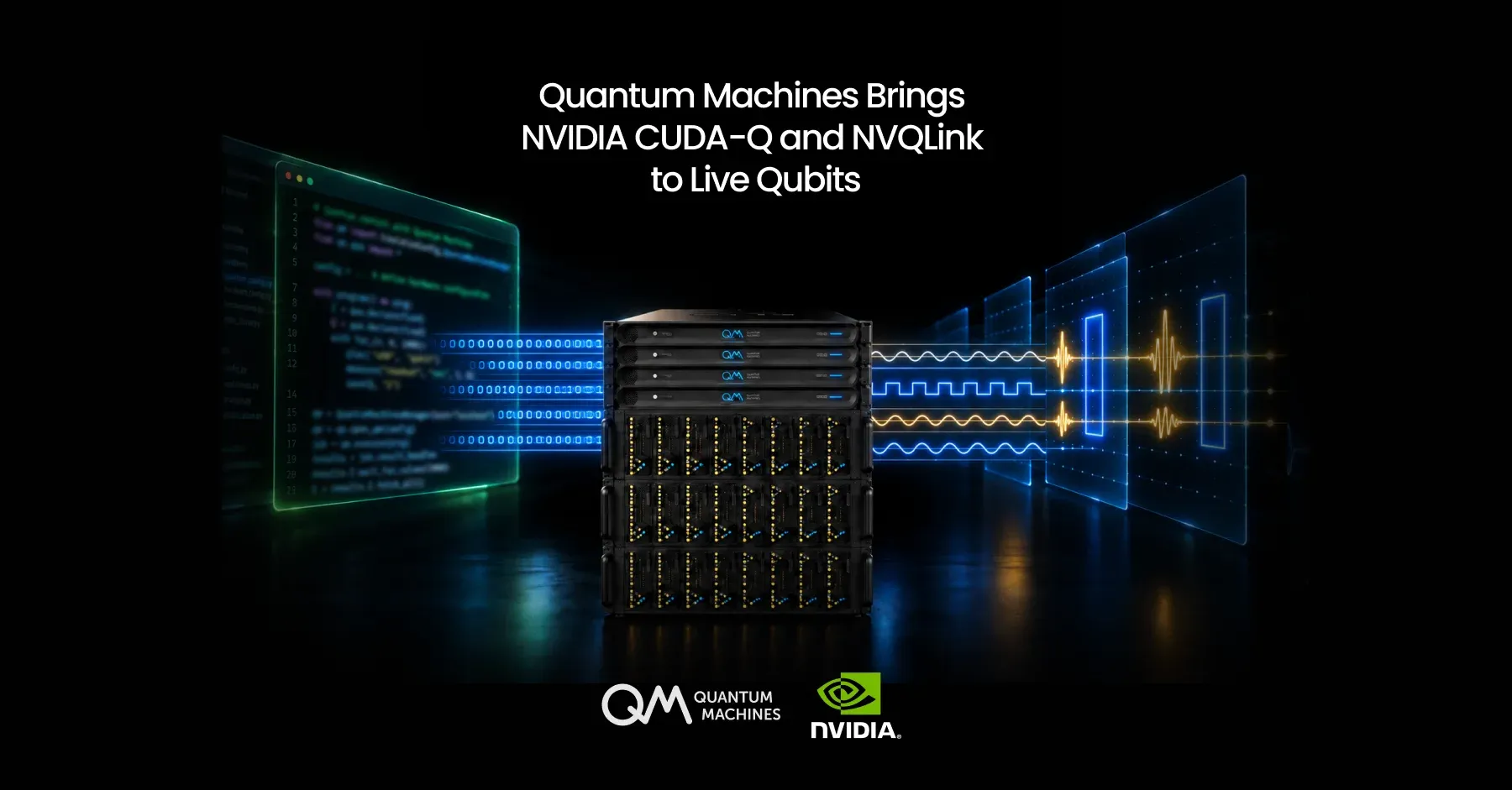
The company has successfully demonstrated the first end-to-end NVIDIA CUDA-Q program running across live qubits and a PPU classical processor using NVIDIA NVQLink. CUDA-Q serves as an open platform for quantum-GPU supercomputing, allowing developers to write instructions that both classical and quantum computers can execute. This integration allows software developers to write applications that share quantum and classical resources, utilizing the reliability of supercomputing within a quantum workflow. To facilitate this, NVIDIA NVQLink provides a microsecond-speed connection architecture between the quantum controller and GPUs.
In this demonstration, code written once with CUDA-Q was executed across Quantum Machines' control stack, spanning a quantum processor, GPUs, and CPUs as a single unified system. The architecture automatically routes specific tasks to the appropriate processor. The full exchange between the components completed in approximately one millionth of a second. This capability is intended to remove the requirement for hand-coding low-level control sequences, which has historically necessitated deep expertise in quantum hardware.
Accelerating Hybrid Quantum-Classical Workloads
Quantum Machines is integrating NVQLink within its Orchestration Platform to connect qubit-driving hardware directly to NVIDIA accelerated computing. This low-latency link to classical processors is designed to abstract the complex coordination typically required for quantum workloads. When a developer utilizes CUDA-Q, quantum operations occur on the QPU, while CPUs and GPUs are called in real time. The Quantum Machines control system then converts these operations into the precisely timed signals required to control and measure qubits.
A primary technical objective of this integration is speed. The company states that measurement data can reach classical processors, with decisions returning to the quantum control system in microseconds. This rapid feedback loop is intended to support future workloads, specifically quantum error correction, which requires real-time interaction. By moving QPUs closer to the operational model of GPUs—which transitioned from specialized research hardware to mainstream integrated components—Quantum Machines is signaling a shift toward making quantum resources accessible to standard programming languages like Python, C++, and QUA.
Key Takeaways
- Quantum Machines became the first control company to run an end-to-end NVIDIA CUDA-Q program across live qubits and a PPU classical processor using NVQLink.
- The integration enables a full data exchange between the quantum processor, GPUs, and CPUs to complete in approximately one millionth of a second.
- The platform supports hybrid algorithms using familiar programming languages, including Python, C++, and QUA, to reduce the need for specialist hardware expertise.
TechInsyte's Take
In our view, this integration represents a strategic attempt to move quantum computing out of the "specialized laboratory" phase and into the "integrated infrastructure" phase. By leveraging NVIDIA’s CUDA-Q and the high-speed NVQLink, Quantum Machines is targeting the most significant bottleneck in the industry: the massive complexity of low-level hardware orchestration. If the microsecond-speed feedback loop can reliably support quantum error correction, it provides a viable path toward the scalable, hybrid supercomputing models that enterprise users require. This isn't just a technical update; it is a move to standardize the quantum developer experience by aligning it with existing GPU-centric workflows.
Questions & Answers
How does the integration of CUDA-Q impact the quantum development lifecycle?
The integration allows developers to use familiar languages like Python and C++ to write applications that share quantum and classical resources. This removes the need for engineers to hand-code low-level control sequences, potentially reducing the specialized hardware expertise required to deploy quantum workloads.
What role does NVIDIA NVQLink play in this architecture?
NVQLink acts as a microsecond-speed connection architecture between the quantum controller and GPUs. It enables high-speed distribution of work between conventional computing components and the quantum processor, allowing the system to function as a unified supercomputing unit.
Why is microsecond-level latency critical for future quantum applications?
The ability for measurement data to reach classical processors and return decisions to the quantum control system in microseconds is essential for real-time interaction. This speed is specifically identified as a requirement for future workloads such as quantum error correction.
How does this development change the positioning of Quantum Processing Units (QPUs)?
The announcement suggests a shift where QPUs move from being isolated, expert-only research tools toward becoming integrated computing resources. Much like the evolution of GPUs, the goal is to allow QPUs to work alongside CPUs and GPUs as part of a single, unified system.
Source: EINPresswire