Ouster Brings Rev8 Digital Lidar Support to NVIDIA Jetson for Robotics and Edge AI
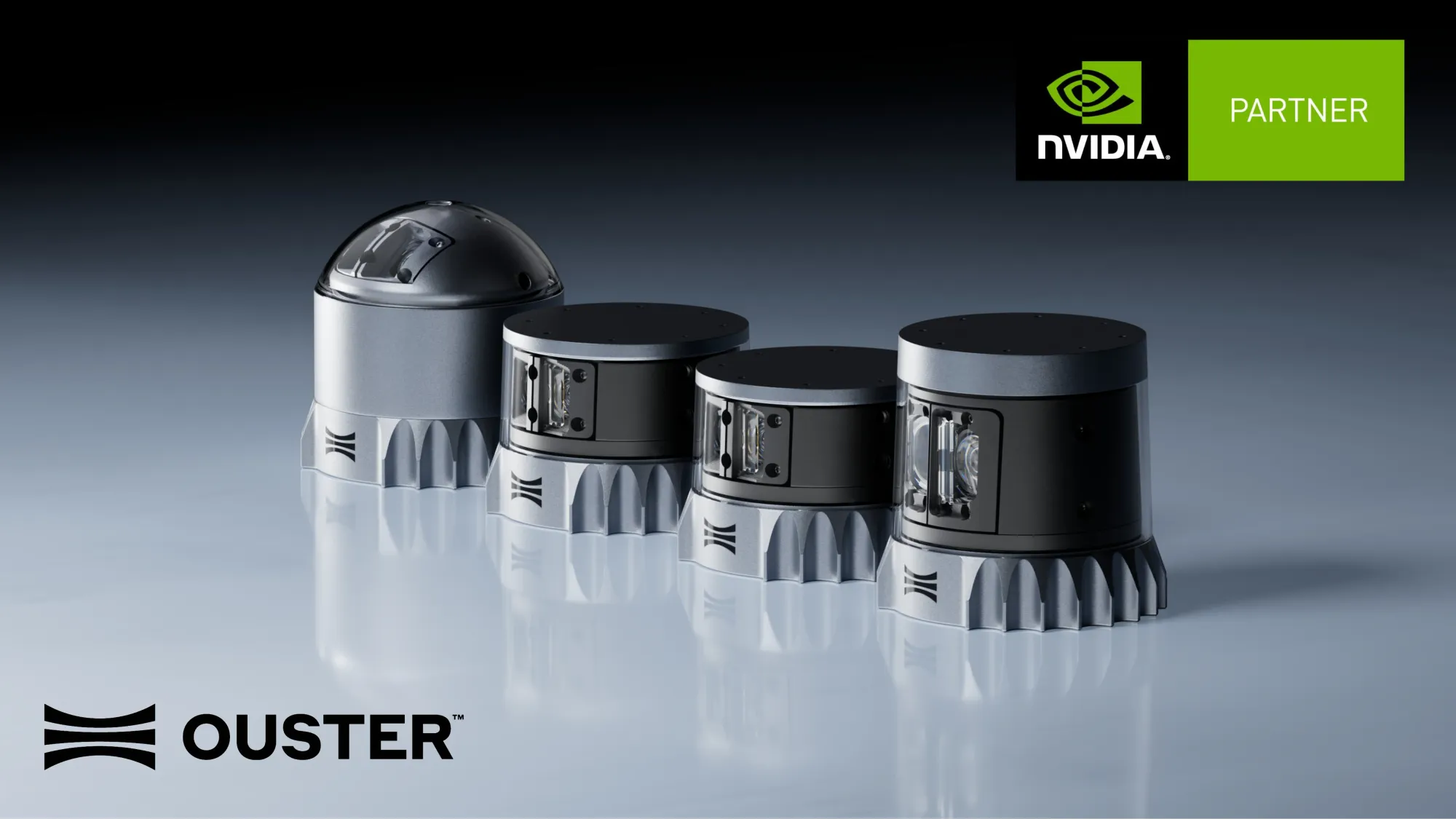
Ouster has announced support for its new Rev8 OS family of digital lidar sensors across the NVIDIA Jetson platform, expanding its role in robotics, edge AI, and Physical AI development.
The company said the integration brings Rev8’s digital lidar data into the NVIDIA robotics ecosystem through dedicated software support, including plugins for NVIDIA JetPack and Isaac ROS. The goal is to help developers use high-density 3D sensing data directly inside accelerated perception pipelines.
Why This Matters for Physical AI
Physical AI systems need to understand and act in the real world. That requires more than software models. Robots, autonomous machines, smart infrastructure, and industrial systems need reliable perception data from sensors that can operate in real environments.
Ouster is positioning Rev8 as a sensing layer for this next phase of robotics and edge AI. The Rev8 OS family is powered by the company’s next-generation L4 Ouster Silicon and, according to Ouster, delivers double the range and resolution of previous generations. The company also says Rev8 includes native color lidar sensors and is engineered for functional safety, reliability, and affordability at scale.
For robotics teams, the important part is not only the sensor hardware. It is the ability to move lidar data into development, simulation, and real-time edge processing workflows without creating heavy integration work.
Rev8 Gets Dedicated NVIDIA JetPack Support
Ouster said it is building and maintaining optimized plugins for its sensors across NVIDIA JetPack software, including Isaac ROS.
That means Rev8 point cloud data can be ingested into NVIDIA’s hardware-accelerated perception pipelines. For developers working on robotics and autonomous systems, this can reduce the friction between sensor deployment and perception software development.
This is important because lidar data is large, complex, and time-sensitive. Robotics systems often need to process 3D perception inputs quickly for navigation, obstacle detection, mapping, and decision-making. Dedicated JetPack support gives developers a cleaner path to use Ouster sensors with NVIDIA’s edge AI hardware and software stack.
Isaac Sim Support Helps Developers Test Before Deployment
Ouster is also adding native support for Rev8 sensors inside NVIDIA Isaac Sim, the open simulation framework used for robotics development.
With this support, developers can use physically accurate 3D lidar models to evaluate range, resolution, color, and intensity. They can also generate synthetic data to train machine learning models and validate perception pipelines before deploying systems in the physical world.
This matters for teams building robotics and industrial AI systems because field testing can be expensive, slow, and difficult to repeat. Simulation allows developers to test different operating conditions, sensor configurations, and perception workflows earlier in the development cycle.
Edge Processing for Jetson Orin and Jetson Thor
Ouster said its drivers are tuned for NVIDIA Jetson AGX Orin and Jetson Thor, supporting real-time, low-latency processing at the edge.
The company specifically highlighted use cases such as 3D SLAM, obstacle detection, and sensor fusion. These are core workloads for robotics and autonomous systems because machines need to map environments, detect objects, and combine data from multiple sensors quickly enough to act safely and accurately.
By integrating Rev8 with Jetson hardware, Ouster is trying to make its lidar sensors part of a broader production-ready robotics stack rather than a standalone sensing component.
Ouster’s Bigger Platform Strategy
Ouster said it is moving beyond basic hardware compatibility and wants developers to use 3D perception data with the full NVIDIA accelerated computing stack.
As an NVIDIA NPN partner, the company is positioning the Rev8 integration as part of a production ecosystem where sensors, drivers, simulation tools, edge compute, and perception software work together.
Ouster CEO Angus Pacala said the expanded collaboration with NVIDIA is intended to help the robotics community use high-fidelity 3D digital lidar data through NVIDIA’s accelerated computing and development tools. He said the companies are providing building blocks for Physical AI, enabling machines to sense, think, and act in the real world with more speed and precision.
Why B2B Technology Buyers Should Watch This
For robotics companies, industrial automation teams, smart infrastructure operators, and edge AI developers, sensor integration is becoming a major factor in product execution.
A lidar sensor may have strong hardware specifications, but its value depends on how easily teams can use its data inside real development pipelines. Ouster’s Rev8 support for NVIDIA Jetson is aimed at that gap.
The announcement also reflects a larger trend in Physical AI: hardware, simulation, AI compute, and perception software are becoming more tightly connected. Developers want sensor data that can move from simulation to edge deployment with fewer manual steps.
If Ouster’s Rev8 integrations perform as intended, robotics teams using NVIDIA Jetson could get a more direct route from lidar sensing to perception, mapping, and autonomous operation.
For Ouster, the launch strengthens its position in the robotics and edge AI ecosystem. For developers, it gives Rev8 a clearer role inside NVIDIA-based Physical AI workflows.
Key Source / Reference
Official source: Business Wire — “Ouster Brings Support for REV8 Digital Lidar to Robotics and Edge AI Ecosystem.”
Optional FAQ Section
What did Ouster announce?
Ouster announced the integration of its Rev8 OS family of digital lidar sensors across the NVIDIA Jetson platform.
What is Rev8?
Rev8 is Ouster’s new OS family of digital lidar sensors, powered by next-generation L4 Ouster Silicon.
Why is the NVIDIA Jetson integration important?
The integration helps robotics and edge AI developers use Rev8 lidar data inside NVIDIA’s accelerated perception, simulation, and edge processing workflows.
Which NVIDIA software tools does Rev8 support?
Ouster said it is developing dedicated plugins for NVIDIA JetPack software, including Isaac ROS. Rev8 also has native support in NVIDIA Isaac Sim.
What edge AI hardware is supported?
Ouster said its drivers are tuned for NVIDIA Jetson AGX Orin and Jetson Thor.
What use cases does the integration support?
The integration is designed to support 3D SLAM, obstacle detection, sensor fusion, robotics perception, and Physical AI development.