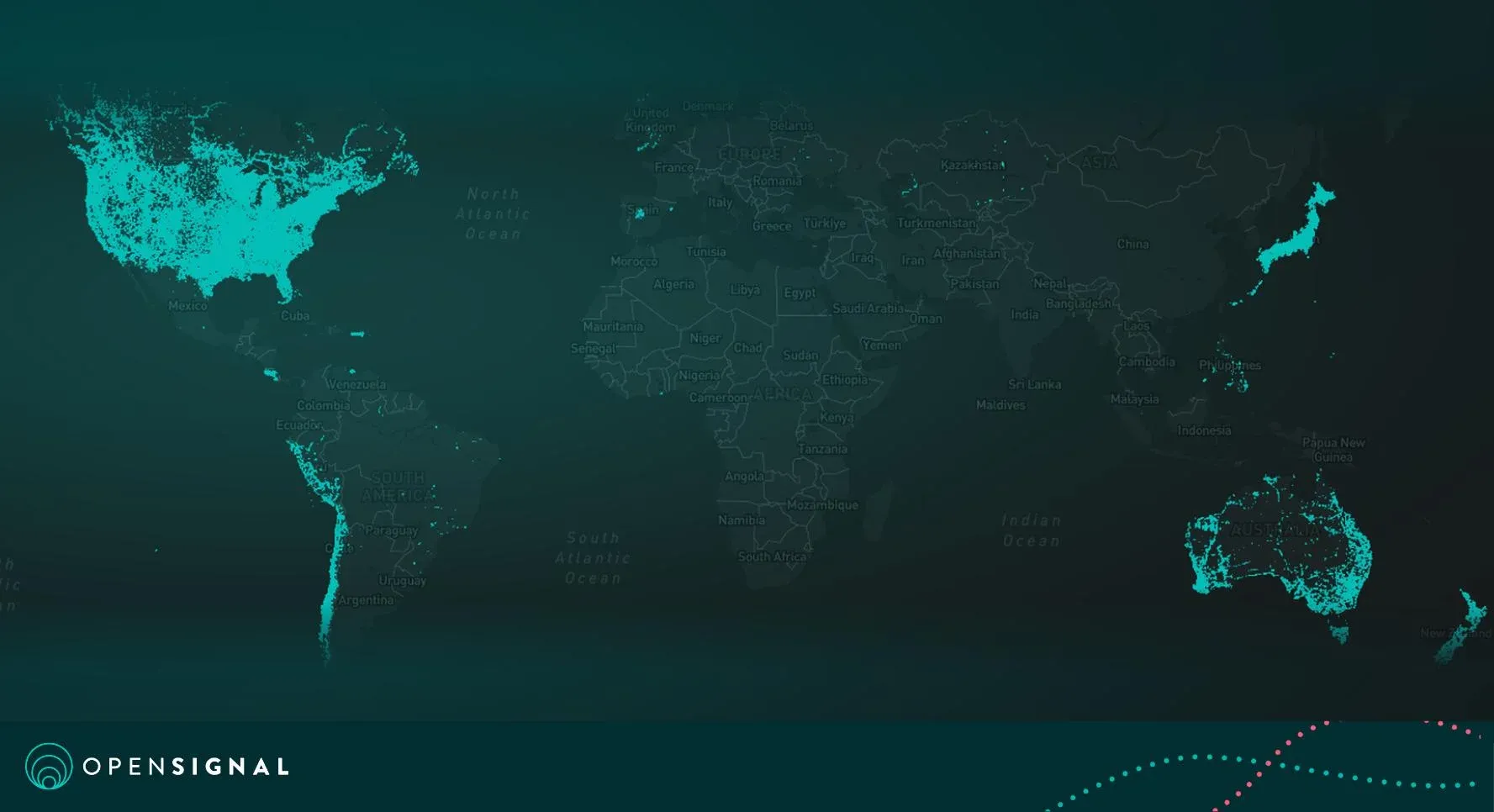
Opensignal is attempting to bring transparency to the rapidly evolving direct-to-device (D2D) satellite market by launching a new interactive visualization tool. The Opensignal D2D Satellite Map provides the first real-world depiction of where smartphones are successfully connecting to satellites globally. This move aims to provide industry stakeholders with empirical data to guide strategic decisions regarding spectrum allocation, device compatibility, and new service partnerships.
The Opensignal D2D Satellite Map Launch
The company is positioning this interactive map as a way to ground industry decisions in actual consumer behavior rather than theoretical projections. Every data point on the map represents a verified location where a smartphone has connected to a D2D service since January 2026. To ensure the data remains relevant as the technology matures, Opensignal plans to update the map on a monthly basis. This intelligence is extracted from the company’s existing repository of billions of real-world measurements. By providing an independent view of where D2D is gaining momentum, the tool seeks to clarify which geographic regions are seeing genuine adoption of satellite-to-cellphone connectivity.
Technical Constraints and D2D Evolution
While the Global mobile Suppliers Association (GSA) reported 23 partnerships launching satellite-to-cellphone services as of August 2026, the technology currently faces significant functional limitations. Existing D2D services are largely restricted to text messaging, emergency alerts, and a limited selection of applications. These constraints stem from evolving standards, early-generation satellite hardware, and limited available spectrum. Mobile operators and satellite providers are currently working to expand these capabilities to include voice services and higher-speed data. As these technical hurdles are addressed, Opensignal expects to expand its mapping capabilities to include performance metrics, measuring how effectively these connections function, similar to its existing mobile network experience analyses.
Key Takeaways
- The Opensignal D2D Satellite Map tracks smartphone connections to satellite services globally using real-world measurements.
- As of August 2026, the GSA reported that 23 partnerships have launched satellite-to-cellphone services.
- The map will be updated monthly and includes connection data recorded since January 2026.
TechInsyte's Take
In our view, this launch signals a critical shift from the speculative phase of D2D technology to an era of empirical validation. For enterprise leaders and infrastructure investors, the current lack of visibility into actual D2D adoption has been a significant barrier to long-term planning. By quantifying where these connections actually occur, Opensignal is providing the data necessary to justify investments in spectrum and hardware. This transparency will likely accelerate the transition from basic emergency messaging to more robust, data-capable satellite-to-mobile services.
Questions & Answers
How does the D2D Satellite Map provide value to enterprise decision-makers?
The map offers an independent, real-world view of where D2D adoption is actually occurring, allowing stakeholders to base decisions regarding spectrum, devices, and partnerships on empirical data rather than industry speculation.
What are the current technical limitations of D2D satellite services?
Current services are primarily constrained by limited spectrum, early-generation satellite and handset hardware, and evolving standards, which currently limits functionality to text messaging, emergency alerts, and a small set of apps.
What is the projected future capability of these satellite connections?
Mobile operators and satellite companies are working toward enabling voice services and higher-speed data as the technology matures and regulators evaluate spectrum availability.
How frequently is the D2D connectivity data updated?
Opensignal intends to update the interactive map on a monthly basis to reflect changing connection patterns and service maturity.
Source: Opensignal