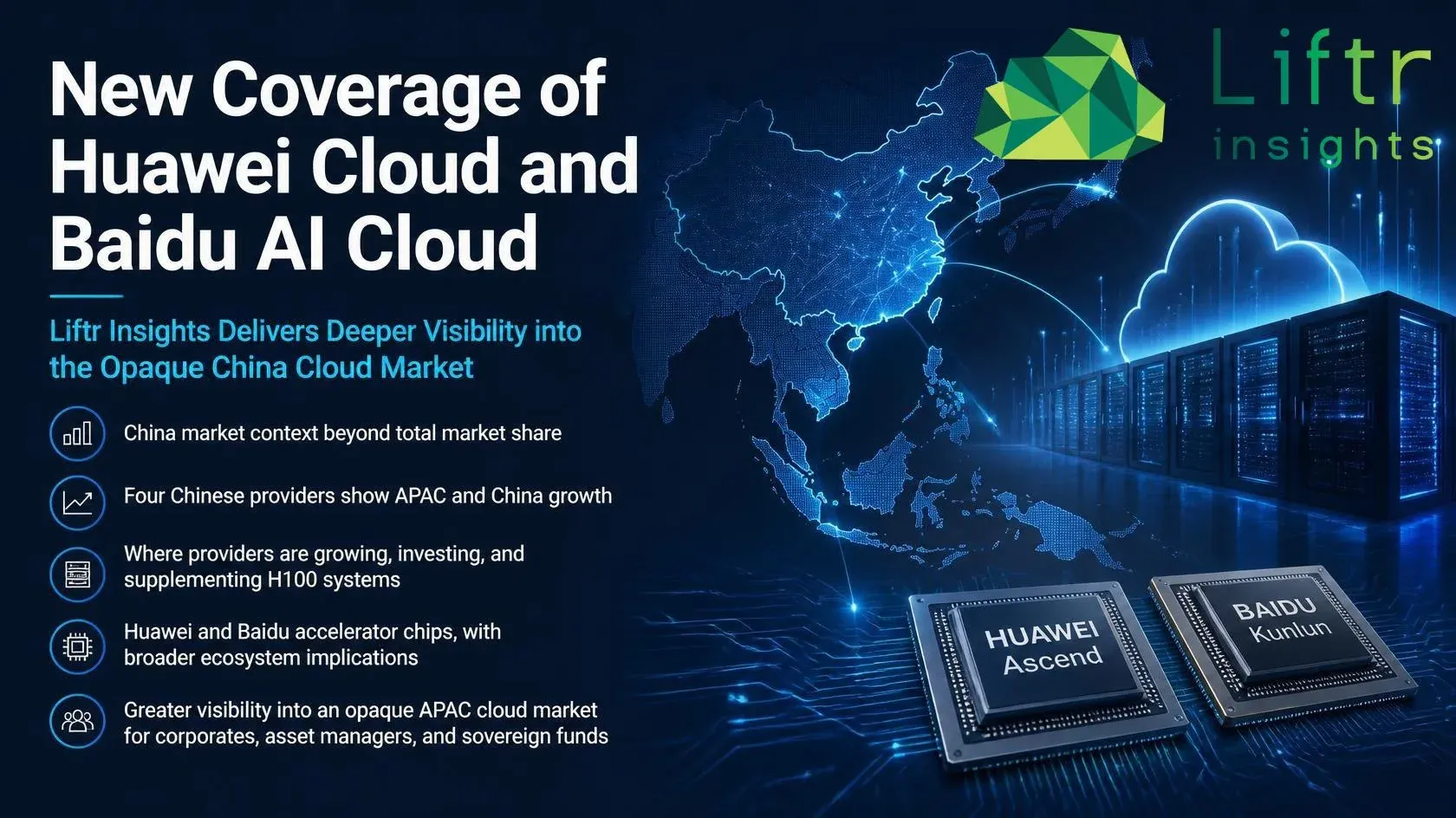
Liftr Insights is attempting to dismantle the information barriers surrounding the Chinese cloud sector by integrating Huawei Cloud and Baidu AI Cloud into its intelligence platform. This expansion provides visibility into all four major Chinese cloud providers, offering a standardized view of a market previously characterized by limited transparency. For global enterprises and investors, this move aims to clarify regional growth and infrastructure trends.
Expanding Intelligence Across Chinese Cloud Providers
The integration of Huawei Cloud and Baidu AI Cloud allows Liftr Insights to provide a more comprehensive view of the Asia-Pacific (APAC) growth landscape. By adding these two entities, the platform now covers all four major Chinese cloud providers, which the company suggests is essential for understanding the global cloud infrastructure race. The company is positioning this expanded coverage as a way to help asset managers and corporate strategy teams navigate a region often difficult to analyze due to inconsistent reporting standards. Liftr utilizes a proprietary methodology to collect and normalize complex provider data, attempting to transform it into a standardized dataset that is comparable across different global vendors and geographic regions.
Tracking AI Infrastructure and Semiconductor Demand
Liftr is linking this expanded data coverage to broader shifts in the AI ecosystem, specifically regarding how Chinese providers build AI infrastructure. The platform aims to provide insights into how these leading providers are supplementing traditional GPU deployments through proprietary silicon initiatives and accelerator technologies. This capability is intended to help users monitor the trend of finding alternatives to NVIDIA within the AI landscape. Because Chinese cloud providers frequently adjust their product offerings, reporting structures, and infrastructure strategies, Liftr claims its normalization process is uniquely designed to handle these frequent changes. This intelligence is intended to help clients identify emerging signals across the interconnected sectors of cloud computing, artificial intelligence, and semiconductor demand.
Key Takeaways
- Liftr Insights has added Huawei Cloud and Baidu AI Cloud to its platform, completing coverage of the four major Chinese cloud providers.
- The platform uses proprietary methodology to normalize data from providers that often utilize inconsistent reporting standards.
- The expanded coverage aims to provide visibility into proprietary silicon initiatives and accelerator technologies used as alternatives to traditional GPU deployments.
TechInsyte's Take
In our view, Liftr Insights is targeting a critical intelligence gap in the enterprise IT landscape. By standardizing data from Huawei and Baidu, they are not just tracking market share; they are attempting to map the decoupling of the AI hardware supply chain. As Chinese providers pivot toward proprietary silicon to mitigate semiconductor constraints, the ability to quantify these shifts provides a vital signal for global infrastructure planning. This move suggests that transparency in the APAC region is becoming a primary requirement for sophisticated technology investment.
Questions & Answers
How does Liftr Insights address the lack of transparency in the Chinese cloud market?
Liftr Insights utilizes a proprietary methodology to collect, normalize, and distribute market share intelligence. This process aims to transform complex, inconsistent provider data into a standardized dataset that can be compared against other global vendors and regions.
What specific hardware trends does this expanded coverage aim to highlight?
The expansion is intended to provide insight into how Chinese cloud providers are building AI infrastructure, specifically regarding how they supplement traditional GPU deployments with proprietary silicon initiatives and accelerator technologies.
Why is the inclusion of Huawei and Baidu significant for global investors?
Including these providers gives clients a complete picture of APAC growth and provides signals regarding AI adoption and semiconductor demand, which are essential for understanding the global cloud infrastructure race.
What makes the data normalization process for Chinese providers unique?
The company states that Chinese cloud providers frequently adjust their product offerings, reporting structures, and infrastructure strategies, making the normalization of this data more challenging than in other global regions.
Source: Liftr Insights