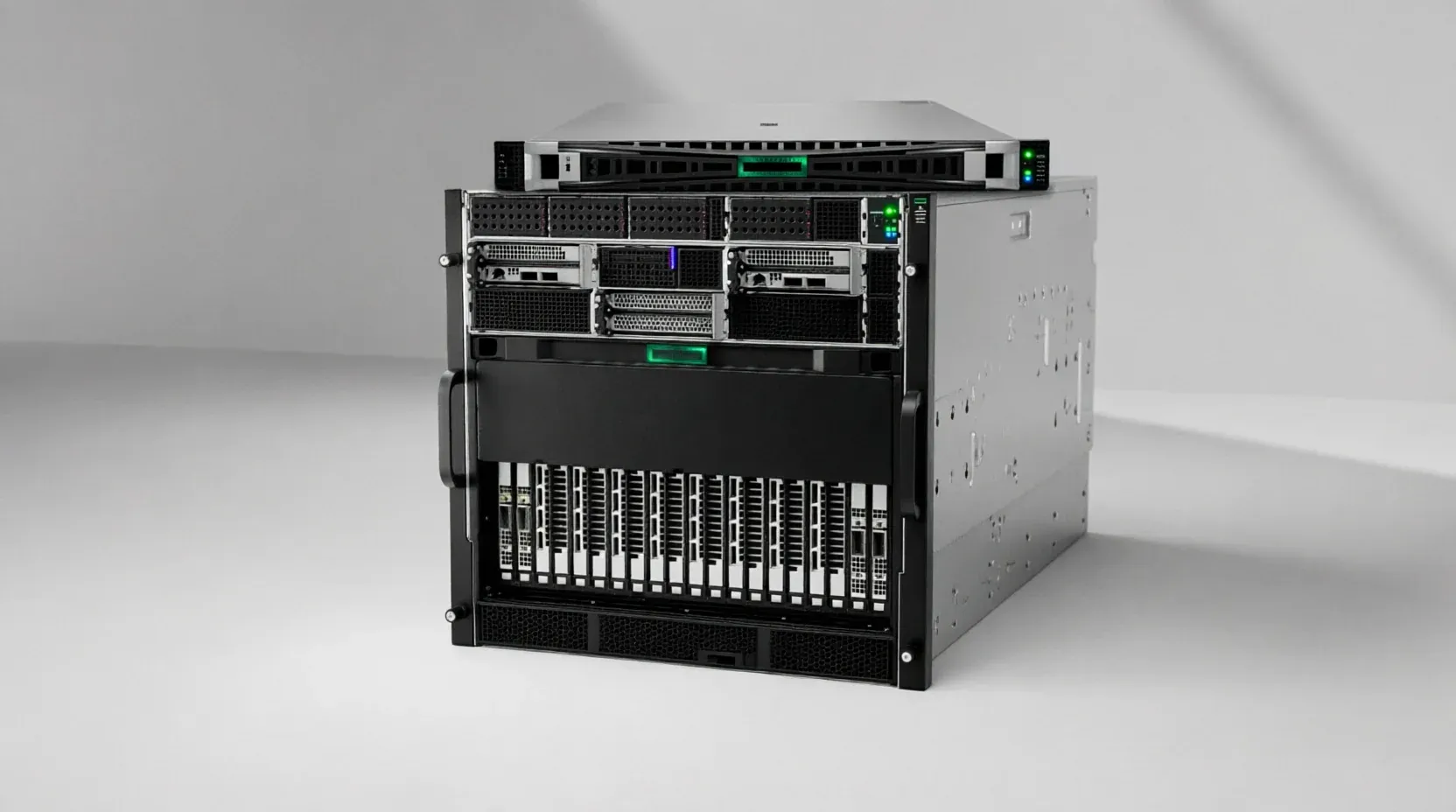
HPE is positioning its new hardware lineup to address the growing security and operational friction associated with autonomous AI systems. By integrating 6th Generation AMD EPYC Server processors into its ProLiant Gen13 architecture, the company aims to provide the compute density and specialized I/O required for agentic AI and inference workloads. This strategic move targets enterprises struggling to scale AI due to risk concerns, specifically addressing the barriers identified in McKinsey’s 2026 AI Trust Maturity Survey, where nearly two-thirds of respondents cited security as a primary obstacle. The rollout includes four distinct server models designed to handle everything from compact, high-throughput tasks to massive, liquid-cooled rack-scale deployments.
Expanding Compute Density with AMD EPYC Integration
The initial launch of the HPE ProLiant Gen13 series focuses on maximizing core density and memory bandwidth to support compute-intensive enterprise applications. The HPE ProLiant DL585a Gen13 Server is engineered as a high-density platform, supporting up to eight double-wide PCIe GPUs and two 6th Gen AMD EPYC processors. This configuration is intended to optimize token throughput and PCIe bandwidth for demanding tasks such as retrieval-augmented generation (RAG) model fine-tuning and AI inference. Complementing this is the HPE ProLiant DL525 Gen13, a 1U, single-socket system capable of utilizing a single processor with up to 256 cores. This model leverages 16-channel memory—supporting both DDR5 and MRDIMM—and PCIe Gen6 connectivity to manage high-data-throughput workloads like fraud detection and electronic design automation (EDA).
For large-scale deployments, HPE is introducing the HPE ProLiant XD245 and XD285 servers, which adhere to Open Compute Project (OCP) standards. The XD245 utilizes a one-Open Rack Unit (1OU), four-node direct liquid-cooled design to maximize density, powered by up to eight 6th Gen AMD EPYC processors. In contrast, the XD285 employs a two-Open Rack Unit (2OU), two-node air-cooled architecture, providing flexibility for diverse data center environments. These OCP-compliant systems are designed to process massive datasets at the rack level, supporting scientific research, weather modeling, and financial simulations through efficient shared power and cooling.
Hardening Infrastructure Against Autonomous AI Risks
As AI transitions from generating insights to taking autonomous actions, HPE is embedding automated security features directly into the Gen13 hardware layer. The company is introducing several industry-first capabilities via HPE Integrated Lights-Out 8 (iLO 8) to mitigate the risks of single-user error and emerging cryptographic threats. These include automatic self-encrypting drive (Auto-SED) capabilities, which protect data at rest from the first boot without requiring external key managers. Additionally, the multi-person authorization (MPA) feature requires two authorized users to approve high-impact actions, such as secure erasures or key provisioning, to prevent unauthorized or accidental misuse.
To address future-state threats, the Gen13 series includes expanded post-quantum cryptography (PQC) readiness, extending protection beyond firmware to secure server communication paths. This is paired with HPE’s Silicon Root of Trust, which performs enterprise-grade component verification to validate the integrity of hardware as it is added or modified. On the operational side, HPE is linking these hardware advancements to HPE Compute Ops Management. The company claims that organizations utilizing this management platform have seen a 50% reduction in server management time and a 209% ROI, suggesting that automated lifecycle operations are critical for maintaining the resiliency of distributed AI infrastructure.
Key Takeaways
- The HPE ProLiant DL585a Gen13 supports up to eight double-wide PCIe GPUs and two 6th Gen AMD EPYC processors for AI inference and RAG fine-tuning.
- New security features include industry-first multi-person authorization (MPA) and automatic self-encrypting drive (Auto-SED) capabilities.
- Availability timelines vary, with the DL525 arriving in late 2026, the DL585a in early 2027, and the XD245/XD285 models in 2027.
TechInsyte's Take
In our view, HPE’s pivot toward "agentic AI" readiness is a calculated response to the massive security gap currently hindering autonomous enterprise workflows. By embedding multi-person authorization and post-quantum cryptography directly into the ProLiant Gen13 silicon and management layers, HPE is attempting to move security from a software afterthought to a hardware prerequisite. This is a critical distinction; as AI agents gain the ability to execute actions, the "blast radius" of a single compromised credential or a rogue autonomous process increases exponentially. HPE is betting that enterprise buyers will prioritize this "trusted foundation" over raw compute alone. If successful, this strategy shifts the conversation from mere performance metrics to "governance-ready" infrastructure, a move that could set a new standard for how data center operators approach the deployment of autonomous AI agents.
Questions & Answers
How does the Gen13 architecture address the security risks of autonomous AI?
HPE is implementing hardware-level controls, including multi-person authorization (MPA) for high-impact actions and automatic self-encrypting drives (Auto-SED) to protect data at rest. These features, managed via HPE iLO 8, are designed to mitigate the risks of single-user errors and unauthorized access that become more critical as AI systems move toward autonomous operation.
What are the primary performance differentiators for the new AMD-powered servers?
The servers leverage 6th Gen AMD EPYC processors to provide higher core density, increased memory bandwidth (including DDR5 and MRDIMM support), and PCIe Gen6 connectivity. This enables high-throughput workloads such as AI inference, RAG model fine-tuning, and complex financial or scientific simulations.
Which server models are optimized for high-density, liquid-cooled environments?
The HPE ProLiant XD245 is specifically designed for high-density compute using a one-Open Rack Unit (1OU), four-node direct liquid-cooled design, supporting up to eight 6th Gen AMD EPYC processors.
What is the projected availability for the new HPE ProLiant Gen13 lineup?
The HPE ProLiant DL525 Gen13 is expected in late 2026, while the DL585a Gen13 is slated for early 2027. The OCP-compliant XD245 and XD285 servers are scheduled to become available in 2027.
Source: HPE