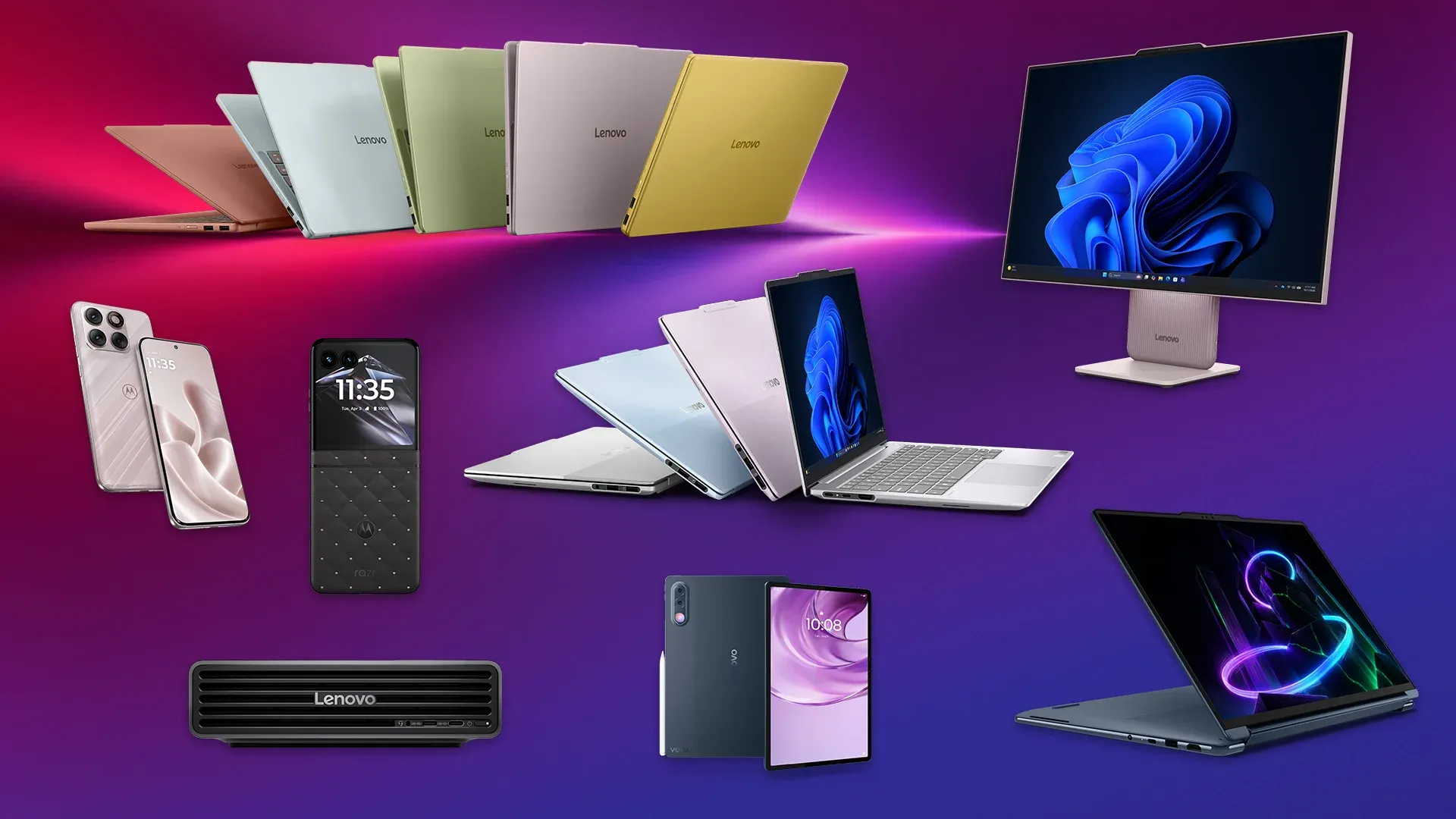
Lenovo is attempting to bridge the gap between fragmented consumer hardware and centralized enterprise intelligence by operationalizing its "Hybrid AI" strategy across a unified device ecosystem. At Lenovo Innovation World during IFA 2026, the company unveiled a broad hardware and software roadmap designed to move AI from a cloud-dependent novelty to a persistent, cross-device utility. By integrating its Lenovo and Motorola Qira ambient intelligence into PCs, smartphones, and even wearables, the company is positioning itself to capture the shift toward "one personal AI" that follows the user across multiple touchpoints. This rollout signals a strategic move to secure the edge by embedding intelligence directly into the hardware layer, targeting both individual creators and large-scale enterprise deployments.
Scaling Qira Intelligence Across the Device Ecosystem
The expansion of Lenovo and Motorola Qira represents the company's primary mechanism for creating a seamless personal AI experience. Lenovo is broadening the accessibility of Qira by extending support to eligible PCs equipped with at least 16GB of memory, a move that lowers the hardware threshold for ambient intelligence. On the mobile side, Motorola is integrating Qira into eligible edge, razr, and signature devices via the Android 17 upgrade. Notably, the new moto watch ultra will serve as the first Motorola wearable to support Qira on compatible devices, suggesting an intent to extend AI interaction into the highly personal realm of health and wellness monitoring.
To increase the utility of this intelligence, Lenovo has entered a collaboration with Workato to expand Qira experiences across essential productivity applications. This integration targets high-frequency workflows within Gmail, Google Calendar, Google Contacts, Slack, Outlook Mail, and Outlook Calendar. By linking AI intent to action within these specific services, Lenovo is attempting to reduce the friction between user commands and software execution. This approach suggests that the company views the AI's value not just in its processing power, but in its ability to act as an orchestration layer across disparate SaaS environments and local hardware.
Deploying Hybrid AI for Enterprise Productivity and Security
For the commercial sector, Lenovo is focusing on the deployment of Hybrid AI to help organizations manage data where it resides, rather than relying solely on centralized cloud models. The new ThinkCentre X Ultra and ThinkCentre M75 Series desktops are being positioned to provide scalable local AI performance, catering to diverse business environments that require high-compute capabilities at the edge. Complementing this desktop hardware, the ThinkBook 14 Gen 9 and ThinkBook 14x Gen 2 are designed to offer mobile professionals distinct pathways for on-device AI productivity and premium mobility.
Recognizing that decentralized AI increases the enterprise attack surface, Lenovo is also introducing new security layers to manage AI-enabled environments. The company is launching ThinkShield TraceLock, which is powered by Absolute Security, alongside Prompt Security, a SentinelOne company. These tools are intended to assist organizations in maintaining device visibility, controlling hardware, and establishing responsible AI governance. This dual focus on local compute performance and specialized security suggests that Lenovo is targeting the specific friction points—namely data privacy and governance—that currently hinder widespread enterprise AI adoption.
Key Takeaways
- Lenovo is expanding Qira ambient intelligence to eligible PCs with 16GB of memory and Motorola devices receiving the Android 17 upgrade.
- A new collaboration with Workato enables Qira to support workflows across Gmail, Google Calendar, Slack, and Outlook.
- The enterprise portfolio includes ThinkShield TraceLock and Prompt Security to address AI governance and device visibility.
TechInsyte's Take
In our view, Lenovo’s strategy is a calculated bet on the "edge-first" future of artificial intelligence. By aggressively pushing Qira into wearables like the moto watch ultra and lowering the memory requirements for AI-capable PCs, Lenovo is attempting to commoditize ambient intelligence. This move is designed to make AI a persistent background utility rather than a destination app. For the enterprise, the simultaneous rollout of ThinkShield security innovations indicates that Lenovo understands the primary barrier to Hybrid AI is not compute power, but trust. If Lenovo can successfully link local device intelligence with robust governance tools, they will move from being a mere hardware vendor to a critical infrastructure provider for the AI era. The success of this strategy depends on whether the Workato integration can actually deliver meaningful cross-app orchestration or if it remains a fragmented user experience.
Questions & Answers
How does Lenovo plan to lower the barrier for personal AI adoption?
Lenovo is expanding its Qira ambient intelligence to a wider range of hardware, specifically including eligible PCs that possess 16GB of memory. This allows users without high-end, specialized configurations to access personal AI experiences.
What role does the Android 17 upgrade play in Motorola's AI strategy?
The Android 17 upgrade will serve as the delivery mechanism for Motorola Qira on eligible edge, razr, and signature devices, integrating ambient intelligence directly into the mobile operating system ecosystem.
How is Lenovo addressing the security risks associated with decentralized AI?
Lenovo is introducing ThinkShield TraceLock, powered by Absolute Security, and Prompt Security (a SentinelOne company) to provide organizations with the visibility, control, and governance necessary to manage AI deployments responsibly.
What is the strategic goal of the Lenovo and Workato collaboration?
The collaboration aims to expand Qira experiences into major productivity tools such as Slack, Gmail, and Outlook, allowing users to move from intent to action more naturally across their existing software suites.
Source: Businesswire