IonQ is moving into the final phase of a rigorous federal evaluation to prove that quantum computing can achieve true utility scale. By advancing to Stage C of the Defense Advanced Research Projects Agency’s (DARPA) Quantum Benchmarking Initiative (QBI), the company is positioning its hardware for independent government verification. This transition involves a signed agreement with a potential value of up to $300 million, though the company noted that further funding remains subject to future appropriations and DARPA funding actions.
DARPA QBI Stage C Advancement
The advancement to Stage C marks a shift from theoretical roadmaps to the physical delivery of hardware for independent testing. Having successfully completed Stage A, where it defined a technical concept for utility-scale systems, and Stage B, which involved developing detailed R&D roadmaps and risk-mitigation plans, IonQ must now provide multiple generations of its Superion quantum systems for DARPA’s review. This stage is designed to determine if quantum systems can reach a point where their computational value exceeds their operational cost.
Running through 2029, the process will involve DARPA’s team rigorously testing IonQ’s scalable hardware and software against the company's stated technical roadmap. This independent validation process is intended to scrutinize whether IonQ can manufacture and deploy these systems reliably at volume. The company is leveraging this period to scale its manufacturing capabilities while simultaneously expanding its commercial and scientific customer base.
Superion Architecture and Technical Roadmap
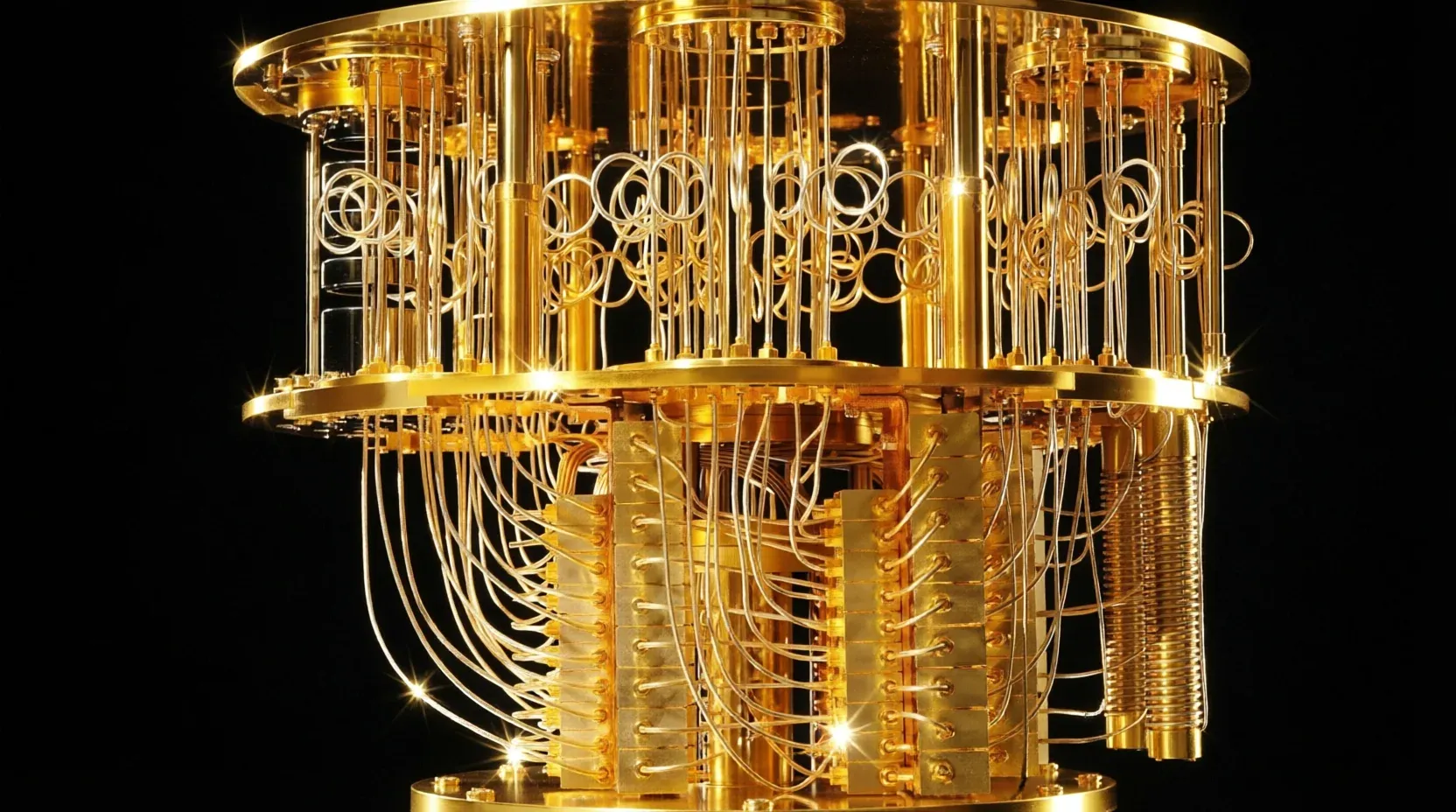
IonQ is betting on the scalability of its Superion architecture to meet the exacting requirements of the QBI. The company’s strategy focuses on stripping complexity out of the system to ensure that quantum computers can be manufactured and operated reliably at scale. This approach is currently being applied to its sixth-generation system, the Superion 256. The company is positioning this hardware as a foundation for solving complex problems in sectors such as drug discovery, materials science, and cybersecurity.
Technical performance remains a central metric for this validation. In 2025, IonQ reported achieving 99.99% two-qubit gate fidelity, a figure it claims set a world record in quantum computing performance. As the company moves through Stage C, DARPA will evaluate whether these performance metrics can be maintained across multiple generations of hardware as the systems scale toward fault-tolerant, large-scale quantum computing.
Key Takeaways
- IonQ has entered Stage C of DARPA’s Quantum Benchmarking Initiative under an agreement worth up to $300 million.
- The Stage C phase, which runs through 2029, requires IonQ to deliver multiple generations of Superion systems for independent validation.
- DARPA’s evaluation aims to determine if quantum computing can reach "utility scale," where computational value outweighs the cost.
TechInsyte's Take
In our view, this DARPA agreement is less about the immediate $300 million and more about the high-stakes validation of IonQ’s manufacturing thesis. While many quantum players focus solely on qubit counts, IonQ is attempting to prove that its Superion architecture can be industrialized. By submitting its roadmap to DARPA’s "exacting" independent review, IonQ is seeking to bridge the gap between experimental prototypes and reliable enterprise infrastructure. If IonQ successfully navigates this verification process through 2029, it will provide the technical legitimacy required to move quantum computing from a specialized research tool to a standard component of the global digital infrastructure.
Questions & Answers
What is the primary objective of DARPA's Quantum Benchmarking Initiative?
The initiative is designed to rigorously evaluate whether quantum computing systems can achieve "utility scale," a threshold where the computational value provided by the system exceeds the cost of its operation.
How much funding is involved in the IonQ and DARPA agreement?
The agreement has a potential value of up to $300 million, though IonQ clarified that any funding beyond the initial obligation depends on future DARPA funding actions and appropriations.
What specific hardware will be tested during Stage C?
IonQ will deliver multiple generations of its Superion quantum systems to DARPA for independent verification and validation of its hardware and software performance.
How long is the Stage C validation process expected to last?
The Stage C phase of the Quantum Benchmarking Initiative is scheduled to run through 2029.
Source: IonQ