
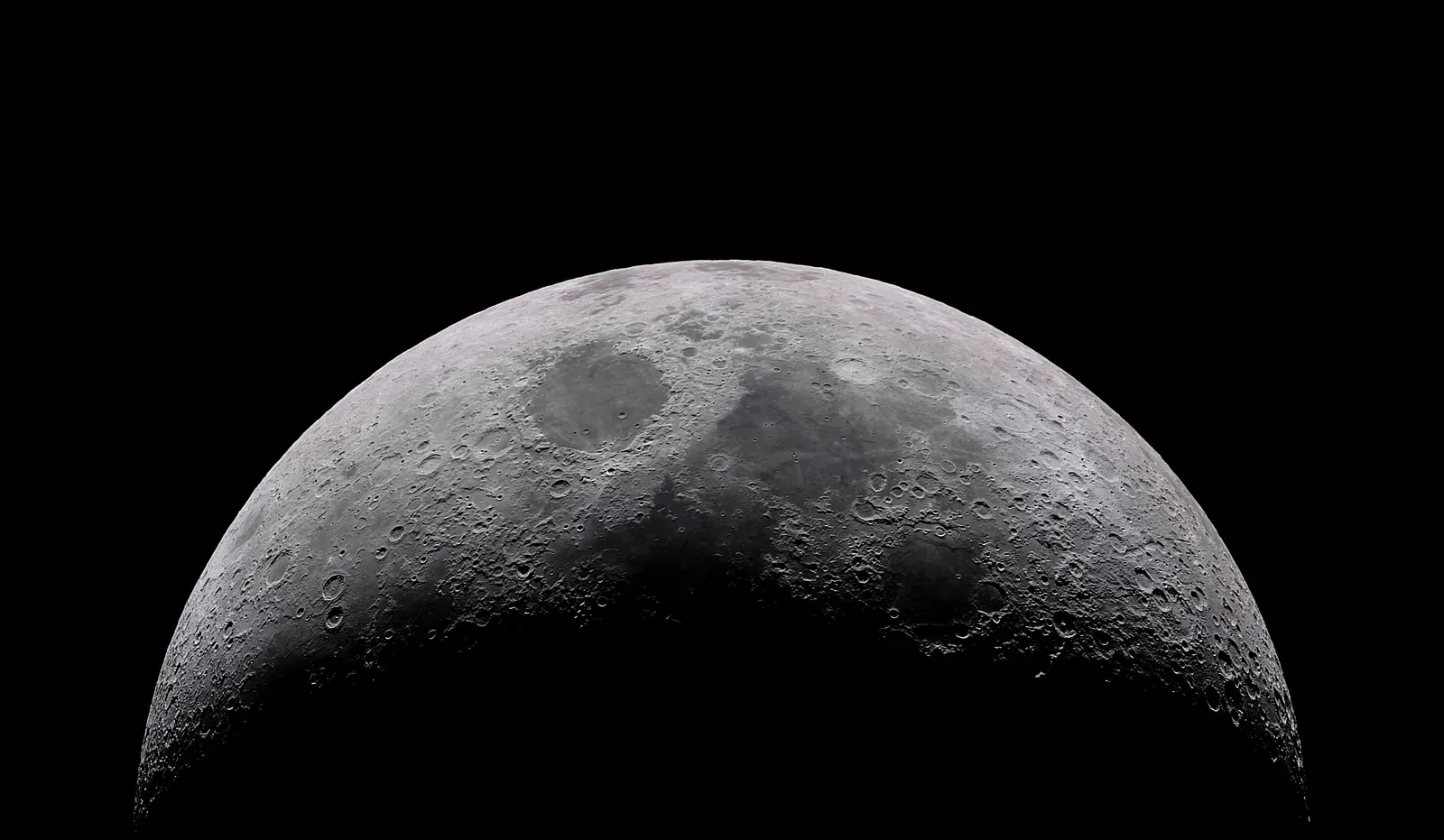
HPE is positioning itself as the foundational infrastructure provider for the emerging lunar economy by moving advanced computation from Earth-based data centers to the lunar edge. Through the deployment of the HPE Spaceborne Computer-4, the company aims to execute the first high-performance computing (HPC) benchmarks on the Moon's surface. This strategic move, involving NASA and Deloitte, seeks to validate whether complex artificial intelligence (AI) workloads can function reliably in extreme extraterrestrial environments. By integrating AI capabilities directly onto a lunar rover, the mission attempts to shift the paradigm from simple data collection to real-time, autonomous insight generation at the point of discovery.
HPE Spaceborne Computer-4 and the FLIP Rover Mission
The HPE Spaceborne Computer-4 is a purpose-built, lightweight, and fanless compute module engineered to withstand the harsh conditions of the lunar South Pole. Scheduled for a late 2026 launch as part of NASA’s Commercial Lunar Payload Services (CLPS) initiative, the module will reside on Astrolab’s FLIP rover. The rover itself will be transported to the lunar surface by Voyager Technologies’ Griffin-1 lander. This hardware configuration is designed to test the viability of advanced computing for future lunar missions and commercial economic activities.
To manage the intense processing requirements, the module utilizes a combination of a low-power central processing unit (CPU) and a graphics processing unit (GPU). Data integrity is supported by KIOXIA solid-state drives, providing high-performance flash memory storage capable of operating under lunar conditions. Beyond the hardware, HPE is deploying a specialized software suite to optimize communication with Earth-based resources and ensure the secure delivery of processed insights. Furthermore, HPE plans to support Astrolab’s mission control in Hawthorne, California, by utilizing HPE Private Cloud and HPE CloudOps Software to provide a unified, automated environment for managing and delivering real-time mission insights.
Testing AI, LLMs, and Cybersecurity on the Moon
The mission serves as a high-stakes laboratory for several critical enterprise technologies, testing their resilience and utility in a far-edge environment. HPE intends to run core AI applications, including vision inference and the processing of LiDAR data for terrain analysis, navigation, and infrastructure development. A significant component of the testing involves Large Language Models (LLMs). Specifically, the mission will evaluate retrieval-augmented generation and semantic processing abilities to assist in searching and interpreting onboard documents.
NASA is contributing to the mission through the Federated Learning for Unbounded and Intelligent Decentralization (FLUID) experiment. This test involves running an AI neural net model trained on data from Earth, the Moon, and the International Space Station to demonstrate the coordination of three separate AI models. Simultaneously, Deloitte is integrating its Silent Shield™ system, which is designed to provide near real-time, predictive cyber-analytics and anomaly detection to identify potential cyber intrusions. By combining these diverse workloads—ranging from autonomous monitoring to predictive cybersecurity—the mission aims to establish the technological framework necessary for scalable AI service applications on the lunar surface.
Key Takeaways
- The HPE Spaceborne Computer-4 will deploy on Astrolab’s FLIP rover via the Griffin-1 lander in late 2026.
- The mission will execute the first high-performance computing (HPC) benchmarks and test Large Language Model (LLM) retrieval-augmented generation on the Moon.
- NASA will utilize the FLUID experiment to coordinate AI neural net models trained across Earth, the Moon, and the International Space Station.
TechInsyte's Take
In our view, this mission represents a critical stress test for the concept of "far-edge" computing. While enterprise IT leaders have long focused on bringing compute closer to the data source on Earth, HPE is attempting to prove that the same principles of AI-driven autonomy and high-performance processing can be scaled to the most extreme environments imaginable. This is not merely a scientific endeavor; it is a commercial validation exercise. By involving Deloitte’s cybersecurity tools and NASA’s federated learning models, HPE is signaling that the future of lunar infrastructure will require a sophisticated, integrated stack of hardware, cloud management, and security. If these workloads succeed, it provides a blueprint for deploying autonomous, resilient digital infrastructure in any remote or contested environment where low-latency, local decision-making is a requirement for operational survival.
Questions & Answers
How will the HPE Spaceborne Computer-4 handle data storage in lunar conditions?
The module utilizes flash memory storage housed within solid-state drives from KIOXIA, a collaboration intended to ensure high-performance data storage remains functional under the specific environmental stressors of the lunar surface.
What specific AI capabilities are being tested during the FLIP rover mission?
The mission will test vision inference, LiDAR data processing for mapping and navigation, and Large Language Model (LLM) capabilities, including retrieval-augmented generation and semantic processing for document interpretation.
How does the mission address the need for cybersecurity in space?
Deloitte is deploying its Silent Shield™ system on the module, which is intended to provide near real-time, predictive cyber-analytics and anomaly detection to identify potential cyber intrusions during the mission.
What role does NASA play in the computational experiments on the Moon?
NASA is conducting the Federated Learning for Unbounded and Intelligent Decentralization (FLUID) experiment, which tests the coordination of an AI neural net model trained on data from Earth, the Moon, and the International Space Station.
Source: HPE