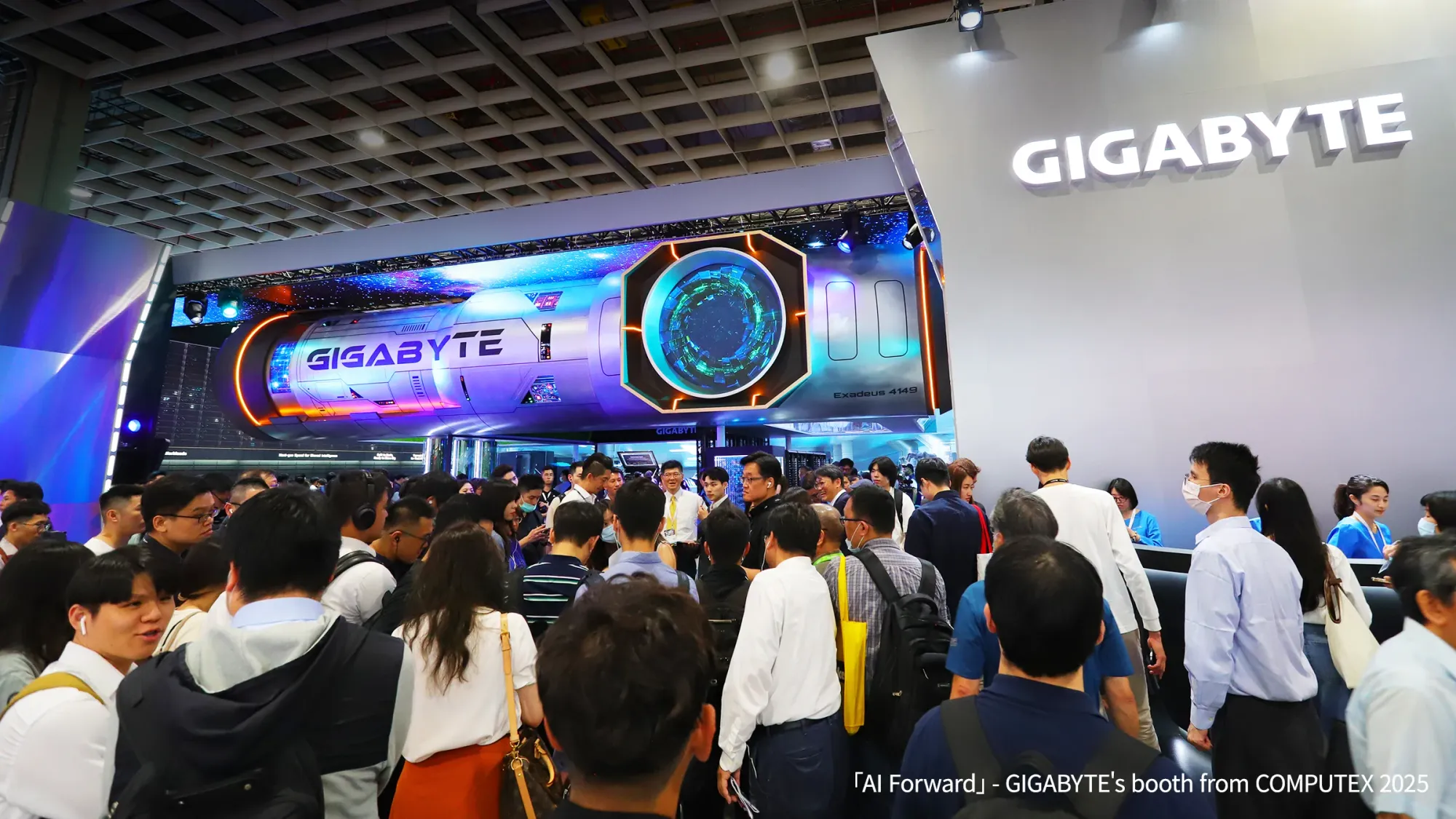
As the semiconductor and data center industries shift focus from theoretical AI models to practical implementation, GIGABYTE Technology has centered its COMPUTEX 2026 showcase on the logistics of scaling AI infrastructure. Under the theme "Future Landing," the company is moving beyond hardware specifications to address the operational challenges of deploying, managing, and sustaining large-scale AI inference and training environments.
The Shift from Training to Large-Scale Inference
The enterprise AI market is entering a phase where the primary challenge is no longer just the capacity to train models, but the ability to run them reliably in production. GIGABYTE’s strategy categorizes the AI infrastructure lifecycle into three distinct phases: Ready, Deployable, and Happening. This framework reflects a broader industry trend where CIOs and CTOs are prioritizing "time-to-value" over raw compute benchmarks.
To support this, GIGABYTE introduced the GIGABYTE AI Factory Accelerator (GAIFA) based in Taiwan. GAIFA serves as a validation environment where compute platforms, high-speed networking, and proprietary management software are integrated into a unified architecture. For infrastructure decision-makers, this represents a shift toward pre-validated "AI factories" that reduce the integration risks typically associated with multi-vendor hardware stacks.
Modular Infrastructure and Software-Defined Management
Rapid scaling remains a significant bottleneck for enterprise AI. Traditional data center construction and hardware integration often lag behind the pace of software development. GIGABYTE is addressing this through a modular, prefabricated approach that combines compute, cooling, and power into standardized, deployable units.
Central to this hardware ecosystem is the GIGABYTE POD Manager (GPM). As AI clusters grow in complexity, software-defined management becomes essential for operational efficiency. GPM provides a centralized interface for resource allocation and workload optimization. For data center operators, this level of visibility is critical for maintaining stability and managing the high thermal and power demands of modern GPU-heavy workloads.
Edge AI and Physical Automation Use Cases
The "Happening" phase of GIGABYTE’s portfolio highlights the transition of AI to the edge, specifically in physical automation and healthcare. In industrial settings, the company demonstrated a "real-to-sim-to-real" pipeline, where AI models are trained in simulation before being deployed to physical robotic systems for real-time task execution. This approach minimizes the downtime and safety risks associated with testing AI in live production environments.
In the healthcare sector, the focus has shifted toward localized inference at the point of care. By running AI models for polyp detection, bone marrow analysis, and pulmonary imaging locally, healthcare providers can maintain strict data privacy standards while reducing the latency inherent in cloud-based processing. This move toward deskside and edge AI is further supported by the AI TOP series, which aims to bring high-performance inference capabilities directly to end-user environments.
Key Takeaways
- Pre-validated Architectures: The GAIFA facility indicates a move toward fully integrated AI factories, aiming to reduce the time between hardware acquisition and operational readiness.
- Modular Deployment: GIGABYTE is utilizing prefabricated units that integrate power and cooling, addressing the physical constraints of rapid data center expansion.
- Localized Inference: There is a clear strategic push toward edge AI in regulated industries like healthcare to ensure data sovereignty and low-latency decision-making.
TechInsyte's Take
GIGABYTE’s 2026 roadmap suggests that the semiconductor industry is maturing past the initial AI "gold rush" toward a more disciplined focus on operational sustainability. For technology leaders, the emphasis is moving away from individual component performance and toward integrated systems that can be managed at scale. As AI workloads become more distributed, the ability to deploy modular, pre-validated infrastructure will likely become a baseline requirement for enterprise-grade AI initiatives.
Source: Businesswire