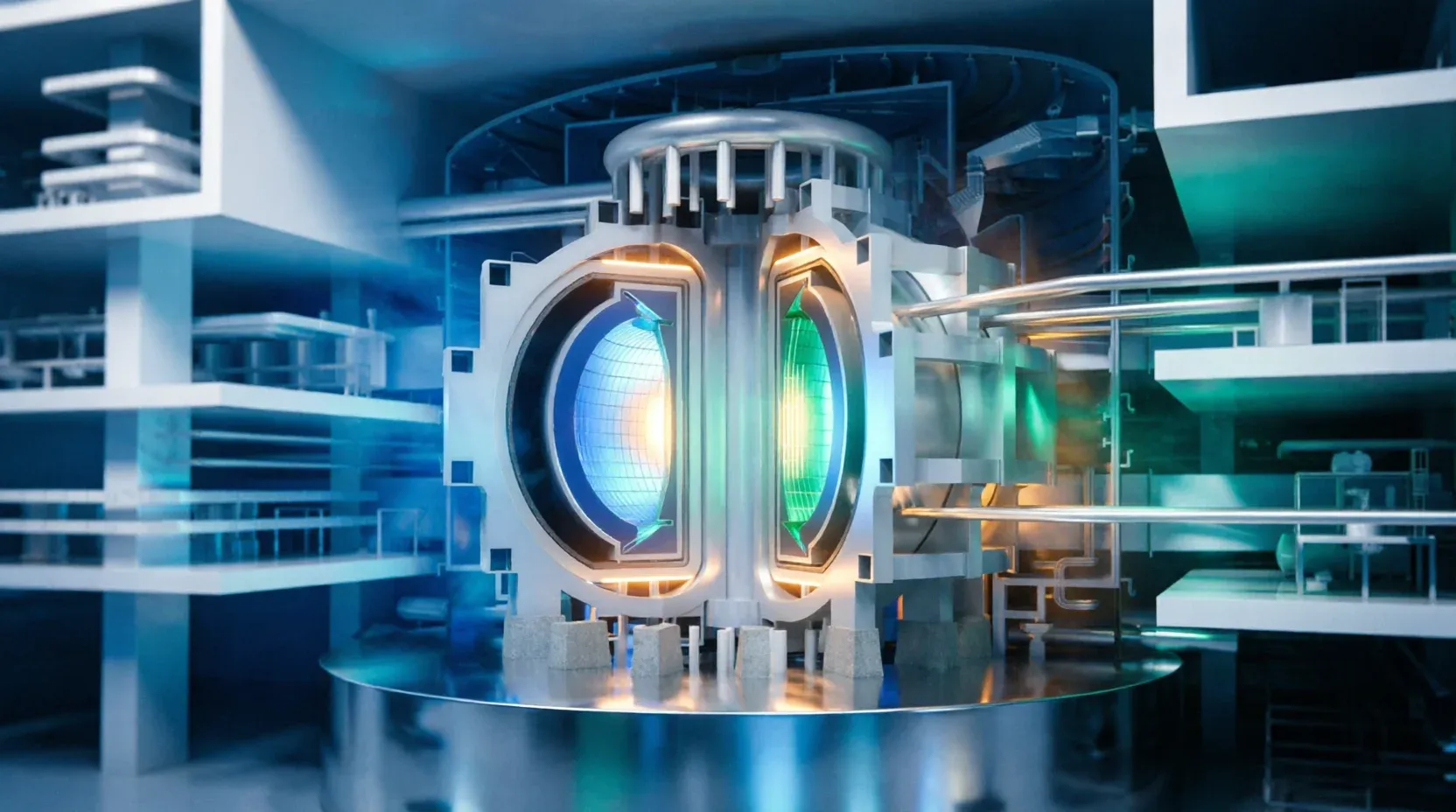
General Atomics (GA) and the U.S. Department of Energy (DOE) have announced a public‑private partnership aimed at creating the first full‑scale Fusion Blanket Component Test Facility (BCTF). Fusion blankets—large structures that line the interior of a fusion reactor vessel—are tasked with extracting the intense heat generated by fusion reactions, converting that heat into electricity, and breeding tritium, the fuel needed to sustain the reaction. To date, no blanket has ever been tested at the size and operating conditions required for a commercial power plant, making the BCTF a pivotal step toward turning fusion from a laboratory proof‑of‑concept into a reliable, carbon‑free energy source. By developing pre‑conceptual designs that integrate lithium‑based solid, liquid, or salt blankets, GA and DOE hope to de‑risk the most uncertain elements of the fusion power‑plant chain, accelerate technology maturation, and keep the United States on a competitive path to commercial fusion energy.
General Atomics and DOE Launch Fusion Blanket Component Test Facility Design
GA disclosed that the collaboration will produce pre‑conceptual designs for a BCTF capable of evaluating integrated blanket systems under realistic, power‑plant‑level conditions. The DOE’s seed investment is being funneled through Idaho National Laboratory (INL), which will serve as the design hub and coordinate contributions from GA, Kyoto Fusioneering, the University of California San Diego, and a broader set of industry and academic partners. Dr. Anantha Krishnan, senior vice president of the General Atomics Energy Group, emphasized the novelty of the effort: “No one has tested a fusion blanket at this scale… a BCTF brings us closer to turning fusion from proven science into practical, sustainable power.” Pattrick Calderoni, fusion program lead at INL, added that the facility will enable systematic testing and qualification of the components that make fusion power possible.
The design study focuses on three core performance criteria. First, engineers must demonstrate that circulating lithium‑based fluids can remove megawatt‑scale heat loads without boiling or degrading. Second, the structural materials must survive intense neutron irradiation and mechanical stresses while maintaining integrity over the expected service life. Third, the blanket must reliably breed tritium at rates sufficient to close the fuel cycle. If the design proceeds to construction, the BCTF will provide a controlled environment where these criteria can be measured, data can be fed back into material models, and design iterations can be rapidly validated before moving to more complex neutron‑source and tritium‑handling tests.
Design Approach Leverages Magnet Technologies Center
The design work will draw heavily on GA’s Magnet Technologies Center, the former site of the ITER Central Solenoid project that was completed last year. That center houses the world’s most powerful pulsed superconducting magnet and a suite of high‑precision manufacturing tools, cryogenic test rigs, and diagnostics that are directly applicable to blanket development. GA notes that re‑using this infrastructure could compress the BCTF timeline by years compared with building a green‑field facility. Dr. Brian Grierson, director of Fusion Energy Technologies at GA, explained, “The Blanket Test Facility would give the fusion community the speed and scale needed to de‑risk next‑generation blanket designs… it’s where innovation meets practicality.”
The proposed BCTF will be physically integrated with GA’s DIII‑D National Fusion Facility, the nation’s largest magnetic‑fusion user facility. This integration allows blanket modules to be exposed to high‑performance plasma discharges, providing realistic heat flux and particle environments while leveraging DIII‑D’s existing safety and control systems. The synergy between the Magnet Technologies Center and DIII‑D is expected to streamline procurement, reduce duplication of effort, and create a single, cohesive test ecosystem for the broader San Diego fusion community.
Implications for California Fusion Ecosystem
The BCTF could reinforce California’s emerging role as a global hub for fusion research and engineering. GA operates the DIII‑D facility in San Diego, which sits alongside the Fusion Data Science and Digital Engineering Center, major academic programs at UC San Diego and San Diego State University, and a growing network of private‑sector collaborators. The state’s recent passage of Senate Bill 80 (SB 80) created the California Fusion Research and Development Innovation Initiative, the first state‑level program explicitly aimed at accelerating commercialization of fusion technologies. City‑level initiatives from San Diego and the San Diego Regional Economic Development Council further aim to attract advanced‑manufacturing investment and skilled talent.
Dr. Wayne Solomon, vice president of Magnetic Fusion Energy at GA, summed up the regional impact: “California, and San Diego in particular, is quickly becoming an epicenter of the fusion economy. A Blanket Test Facility would represent the next stage in turning scientific discovery into sustainable power.” By providing a dedicated, full‑scale test bed, the BCTF would enable local startups and established firms to validate components, reduce development risk, and accelerate the supply chain for future commercial reactors. The facility also promises to generate high‑value research jobs and attract federal and private funding, further cementing the Bay‑South California corridor as a premier destination for next‑generation energy technology.
Key Takeaways
- GA and the DOE are collaborating on pre‑conceptual designs for a Fusion Blanket Component Test Facility that would be the first to test full‑scale fusion blankets.
- The design will leverage GA’s Magnet Technologies Center and existing DIII‑D infrastructure, potentially shortening the development timeline.
- The BCTF is expected to strengthen California’s fusion ecosystem, aligning with SB 80 and regional economic development efforts.
TechInsyte's Take
The BCTF design effort provides a concrete step toward validating blanket technologies that have long been a bottleneck for commercial fusion. While the project remains in the design phase, its reliance on existing GA facilities could reduce risk and schedule uncertainty. Decision‑makers should monitor DOE funding allocations and any progress toward construction, as those signals will indicate how quickly the capability might become available for industry partners.
Source: Businesswire