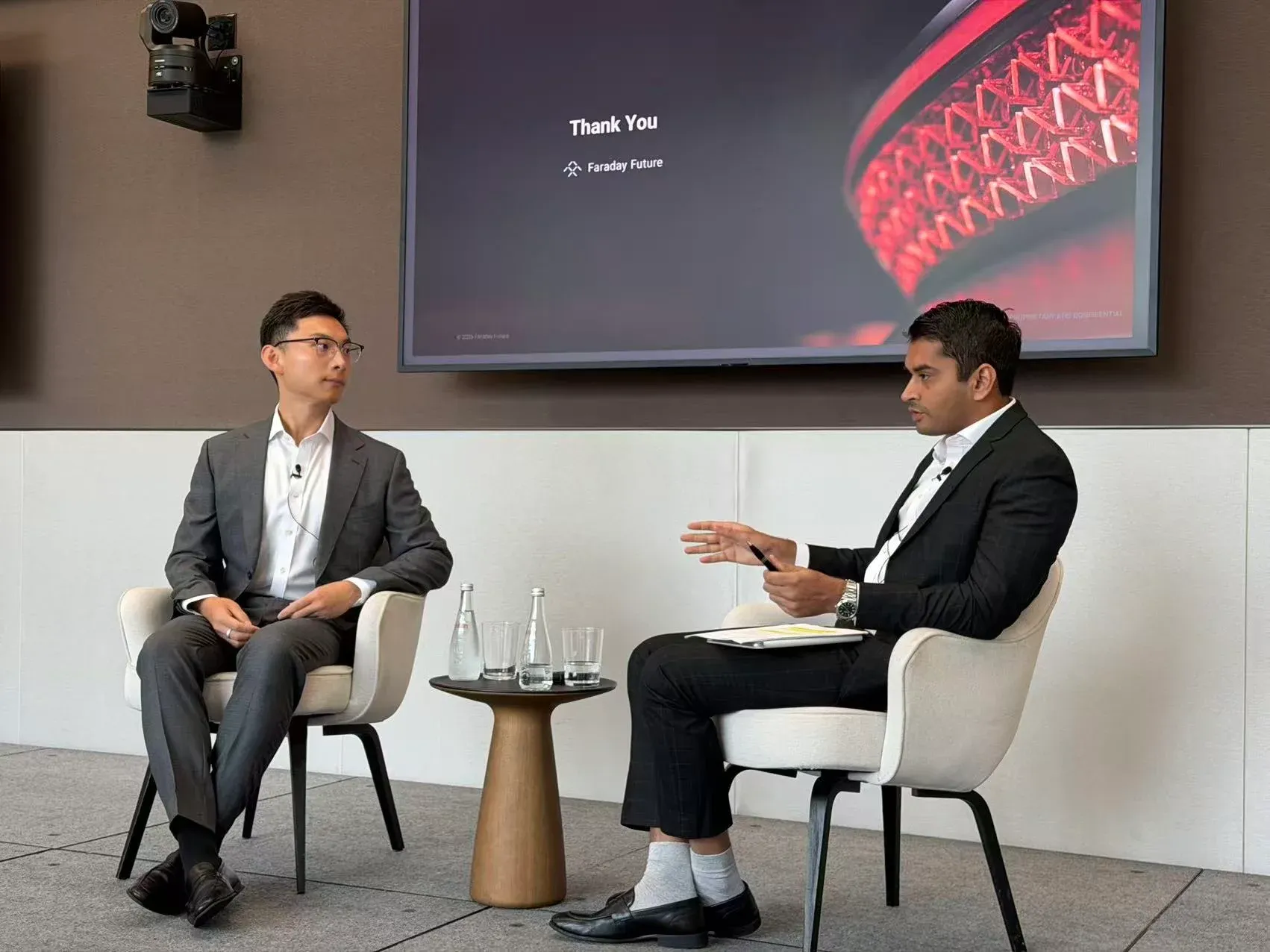
Faraday Future is attempting to pivot its market identity from an electric vehicle manufacturer to a dominant player in the Embodied AI (EAI) ecosystem. During the 2026 J.P. Morgan Auto Conference in New York, Global Executive Chairman Jerry Wang presented a strategy centered on robotics execution. The company is positioning its EAI robotics division as a scalable platform capable of serving diverse commercial markets through specialized hardware and software integration.
FF Robotics Unit Economics and Shipment Growth
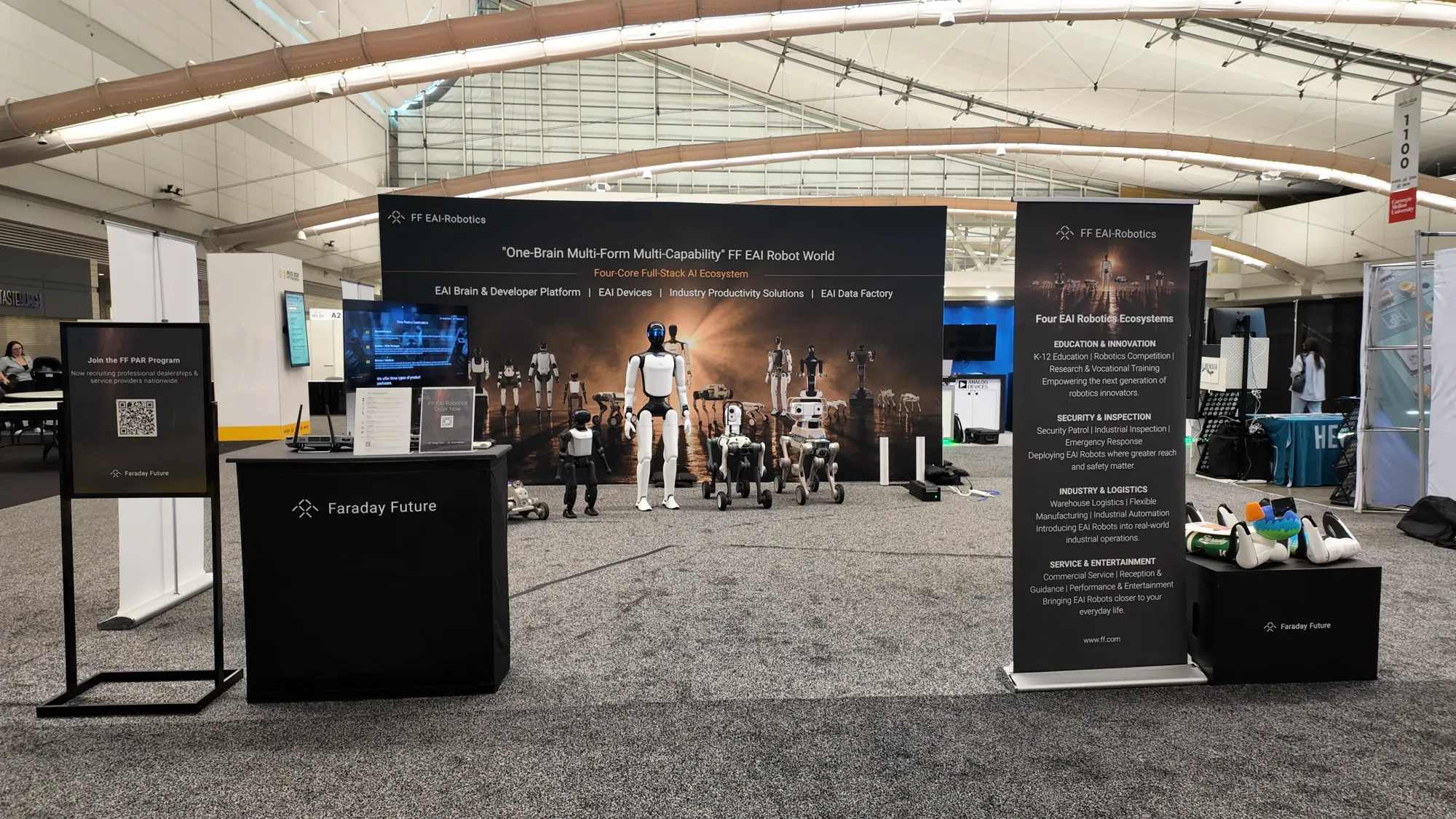
Investor interest at the J.P. Morgan conference focused heavily on the financial viability and scaling potential of FF Robotics. According to the company, discussions with equity and credit investors centered on the division's positive unit economics and the current pace of its shipment growth. Unlike many emerging robotics firms, Faraday Future is emphasizing its ability to move beyond single-use devices. The company aims to leverage its "Four-Core Full-Stack AI" ecosystem—comprising the EAI Brain, Device, Industry Productivity Solutions and Developer Platform, and Data Factory—to transform standalone hardware into deliverable industry solutions across multiple commercial applications.
Scaling the Four-Core Full-Stack AI Ecosystem
The company’s technical roadmap relies on an "evolutionary flywheel" designed to link hardware deployment with continuous intelligence improvements. By scaling device delivery and subsequent data collection, Faraday Future intends to train its EAI Brain to enhance product capabilities over time. This strategy targets two distinct segments: EAI humanoid and bionic robots, alongside EAI automotive-focused robots. Jerry Wang stated that the company's objective is to reach a top-three position among North American robotics companies within five years, measured by real-world deployment volumes of humanoid and bionic units, while simultaneously leading the North American EAI MPV market.
Key Takeaways
- Faraday Future is targeting a top-three North American robotics market position within five years based on deployment volume.
- The company's EAI strategy utilizes a "Four-Core Full-Stack AI" ecosystem to bridge device capability with industry-specific solutions.
- Investor engagement at the 2026 J.P. Morgan conference focused on the positive unit economics and shipment growth of FF Robotics.
TechInsyte's Take
In our view, Faraday Future is making a high-stakes bet on the convergence of physical hardware and embodied intelligence to escape traditional automotive valuation traps. By highlighting positive unit economics and shipment growth, the company is attempting to signal that its robotics division is a functional business rather than a speculative R&D project. However, the success of this "flywheel" depends entirely on whether their "Four-Core" stack can actually translate massive data collection into a competitive advantage in the highly contested humanoid and automotive robot markets.
Questions & Answers
How does Faraday Future plan to achieve its five-year market objectives?
The company intends to reach a top-three position in North American humanoid and bionic robot deployment and lead the North American EAI MPV market through its EAI automotive robots.
What technical framework supports the FF Robotics strategy?
Faraday Future utilizes a "Four-Core Full-Stack AI" ecosystem, which integrates an EAI Brain, hardware devices, industry productivity solutions/developer platforms, and a data factory to create a continuous improvement flywheel.
What specific financial metrics are driving investor interest in FF?
Investors at the J.P. Morgan conference specifically focused on the positive unit economics and the shipment growth cadence of the FF Robotics division.
Source: Businesswire