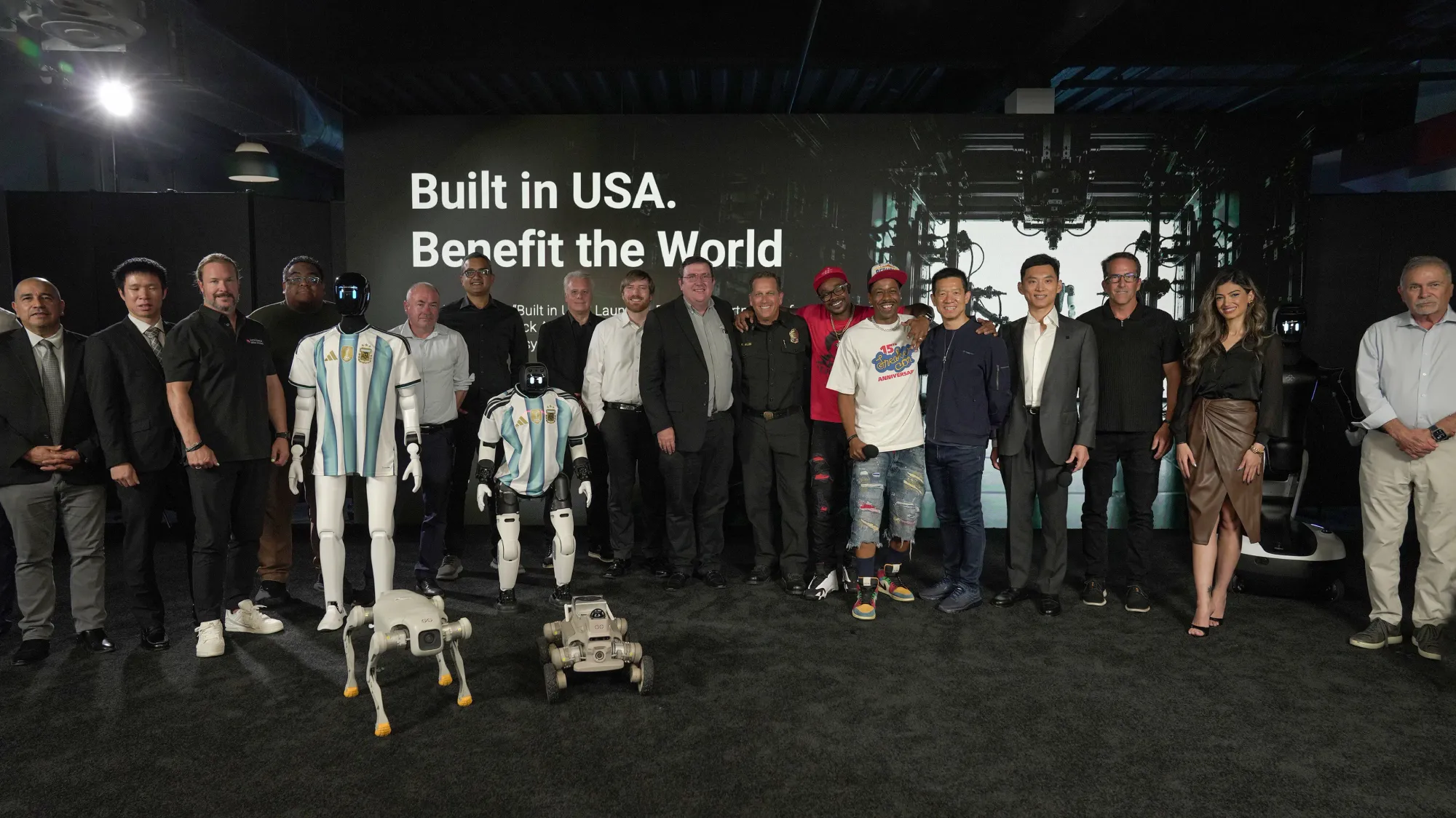
Faraday Future (FF) is attempting to leverage shifting regulatory landscapes to establish a domestic stronghold in the embodied AI (EAI) robotics market. By positioning itself as a compliant bridge for global technologies entering the United States, the California-based company is launching a massive infrastructure and manufacturing roadmap designed to bypass rising industry entry barriers. The company has committed to investing at least $5 billion in the U.S. over the next decade, a move intended to support the production of three to five new robotics products annually. This strategic pivot centers on a three-phase "Built in USA" acceleration program, which aims to transition the company from software and R&D development into full-scale domestic hardware manufacturing.
The Three-Phase Roadmap to Domestic Manufacturing
The company is structuring its industrial expansion around a rigid timeline intended to move from digital foundations to physical "Made in USA" hardware. Having completed Phase One—which focused on establishing the EAI Brain, Industry Productivity Solutions, and the EAI Data Factory—FF is now entering a critical manufacturing ramp-up period. During Phase Two, which runs from August 2024 through the first quarter of 2027, the company intends to accelerate "Assembled in USA" capabilities for EAI devices and the specific components required to meet FCC compliance.
A primary objective of this phase is to bring a dedicated robotics factory online by the end of this year. If successful, the company expects to see its first new EAI device roll off the production line in February 2027. The ultimate goal, designated as Phase Three, targets the fourth quarter of 2028. By this milestone, FF aims to achieve "Made in USA" status for its EAI devices, FCC-compliant parts, and a suite of critical components capable of driving broader industry advancements. This roadmap is not set in stone; the company notes that timelines may be adjusted based on FCC policies, legal regulations, and actual execution progress.
Scaling the Four-Core Full-Stack AI Ecosystem
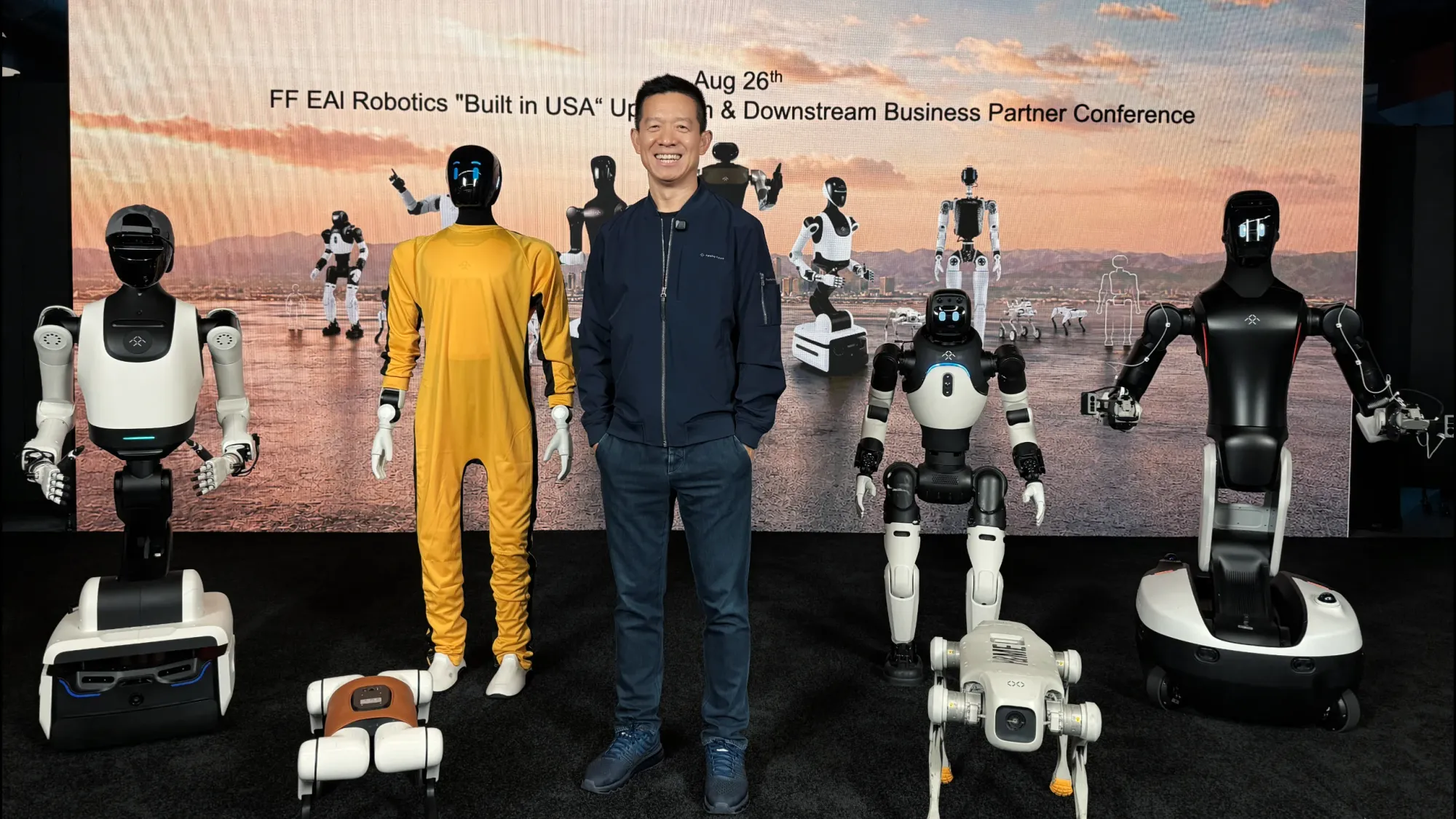
To support this hardware rollout, FF is deploying a "Four-Core Full-Stack AI" ecosystem strategy. This framework integrates the EAI Brain, EAI Devices, Industry Productivity Solutions and Developer Platform, and the EAI Data Factory. The company is currently prioritizing two specific hardware products under this program: the Next Futurist, a full-size humanoid robot designed for research, education, and industrial inspection, and the Next Aegis, a quadruped robot intended for security and complex-terrain navigation. Both products are designed to share the same underlying intelligence and data systems, a technical approach the company describes as "One Brain, Multiple Forms."
Beyond hardware, FF is aggressively expanding its downstream partner network and educational footprint. The company has opened nationwide recruitment for distributors, AI partners, and data providers, utilizing a "PAR Revenue Flywheel" designed to offer partners recurring income from software subscriptions and services rather than just one-time hardware margins. Simultaneously, the company is scaling its EAI education ecosystem, which includes a nine-level curriculum framework. FF has already established partnerships with the Lynwood Unified and El Segundo Unified school districts in California, covering approximately 22 K–12 schools, and is currently developing potential partnerships across 10 U.S. states.
Key Takeaways
- Faraday Future plans to invest a minimum of $5 billion in the United States over the next ten years to support its robotics ecosystem.
- The company aims to bring its robotics factory online by the end of 2024, with the first new EAI device expected to roll off the production line in February 2027.
- The "Built in USA" strategy includes a goal to achieve full "Made in USA" status for devices and critical FCC-compliant components by the fourth quarter of 2028.
TechInsyte's Take
In our view, Faraday Future is making a high-stakes bet that regulatory compliance will become the primary competitive moat in the robotics sector. By aligning its manufacturing roadmap so closely with FCC policy frameworks, FF is not just building robots; it is attempting to build a "compliant gateway" for international technology providers who find the U.S. market increasingly difficult to navigate. This is a sophisticated pivot from a traditional hardware manufacturer to an infrastructure orchestrator.
The success of this strategy hinges entirely on the company's ability to execute its manufacturing timelines. Moving from a software-centric "EAI Brain" to a "Made in USA" hardware reality by 2028 is an incredibly ambitious industrial undertaking, especially given the capital intensity of robotics. If FF can successfully bridge the gap between global supply chains and domestic production requirements, they may secure a first-mover advantage in a highly regulated market. However, the heavy reliance on a "flywheel" of recurring revenue from partners and educational institutions suggests that the company is looking to mitigate the massive upfront costs of hardware through a diversified service-based ecosystem.
Questions & Answers
How does Faraday Future plan to monetize its robotics ecosystem beyond hardware sales?
The company is implementing a "PAR Revenue Flywheel" and a robot-sharing platform called RoboShare. This model allows partners to earn recurring income from software subscriptions, curricula, upgrades, and operational services, shifting the business model from one-time hardware transactions to ongoing service-based revenue.
What specific hardware products are central to the "Built in USA" program?
The program currently focuses on two primary EAI devices: the Next Futurist, a full-size humanoid robot designed for industrial and research use, and the Next Aegis, a quadruped robot designed for security, inspection, and complex-terrain mobility.
What is the strategic significance of the "Four-Core Full-Stack AI" strategy?
The strategy integrates intelligence (EAI Brain), hardware (EAI Devices), utility (Industry Productivity Solutions/Developer Platform), and data (EAI Data Factory). This integration is intended to create an evolutionary loop where scaled device delivery drives data collection, which in turn improves the AI's capabilities for future deployments.
What role does FCC compliance play in Faraday Future's domestic strategy?
FF is positioning its "Built in USA" program as a way to help global partners navigate rising industry entry barriers. By building U.S.-based R&D and production capabilities that meet the latest FCC policies, the company intends to act as a compliant platform for advanced global technologies to enter the United States market.
Source: Businesswire