DigitalOcean is attempting to redefine the cloud computing paradigm by shifting the primary unit of value from the virtual machine to the autonomous agent. By launching the public preview of DigitalOcean Managed Agents, the company is positioning its "AI-Native Cloud" as a specialized environment designed to solve the specific infrastructure hurdles—security, persistence, and responsiveness—that currently prevent enterprises from scaling agentic workflows. Rather than forcing developers to manually stitch together disparate services for inference, sandboxing, and tool access, DigitalOcean is offering a vertically integrated stack that includes a dedicated harness runtime, governed tool access via an Action Gateway, and serverless inference across more than 75 open and proprietary models. This strategic move aims to capture the growing market of developers who are currently struggling with the high total cost of ownership (TCO) and the operational complexity of managing long-running, non-linear AI agent sessions.
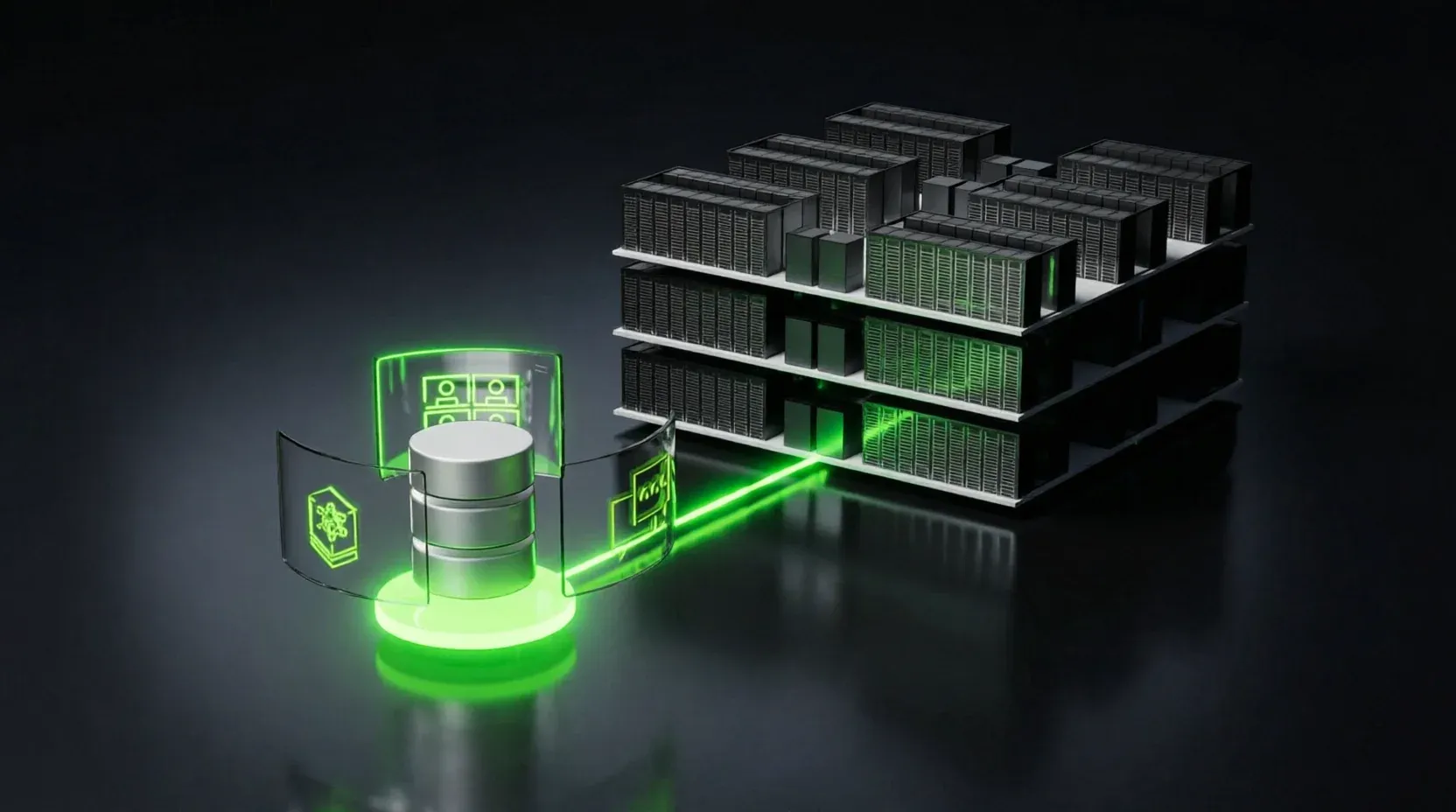
DigitalOcean Managed Agents Infrastructure Integration
The Managed Agents service is built upon two core integrated components: the DigitalOcean Harness Runtime and the DigitalOcean Action Gateway. The Harness Runtime functions as a lightweight microVM that provides a coding sandbox and built-in tools like Chromium, allowing agents to execute code in a hardware-isolated environment. To address the non-linear nature of agentic work, the runtime includes lifecycle APIs that support pause, resume, and fork semantics. This allows developers to maintain conversational history and working states across sessions. DigitalOcean claims these runtimes can resume from a paused state in 305 milliseconds, a figure they state is 46% faster than other leading market offerings.
Complementing the runtime, the Action Gateway provides agents with governed access to over 16,000 tools from more than 500 providers through a single managed Model Context Protocol (MCP) endpoint. This includes integrations with platforms such as GitHub, Jira, Stripe, and PagerDuty. Crucially, DigitalOcean is implementing a security model where credentials are brokered at execution time, ensuring they never reach the model or the sandbox itself. The entire stack is connected to the DigitalOcean Inference Engine, which provides serverless access to models such as Nemotron 3 Ultra, Kimi K3, GLM 5.3, Claude Fable 5.1, and GPT 6 Astra. This integration is designed to allow an Inference Router to direct workloads based on specific requirements for cost, latency, or quality, theoretically optimizing the "intelligence per dollar" for the end user.
Scaling Agentic Workflows and Economic Models
DigitalOcean is targeting the economic inefficiencies inherent in traditional cloud computing when applied to AI agents. Because agents often spend significant time waiting for model responses or human intervention, the company has introduced an "Active CPU billing" model. Under this structure, developers are charged $0.044 per vCPU-hour and $0.0095 per GB-hour, but charges for both CPU and memory stop when a session is auto-paused. This is intended to prevent the wasted spend associated with idle virtual machines. DigitalOcean suggests this model, combined with their integrated stack, can result in a monthly TCO that is up to 37% lower than leading independent sandbox providers.
The platform is designed to support existing developer workflows without requiring immediate code changes. It supports widely used coding harnesses such as Claude Code, Codex CLI, OpenCode, and Hermes, as well as frameworks like LangGraph. Furthermore, teams can package custom agents as standard Open Container Initiative (OCI) container images to use as reusable templates. Early adopters, including Qencode, OpenHands, and Amplitude, are already utilizing the service to automate tasks ranging from support triage to software development lifecycle management. For instance, Qencode reports using an agent to review requests across Slack, email, and Intercom, which they claim has saved their team an estimated four to eight hours per week.
Key Takeaways
- DigitalOcean Managed Agents provides a hardware-isolated harness runtime that can resume from a paused state in 305 milliseconds.
- The platform offers governed access to over 16,000 tools from 500+ providers via a single managed MCP endpoint.
- The billing model utilizes active CPU billing at $0.044 per vCPU-hour, pausing charges when agents are inactive to optimize TCO.
TechInsyte's Take
In our view, DigitalOcean is making a calculated bet that the "first generation" cloud—centered on the virtual machine—is ill-equipped for the era of autonomous agents. By moving the "front door" of the cloud from the VM to the agent, DigitalOcean is attempting to bypass the heavy lifting of infrastructure orchestration that currently plagues AI engineers. The integration of the Action Gateway with a specialized microVM runtime suggests they recognize that the primary bottleneck for enterprise AI is not just model intelligence, but the secure, low-latency execution of "actions" in the real world.
If DigitalOcean can successfully prove that their 305ms resume time and active-only billing model deliver the promised 37% TCO reduction, they could become the preferred landing zone for mid-market enterprises looking to move from AI experimentation to production-grade agentic workflows. However, the success of this "AI-Native" positioning will depend heavily on the breadth of their MCP tool ecosystem and whether they can maintain security-hardened isolation as agents gain more autonomous control over production systems.
Questions & Answers
How does DigitalOcean Managed Agents address the security risks of running untrusted agent code?
The service utilizes a hardware-isolated harness runtime for every session and employs a separate secrets management service. Through the Action Gateway, credentials for the 16,000+ available tools are brokered at the moment of execution, ensuring that sensitive credentials never reach the AI model or the sandbox environment.
What is the strategic advantage of the "Active CPU billing" model for enterprise IT budgets?
Traditional cloud models often charge for the entire uptime of a virtual machine, regardless of whether it is processing data or waiting for a model response. DigitalOcean's model only charges for actual CPU cycles consumed ($0.044 per vCPU-hour) and pauses memory charges during idle periods, which is designed to lower the total cost of ownership for long-running, non-linear agent tasks.
Can existing AI development frameworks be integrated into this new infrastructure?
Yes. DigitalOcean Managed Agents is designed to run popular coding harnesses like Claude Code, Codex CLI, OpenCode, and Hermes without modification. It also supports agents built with LangGraph and allows developers to deploy custom agents using standard Open Container Initiative (OCI) container images.
How does the platform handle the need for agent persistence and collaboration?
The platform includes lifecycle APIs that allow sessions to persist conversational history and working states. Because sessions live in the cloud rather than on local hardware, they support "collaborative sessions" where multiple users or agents can work in a shared environment, and tasks can be resumed across different devices.
Source: DigitalOcean