
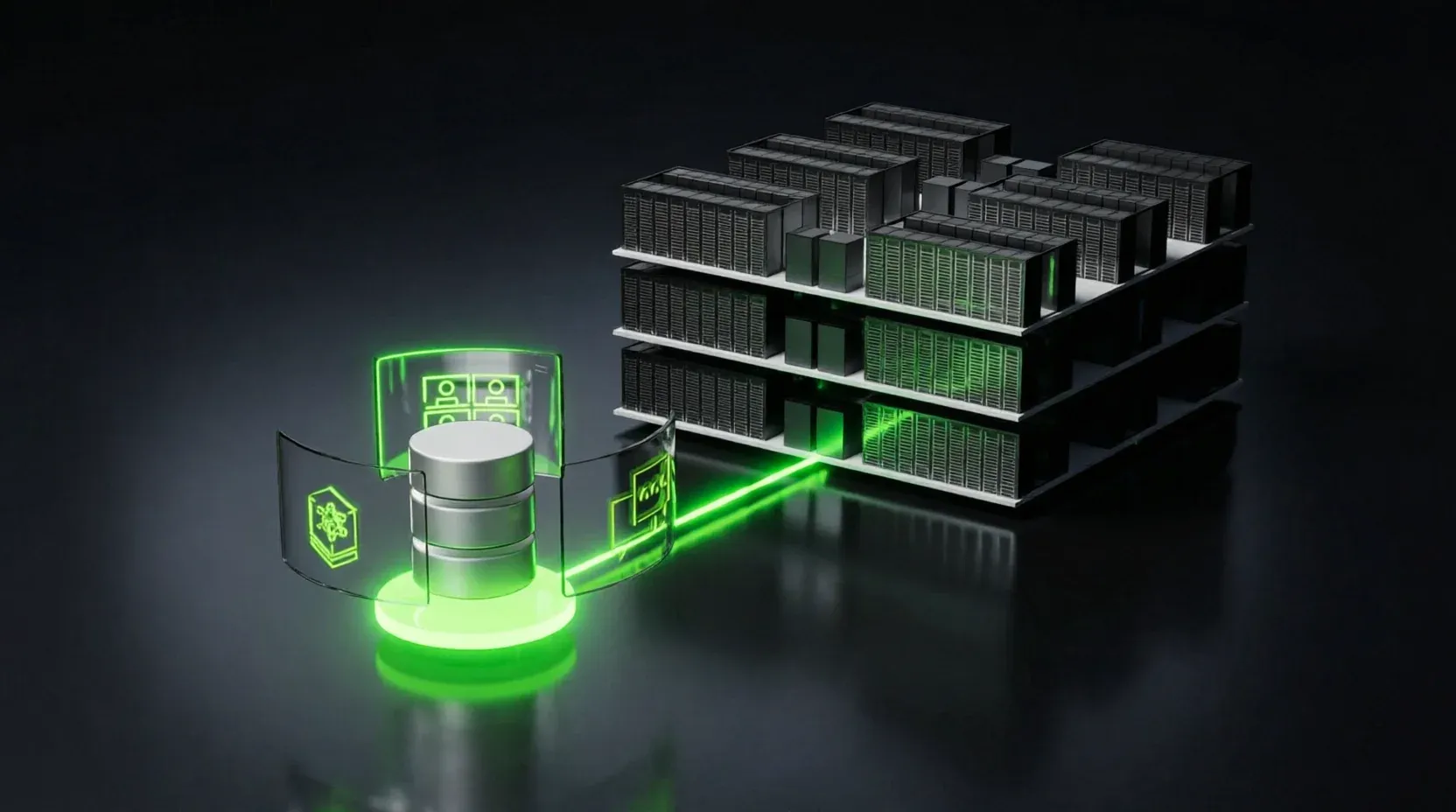
Enterprises are attempting to scale autonomous AI agents while navigating the inherent risks of over-permissive access and accidental data exposure. To address this, Bedrock Data has extended its Agent DLP™ technology to NVIDIA OpenShell, the open-source agent runtime within the NVIDIA Open Safety Platform. This integration aims to bridge the gap between traditional permission-based security and data-aware governance by providing a runtime policy evaluation layer. While NVIDIA OpenShell provides a secure, zero-trust sandbox for agent execution, Bedrock Data adds a layer of intelligence that evaluates the actual content of request payloads against an enterprise's specific data policies. This development is positioned to allow organizations to deploy long-horizon agents with greater confidence, ensuring that sensitive information remains protected even when an agent's technical permissions might otherwise allow its movement.
Securing Autonomous Agent Actions via NVIDIA OpenShell
The integration centers on the technical challenge where traditional permissions govern which resources an agent can use, but fail to distinguish between sensitive and harmless data within those resources. Bedrock Data is leveraging NVIDIA OpenShell’s Supervisor Middleware to inject data-aware decision-making into the agent's runtime environment. NVIDIA OpenShell utilizes a zero-trust architecture to provide isolation through kernel-level enforcement over an agent's processes, filesystem, and outgoing connections. However, the company notes that permissions alone cannot prevent an agent from, for example, writing sensitive data to a shared scratch table that it is technically authorized to use.
By integrating Bedrock Data’s Agent DLP™, the system can evaluate an agent's action based on the specific data involved in a request. Bedrock Data utilizes its Metadata Lake—an enterprise knowledge graph that classifies data across cloud, SaaS, AI, and on-premises environments at petabyte scale—to determine the context of the data. When an agent attempts an action, Bedrock Data evaluates the payload against established company policies and returns a decision to OpenShell. If the data is not cleared for the intended destination, OpenShell can block the action at the sandbox boundary. This allows for enforcement across various agent behaviors, including MCP tool usage, command-line invocations, or self-written code.
Implementing Data-Aware Governance at Runtime
Bedrock Data provides three distinct functional layers to the NVIDIA OpenShell ecosystem to enhance enterprise security posture. At runtime, the platform evaluates every action and returns a decision that OpenShell enforces, such as stopping a write operation of sensitive data to an unauthorized table while allowing permitted transfers to proceed. At design time, the integration is intended to show security teams an agent's "blast radius," illustrating which data permissions could lead to policy violations or toxic data combinations. Finally, the integration aims to make OpenShell's enforcement inherently data-aware, meaning that as data classifications or access rights change within the Metadata Lake, the enforcement decisions update automatically without requiring manual rule rewrites.
For enterprise buyers, this integration is being marketed as a way to increase agent autonomy while maintaining strict control. The company suggests that clear-cut, policy-compliant cases can proceed without human intervention, while only ambiguous or high-risk actions reach a designated approver. This is designed to prevent "dead ends" for agents by providing a path to revise actions rather than simply failing. Currently, the Bedrock Data Agent DLP™ for NVIDIA OpenShell is available to existing Bedrock Data customers as an OpenShell supervisor middleware service. Organizations can initially deploy the service in an "observe-only" mode to record decisions before transitioning to active enforcement.
Key Takeaways
- Bedrock Data has extended its Agent DLP™ technology to NVIDIA OpenShell to provide data-aware policy enforcement for autonomous AI agents.
- The integration utilizes NVIDIA OpenShell’s Supervisor Middleware to evaluate request payloads against an enterprise knowledge graph stored in Bedrock Data’s Metadata Lake.
- The service is available immediately to Bedrock Data customers and includes an "observe-only" mode for testing before full enforcement is enabled.
TechInsyte's Take
In our view, this integration highlights a critical shift in the enterprise AI security paradigm: the move from identity-centric security to content-centric governance. As organizations move beyond simple chatbots toward "long-horizon" agents capable of complex, multi-step reasoning, the risk of "permission creep" becomes a primary threat vector. An agent may have the correct identity and the correct permissions, yet still cause a massive data breach by moving sensitive information into an insecure context. By linking NVIDIA's hardware-level and kernel-level isolation with Bedrock Data's metadata-driven intelligence, the industry is signaling that the sandbox alone is no longer sufficient. For CIOs, the strategic value lies in the ability to move from "blocking everything" to "governing everything," potentially allowing for higher agent autonomy without the traditional manual oversight bottlenecks.
Questions & Answers
How does this integration solve the problem of "over-permissive" agent identities?
While traditional permissions define which resources an agent can access, they cannot distinguish between sensitive and non-sensitive data within those resources. This integration allows the system to evaluate the actual data payload in a request. Even if an agent has the technical permission to write to a table, Bedrock Data can instruct NVIDIA OpenShell to block that action if the specific data being written is restricted from that destination.
What role does the Metadata Lake play in the decision-making process?
The Metadata Lake acts as the intelligence engine, providing the "data context" required for enforcement. It is an enterprise knowledge graph that discovers and classifies data across cloud, SaaS, and on-premises environments at petabyte scale. It tracks what the data is, its origin, and its sensitivity, allowing the system to make decisions based on the data's actual properties rather than just simple pattern matching.
Can enterprises test this security layer without risking operational disruption?
Yes. The announcement states that teams can run the Agent DLP™ in an "observe-only" mode first. In this mode, the system records the decisions Bedrock Data would make without actually enforcing them, allowing security teams to validate policy accuracy before turning on active enforcement.
Does the security policy need to be manually updated as data moves?
No. Because the enforcement is tied to the Metadata Lake, which continuously discovers and classifies data as it changes, the decisions enforced by NVIDIA OpenShell are intended to be dynamic. As data classifications or access requirements change, the enforcement decisions update automatically without requiring administrators to rewrite security rules.
Source: Bedrock Data