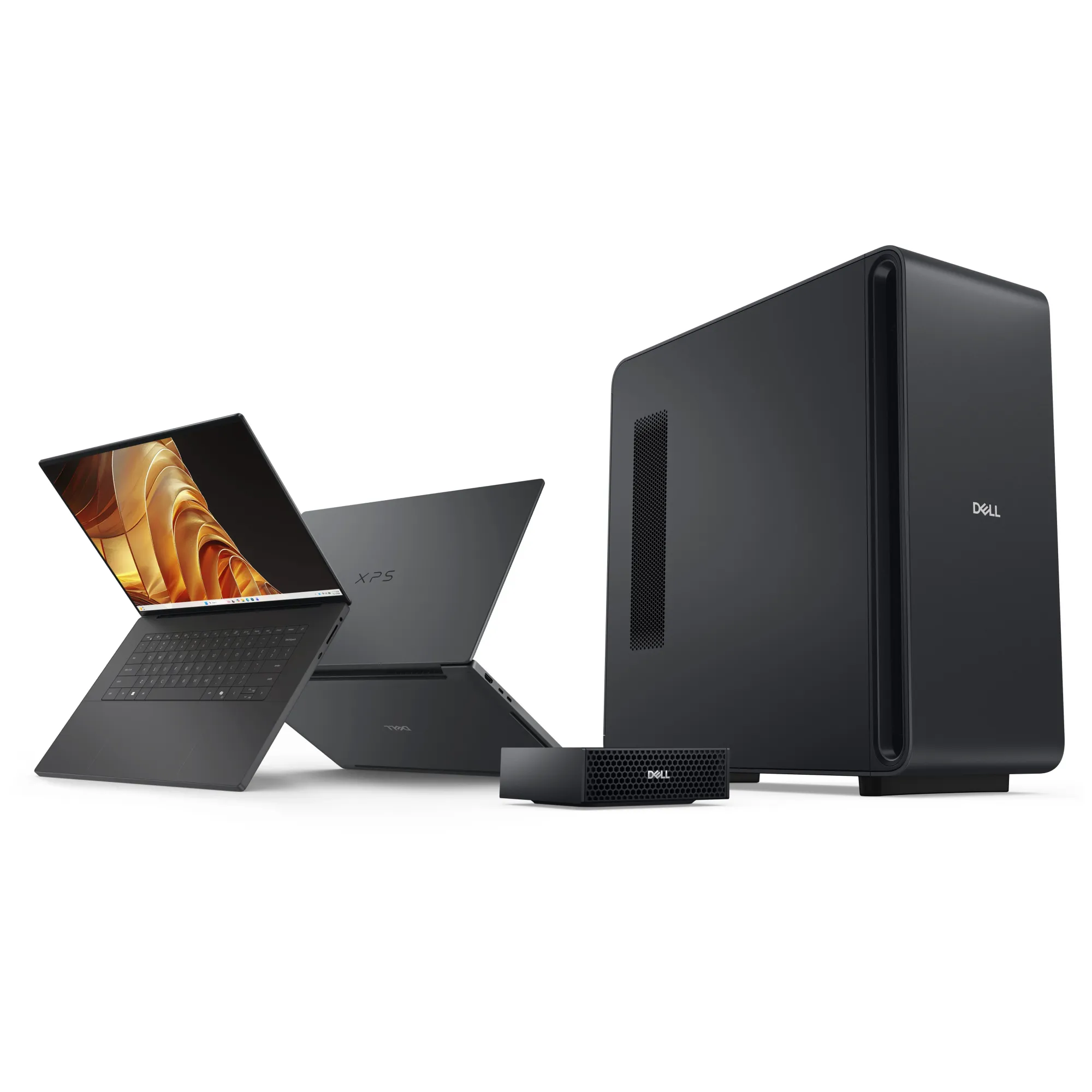
Dell Technologies, NVIDIA, and Microsoft are attempting to shift the center of gravity for artificial intelligence from centralized cloud data centers to local, edge-based hardware. By integrating NVIDIA’s RTX Spark™ superchip technology into a new lineup of Windows-based PCs and workstations, the trio is positioning local compute as the primary engine for "agentic AI"—autonomous AI agents that run continuously on-device. This strategic move targets two distinct high-value segments: professional creators requiring high-fidelity visual output and enterprise developer teams who need to build and deploy AI models within existing Windows-managed infrastructures. The announcement includes the XPS 16 Creator Edition laptop, the Dell Creator Edition Desktop, and the Dell Pro Precision with GB300 workstation. This hardware expansion aims to address the growing demand for privacy-by-default AI development and the need for high-parameter model inference without the latency or recurring costs associated with cloud dependency.
Expanding Local Compute via XPS and Creator Desktops
Dell is introducing hardware specifically engineered to handle the heavy computational loads of local AI development and creative workflows. The XPS 16 Creator Edition laptop represents the first time the XPS line has integrated the NVIDIA RTX Spark™ superchip, a component designed to unify AI, graphics, and memory into a single portable architecture. This superchip combines up to a 6,144-core NVIDIA Blackwell RTX GPU with a 20-core NVIDIA Grace CPU and up to 128GB of unified memory. By utilizing a unified memory architecture, the system allows the CPU and GPU to share a single large memory pool, which Dell claims enables the processing of massive 3D scenes and large AI models that typically exceed the capacity of traditional discrete-GPU laptops.
Complementing the mobile offering, the Dell Creator Edition Desktop brings this same superchip and 128GB of unified memory into a compact desktop form factor. Dell is positioning this desktop as a platform for "always-on" agentic AI, noting that the absence of thermal and battery constraints found in laptops allows for sustained performance during long renders or extended AI training and fine-tuning sessions. The desktop is rated for up to 1 petaflop of FP4 computing power and is capable of supporting AI models with up to 200 billion parameters. Both the XPS 16 and the Creator Edition Desktop are designed to support the full NVIDIA CUDA stack, enabling developers to prototype and run inference locally. This hardware is optimized for leading AI-assisted development tools, including GitHub Copilot, Claude Code, ComfyUI, and Cursor, while maintaining compatibility with professional creative suites like Adobe Premiere and DaVinci Resolve.
Scaling Enterprise AI with Dell Pro Precision GB300
For enterprise-grade requirements, Dell is consolidating its high-end workstation portfolio under the Dell Pro Precision brand, specifically introducing the Dell Pro Precision with GB300. This workstation is designed to bridge a traditional gap in enterprise IT: the divide between Linux-based AI development and Windows-based productivity environments. By making the GB300 available on Windows, Dell is offering a path for organizations to deploy advanced AI compute within their existing managed infrastructures, avoiding the need for new group policies or operating system changes.
The Dell Pro Precision with GB300 leverages the NVIDIA GB300 Grace Blackwell Ultra Desktop Superchip to provide significant scaling capabilities. The workstation can reach up to 20 petaflops of FP4 compute and 748GB of coherent memory. This level of performance is intended to support AI models with up to 1 trillion parameters running locally, which Dell suggests can eliminate cloud-related costs. To manage the thermal demands of such high-density compute, Dell is utilizing its proprietary MaxCool technology, which the company claims provides up to five times higher cooling efficiency. Furthermore, the integration of Windows Subsystem for Linux (WSL) allows developers to access the NVIDIA CUDA ecosystem and Linux-based AI frameworks directly within the Windows environment, theoretically removing the need for dual-boot configurations or frequent context switching between operating systems.
Key Takeaways
- The XPS 16 Creator Edition features an NVIDIA RTX Spark™ superchip with up to 128GB of unified memory and a 6,144-core NVIDIA Blackwell RTX GPU.
- The Dell Pro Precision with GB300 workstation scales to 20 petaflops of FP4 compute and 748GB of coherent memory, supporting models up to 1 trillion parameters.
- Dell, NVIDIA, and Microsoft are targeting the "agentic AI" market by providing hardware that supports local inference and development for tools like GitHub Copilot and Claude Code.
TechInsyte's Take
In our view, this hardware rollout signals a significant pivot in the AI deployment strategy for the enterprise. For much of the generative AI era, the industry has focused on massive, centralized cloud clusters. However, Dell, NVIDIA, and Microsoft are clearly betting that the next phase of maturity—agentic AI—requires the low latency, privacy, and cost-predictability of local compute. By embedding high-parameter model support (up to 1 trillion parameters on the GB300) directly into Windows-managed workstations, Dell is attempting to solve the "shadow AI" problem, where developers might otherwise bypass corporate IT to use unmanaged cloud resources.
This move also highlights a critical convergence of developer and creative workflows. The unified memory architecture in the XPS 16 is not just a spec bump; it is a fundamental architectural shift designed to treat AI models as local assets rather than remote services. While the success of this strategy depends on the continued evolution of local AI software frameworks, the hardware foundation being laid here suggests that the "AI PC" is moving rapidly from a marketing concept to a specialized, high-performance workstation category.
Questions & Answers
How does the unified memory architecture in the XPS 16 Creator Edition impact AI model performance?
The unified memory architecture allows the CPU and GPU to share a single, large memory pool of up to 128GB. This enables the system to run larger AI models and process massive 3D scenes that would typically exceed the memory limits of a traditional discrete-GPU laptop, facilitating local inference without cloud dependency.
What strategic advantage does the Dell Pro Precision with GB300 offer to enterprise IT departments?
The GB300 allows organizations to deploy high-performance AI compute within their existing Windows-managed environments. This means IT teams can provide developers with "personal supercomputers" capable of running models up to 1 trillion parameters without requiring new group policies, operating system changes, or the disruption of moving to Linux-only workflows.
Can these new Windows-based systems support existing Linux-based AI development tools?
Yes. Through the Windows Subsystem for Linux (WSL), developers can access the NVIDIA CUDA ecosystem and various Linux AI frameworks directly within the Windows environment. This allows for the use of professional AI tools without the need for dual-booting or switching between different operating systems.
What are the specific performance capabilities of the Dell Creator Edition Desktop?
The Dell Creator Edition Desktop is designed for continuous, high-performance workloads. It provides up to 1 petaflop of FP4 computing power and supports AI models with up to 200 billion parameters, making it suitable for extended AI training, fine-tuning, and complex 3D rendering.
Source: Dell Technologies