Dell Technologies and Kioxia say they have paired Dell’s PowerEdge R7725xd server with Kioxia’s LC9 Series SSDs to create a 2U configuration that can scale to 9.8 petabytes of flash storage. For enterprise teams planning AI pipelines, data lakes, and backup-heavy workflows, the headline is not just capacity. It is about how much storage can now be concentrated in a smaller footprint, with implications for power, rack utilization, and deployment planning.
What the companies announced
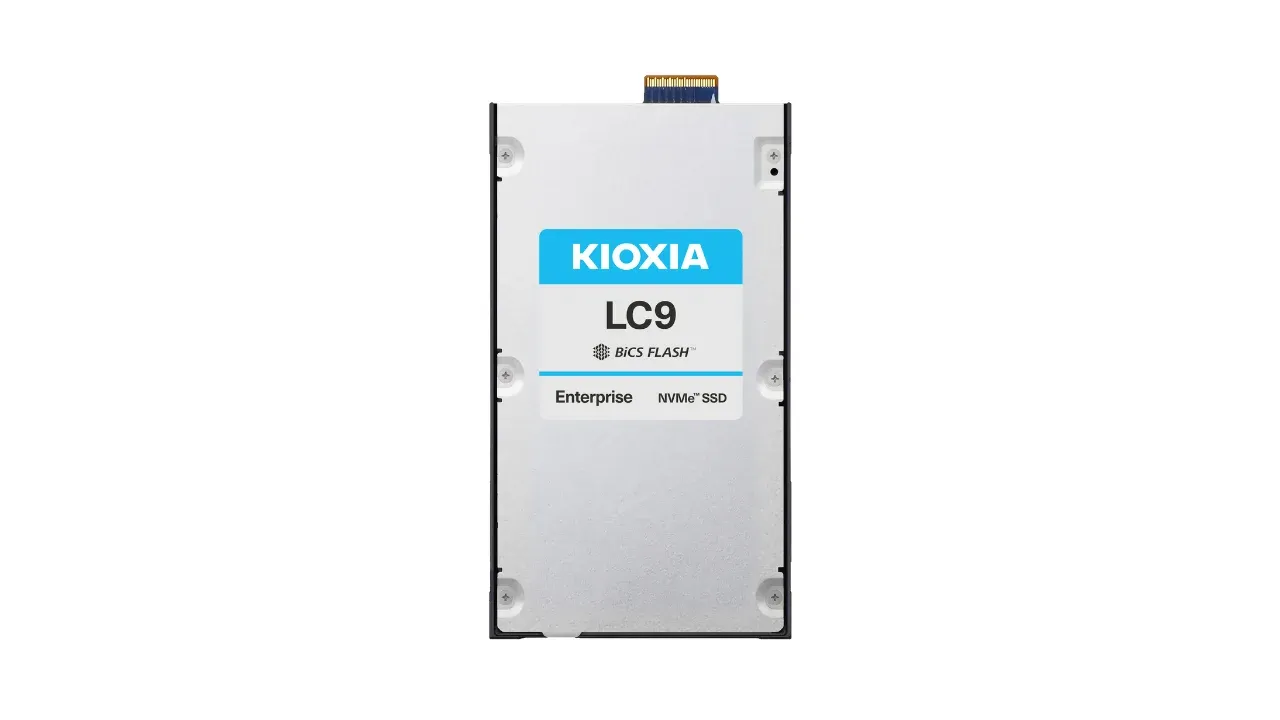
The configuration combines the Dell PowerEdge R7725xd server, AMD EPYC processors, and 40 Kioxia LC9 Series E3.L 245.76 TB NVMe SSDs. Dell says the server is designed for modern AI and data-centric workloads, with air-cooled storage options that complement GPU-enabled systems.
Kioxia says the LC9 Series delivers up to 245.76 TB of flash storage with PCIe 5.0 performance and is available in 2.5-inch, E3.S, and E3.L form factors. The companies describe it as the industry’s first NVMe SSD at this capacity built for generative AI environments. That claim is the vendor’s positioning, and buyers should evaluate it against their own workload requirements and storage validation criteria.
Why density matters for enterprise infrastructure
For CIOs, CTOs, and infrastructure leaders, storage density affects more than hardware count. Higher-capacity drives can reduce the number of servers, racks, and power feeds needed to store the same data. Dell and Kioxia say a comparable 9.8 PB setup using 30.72 TB SSDs would require seven more servers and 280 additional drives, with 8x the power consumption and more rack space.
That math matters in environments where AI training data, model checkpoints, logs, and large backups are expanding faster than facilities can scale. Dense storage can also simplify ingestion and data movement. Dell says the PowerEdge R7725xd supports up to 5x 400 Gbps NICs, which is relevant for teams building high-throughput pipelines or moving large volumes of data into AI systems.
The practical takeaway: storage architecture is becoming a board-level infrastructure issue, not just a procurement line item. Decisions about capacity now affect energy budgets, cooling, footprint, and how quickly teams can bring new AI workloads online.
Where this fits in AI and data operations
The strongest business case for this kind of platform is operational efficiency. If an enterprise can place more usable flash in fewer servers, it may be able to reduce the number of moving parts across storage, networking, and data management. That could help with backup consolidation, data lake expansion, and staging data for model training.
Kioxia’s Akihiro Kimura framed the announcement as a shift in how AI infrastructure is architected, arguing that customers could deploy massive ingestion streams, scale data lakes, and handle large backups in a smaller footprint. That is a company claim, but it aligns with the broader direction of enterprise infrastructure: fewer boxes, denser storage, and tighter integration between compute and flash.
Still, buyers should separate density from readiness. High-capacity SSDs do not automatically solve governance, data quality, or retrieval-performance problems. Teams will still need to test endurance, compatibility, workload behavior, and lifecycle economics before committing to a design.
Key Takeaways
- Dell and Kioxia say the PowerEdge R7725xd with 40 LC9 Series 245.76 TB SSDs can scale to 9.8 PB in a 2U server.
- The pitch is about more than capacity: it targets lower footprint, lower power use, and simpler storage scaling for AI and data-heavy workloads.
- Kioxia says the LC9 Series is its first NVMe SSD at this capacity for generative AI environments, but enterprises should validate that claim against real workloads.
- The configuration is most relevant for teams building AI data pipelines, large data lakes, and backup-intensive infrastructure.
TechInsyte's Take
This announcement signals where enterprise storage is heading: denser flash, fewer servers, and tighter integration with AI-oriented compute. For decision-makers, the immediate question is not whether the capacity number is impressive. It is whether this kind of architecture improves total cost, operational simplicity, and deployment speed in their own environment. The vendors have made a clear case for scale efficiency; the next step is proving that efficiency under production conditions.
Source: Businesswire