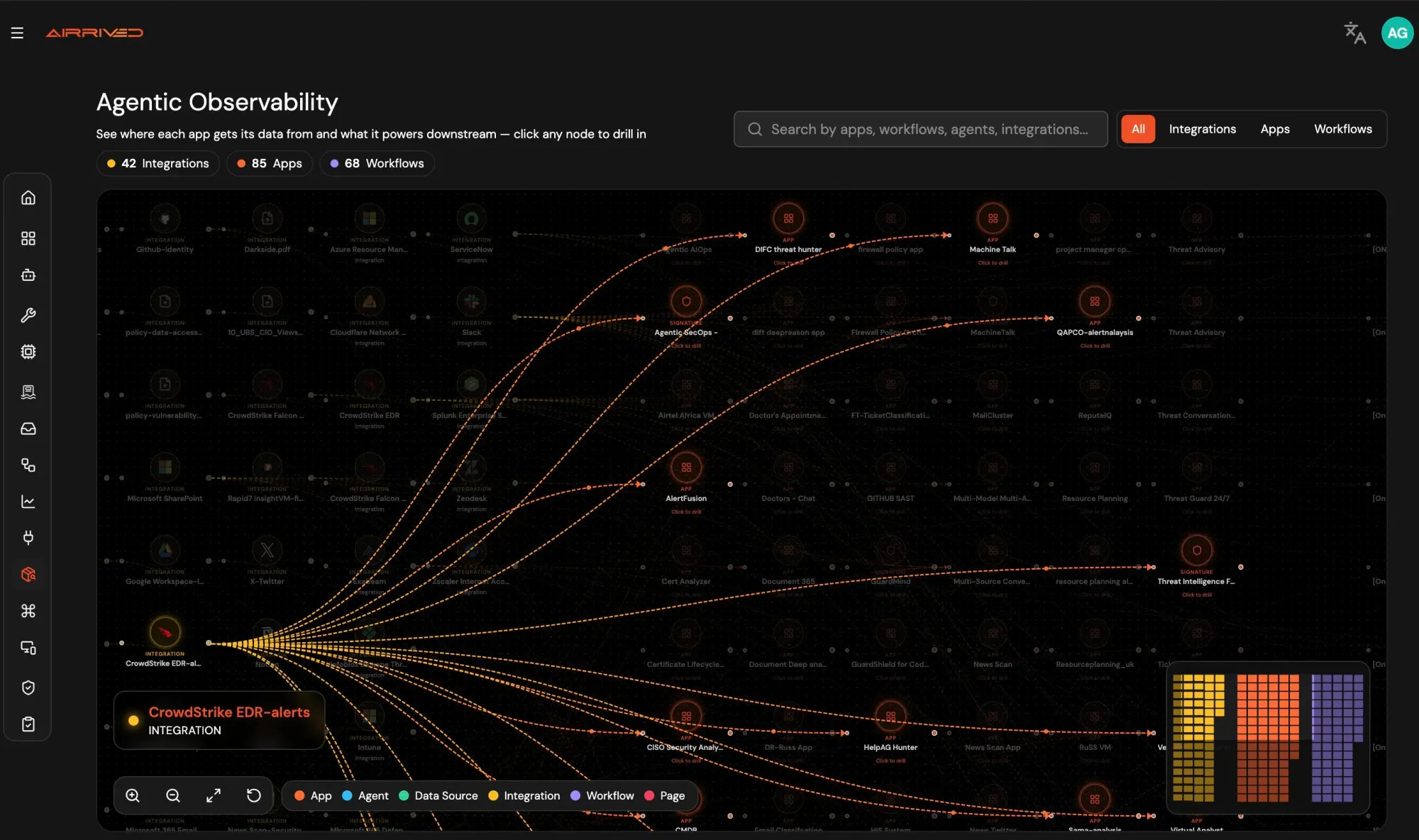
The shift from generative AI as a creative tool to a core operational engine is accelerating, as evidenced by new findings from the Digital Agency Network (DAN). Their recently published "The Agentic Workflows Guide" reveals that specialized AI agent deployments are drastically compressing traditional service timelines. One documented case shows a market intelligence process, which previously required more than a week of manual labor, being reduced to a single overnight run. This transition signals a move toward agentic architectures that prioritize data-heavy, repetitive tasks over purely creative generation.
Agency Deployment of Agentic Architectures
The DAN report, built with contributions from 10 agency leaders, details how firms are moving beyond simple prompting toward complex workflow architectures. Agencies are currently deploying both sequential multi-agent systems and parallel orchestration models. In these setups, specialized agents are assigned distinct roles—covering research, analysis, evaluation, content generation, and quality assurance—before the various outputs converge for a final human review. This structured approach allows for significant time savings in technical domains. For instance, one agency reported cutting SEO planning and audit projects from one or two days down to just a few hours.
Crucially, the report indicates that these efficiency gains are concentrated in operational rather than creative functions. Content production accounts for 28% of reported value, followed by data analysis and reporting at 24%, and internal operations at 17%. In contrast, creative production accounts for only 3% of the value captured, challenging the widespread assumption that generative AI would first disrupt creative output.
Multi-Vendor Stacks and Deployment Maturity
Rather than adopting a single monolithic AI provider, agencies are constructing layered, task-specific technology stacks. Anthropic’s Claude leads reported usage at 38%, followed by OpenAI at 23% and Google’s Gemini at 19%. Automation is being managed through platforms like n8n, which accounts for 12% of usage, while 8% of agencies utilize custom-built internal systems. This fragmentation suggests that firms are selecting tools based on specific capabilities in reasoning, automation, or research rather than vendor loyalty.
Deployment maturity remains uneven across the sector. While 10% of surveyed agencies have standardized agentic workflows across their entire organization and another 10% operate them at an enterprise grade, the majority are still in earlier stages. Specifically, 50% of agencies describe their current implementation as project-specific, and 30% characterize their use of AI agents as experimental. Despite this varying maturity, agencies are maintaining human-in-the-loop protocols to mitigate risks related to output quality inconsistency and a lack of predictability.
Key Takeaways
- Market intelligence processes have been compressed from over a week to a single overnight run using agentic workflows.
- Anthropic's Claude is the most utilized model among contributing agencies at 38%, outpacing OpenAI at 23%.
- Operational gains are outpacing creative ones, with content production (28%) and data analysis (24%) driving more value than creative production (3%).
TechInsyte's Take
In our view, this report confirms that the "AI revolution" in professional services is moving from the novelty of chat interfaces to the rigor of system-level orchestration. The data suggests that the real enterprise value is being captured in the "unsexy" middle office—data analysis, SEO audits, and internal operations—rather than in high-level creative ideation. For C-suite leaders, this signals a fundamental shift in the agency business model: the value of pure execution is plummeting, while the premium on strategic judgment and system orchestration is rising. Companies should prepare for a landscape where service providers are judged more on their proprietary agentic stacks than on their headcount.
Questions & Answers
How are agencies managing the risks of AI output inconsistency?
Agencies are utilizing human-controlled or semi-autonomous workflows. By keeping strategic review, quality assurance, and final approval in human hands, they aim to address the primary challenges of output quality and predictability.
What does the current vendor landscape suggest about enterprise AI adoption?
The spread of usage—with Claude (38%), OpenAI (23%), and Gemini (19%)—indicates that agencies are building layered stacks. They are selecting different tools for specific tasks like research, reasoning, and automation rather than committing to a single vendor.
Where is the most significant economic value being captured by AI agents?
Value is primarily landing in operational work. Content production (28%), data analysis and reporting (24%), and internal operations (17%) are the leading drivers, whereas creative production accounts for only 3% of reported value.
How is the agency business model expected to evolve due to these workflows?
The transition is expected to reduce the value of manual execution while increasing the value of judgment, strategy, and orchestration. This may lead to new revenue streams in strategic infrastructure consulting and IP-driven monetization.
Source: EINPresswire