
AI infrastructure teams are facing a dual-pressure challenge: the need for microsecond data access to keep GPUs saturated and the necessity of storing exabyte-scale datasets and checkpoints. Backblaze and WEKA have announced a collaboration to address this tension by providing a validated integration between high-performance and capacity storage tiers. This partnership aims to simplify the management of the full AI data lifecycle, from initial ingestion and training to inference and long-term retention, by pre-integrating WEKA’s performance tier with Backblaze B2’s object storage.
Validated Integration for AI Data Workflows
The collaboration targets the specific inefficiencies encountered when AI teams manage massive volumes of data across ingestion, training, checkpointing, and inference. By validating the integration between WEKA NeuralMesh and Backblaze B2, the companies are offering a solution where sizing, tuning, and testing are already completed. This approach is designed to protect engineering resources that would otherwise be spent building and testing custom connections between performance and capacity layers.
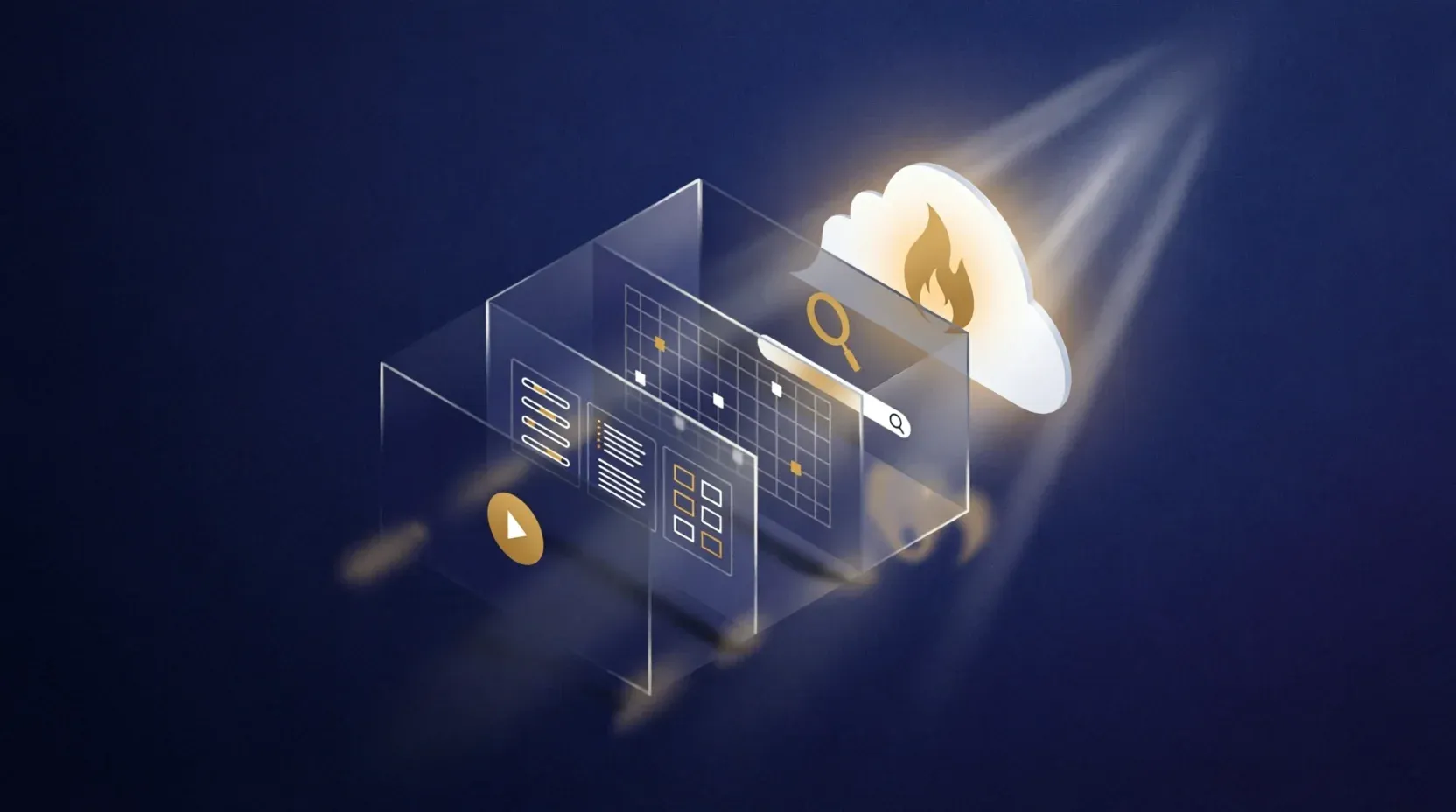
Under this framework, raw, unstructured data—such as media libraries or training sets—can reside in Backblaze B2. When these datasets enter a performance-sensitive phase, they can be served to accelerated compute via NeuralMesh. This creates a tiered architecture where high-speed access is reserved for active workloads, while large datasets, checkpoints, and outputs are retained in the more economical B2 capacity tier. This structure allows teams to recover saved inference data or revert to training checkpoints without improvising manual fixes during active runs.
Tiered Storage via NeuralMesh and B2
The technical foundation of this partnership relies on the distinct roles of the two platforms. WEKA’s NeuralMesh is engineered for performance-intensive environments, providing predictable performance as GPU clusters and datasets scale. It functions as the high-performance layer required to feed accelerated computing environments. In contrast, Backblaze B2 serves as the cloud object storage capacity layer, intended for the long-term retention of large-scale AI assets.
A key technical component of this integration is NeuralMesh’s Snap-to-Object capability, which has been specifically tested with Backblaze. This capability allows teams to pull data directly from the B2 capacity tier back into the performance tier. For example, if a training run requires a recovery to an earlier stage, the system can retrieve the necessary checkpoint from B2. This mechanism is intended to ensure that the transition between high-speed compute requirements and massive-scale storage requirements does not compromise overall system efficiency or data availability.
Key Takeaways
- Backblaze and WEKA have validated an integration to manage data across the AI lifecycle, including ingestion, training, and inference.
- WEKA NeuralMesh provides the performance tier for accelerated computing, while Backblaze B2 provides the capacity tier for large datasets and checkpoints.
- The integration includes NeuralMesh’s Snap-to-Object capability, which allows for the recovery of checkpoints and inference data from Backblaze B2.
TechInsyte's Take
In our view, this collaboration signals a growing recognition that the "AI tax"—the massive engineering overhead required to manage data movement between high-speed memory and cold storage—is becoming unsustainable for enterprise IT. By providing a pre-validated path between WEKA’s performance-centric NeuralMesh and Backblaze’s capacity-focused B2, these companies are attempting to commoditize the data orchestration layer. This move suggests that as AI workloads scale toward the exabyte level, the ability to seamlessly bridge the gap between microsecond GPU access and cost-effective object storage will become a primary competitive differentiator for infrastructure providers.
Questions & Answers
How does this partnership reduce the engineering burden on AI infrastructure teams?
The collaboration provides a validated solution where the integration, sizing, tuning, and testing of the two platforms are already completed. This allows teams to deploy a proven architecture instead of dedicating internal engineering resources to building and testing custom storage integrations themselves.
What specific technical capability enables data recovery from the capacity tier?
The integration utilizes NeuralMesh’s Snap-to-Object capability, which has been tested with Backblaze. This allows teams to pull checkpoints from a training run or recover saved inference data directly from the Backblaze B2 capacity tier.
How is the data distributed across the two storage layers?
Raw, unstructured data like training sets and media libraries are intended to be retained in Backblaze B2. When these datasets require high-performance access for active workloads, they are served via the WEKA NeuralMesh platform to accelerated compute environments.
What is the current availability of the Backblaze B2 certification for NeuralMesh?
According to the announcement, the certification of Backblaze B2 Cloud Storage for NeuralMesh is currently underway. Interested customers can contact either Backblaze or WEKA to begin the process.
Source: Businesswire