
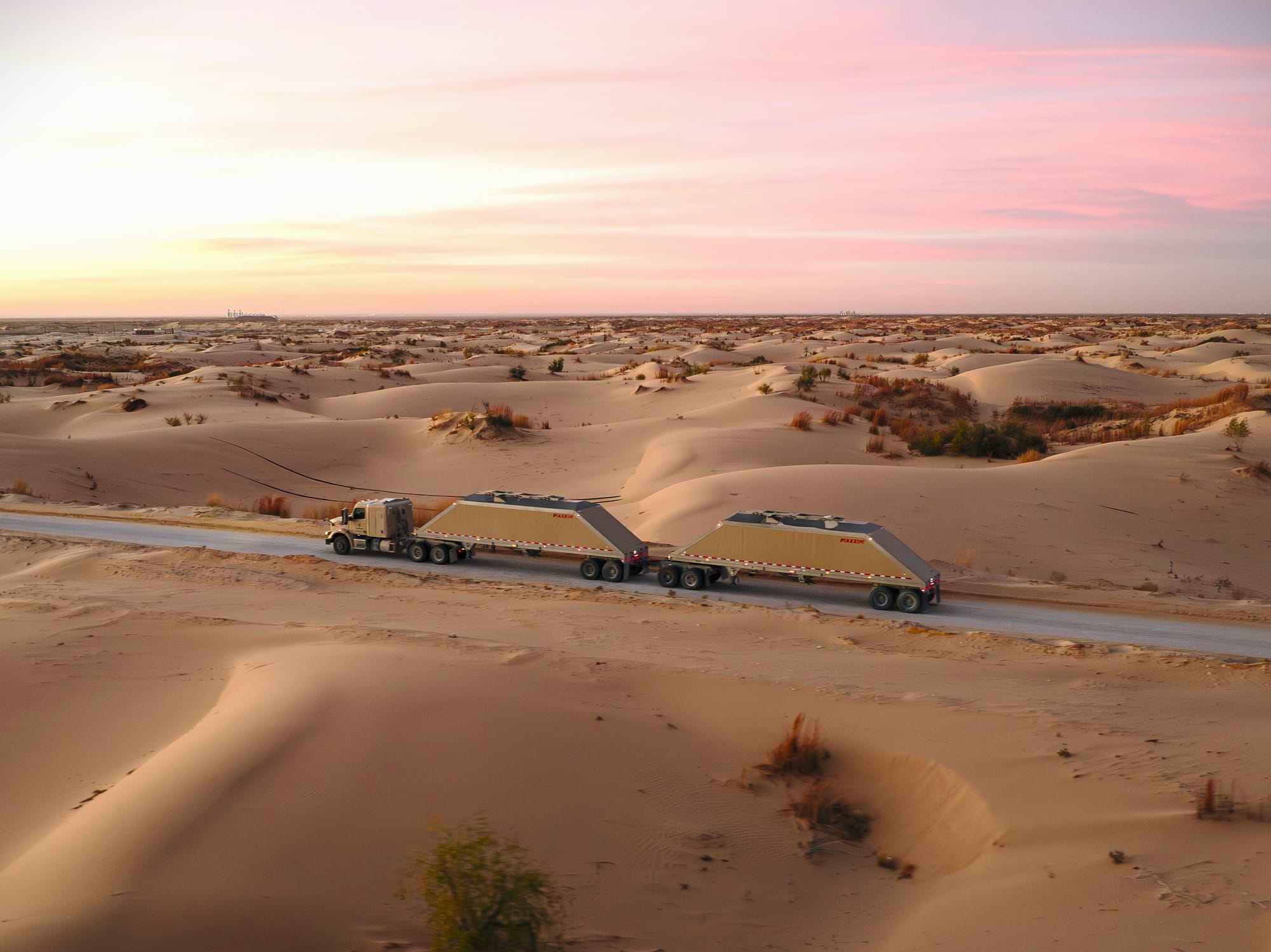
Atlas Energy Solutions is expanding its autonomous truck operations in the Permian Basin through a partnership with Kodiak AI. By integrating Physical AI-powered driving technology into its proppant delivery program, Atlas aims to digitally transform oilfield logistics. This expansion focuses on increasing delivery capacity and geographic reach to meet growing customer demand. For infrastructure and AI leaders, this deployment represents a commercial-scale application of autonomous heavy-duty transport within a specialized industrial environment, moving from isolated load-out points toward broader public road integration.
Kodiak-Powered Fleet Expansion and Timelines
Atlas is scaling its autonomous operations by expanding driverless proppant deliveries to a second simultaneous load-out point along its 42-mile Dune Express sand conveyor system. Previously, driverless trucks operated from only one load-out point at a time. The new configuration allows concurrent operations at sites in Texas and New Mexico, located approximately 90 minutes apart, which increases daily load counts and customer responsiveness.
The companies have established a specific delivery timetable to grow the fleet. As of March 31, 2026, Atlas operated 28 driverless trucks. This number is projected to reach 100 autonomous delivery trucks by mid-2027. Furthermore, Atlas and Kodiak expect the fleet to operate on public roads by early 2027, pending the achievement of regulatory and operational milestones. This transition to public roads is positioned to dramatically expand the reach of the autonomous fleet beyond the current restricted logistics corridors.
Permian Basin Operational Metrics and Capabilities
The autonomous program has scaled since its 2024 deployment. By March 31, 2026, the 28-truck fleet operated across 15 distinct routes, hauling more than 450,000 tons of sand across approximately 7,000 loads. In the first quarter of 2026 alone, the fleet completed over 23,500 driverless hours of operation. A peak performance milestone occurred on July 20, when Kodiak-powered trucks delivered 176 loads of sand in a single day, marking an all-time high for the 18-month deployment period.
Beyond fleet size, the partnership has introduced specialized hauling capabilities. Atlas and Kodiak collaborated to enable a single autonomous truck to haul three connected trailers simultaneously. This represents the first autonomous triple-trailer trucking operation, with a combined loaded weight exceeding 135 tons. By integrating mining and transportation automation with last-mile logistics management, Atlas seeks to reduce operational complexity and risk while simplifying access to oil and natural gas resources. The company did not disclose further details regarding the specific AI software versions used.
Key Takeaways
- Atlas plans to expand its Kodiak-enabled autonomous fleet from 28 trucks to 100 vehicles by mid-2027.
- The fleet achieved a record 176 loads of sand delivered in a single day on July 20.
- The partnership successfully executed the first autonomous triple-trailer operation with a loaded weight over 135 tons.
TechInsyte's Take
In our view, this expansion signals a shift from "proof-of-concept" to industrial-scale deployment for Physical AI. While many autonomous vehicle projects remain trapped in testing phases, Atlas is utilizing a controlled environment—the Dune Express conveyor system—to build a factual performance baseline before hitting public roads in 2027. The move to dual load-out points suggests that the primary bottleneck for autonomous logistics is no longer the AI's ability to drive, but the physical infrastructure's ability to support high-volume throughput. For B2B buyers, this demonstrates that the most viable path for autonomous adoption is through specialized, high-intensity industrial corridors.
Source: BUSINESSWIRE