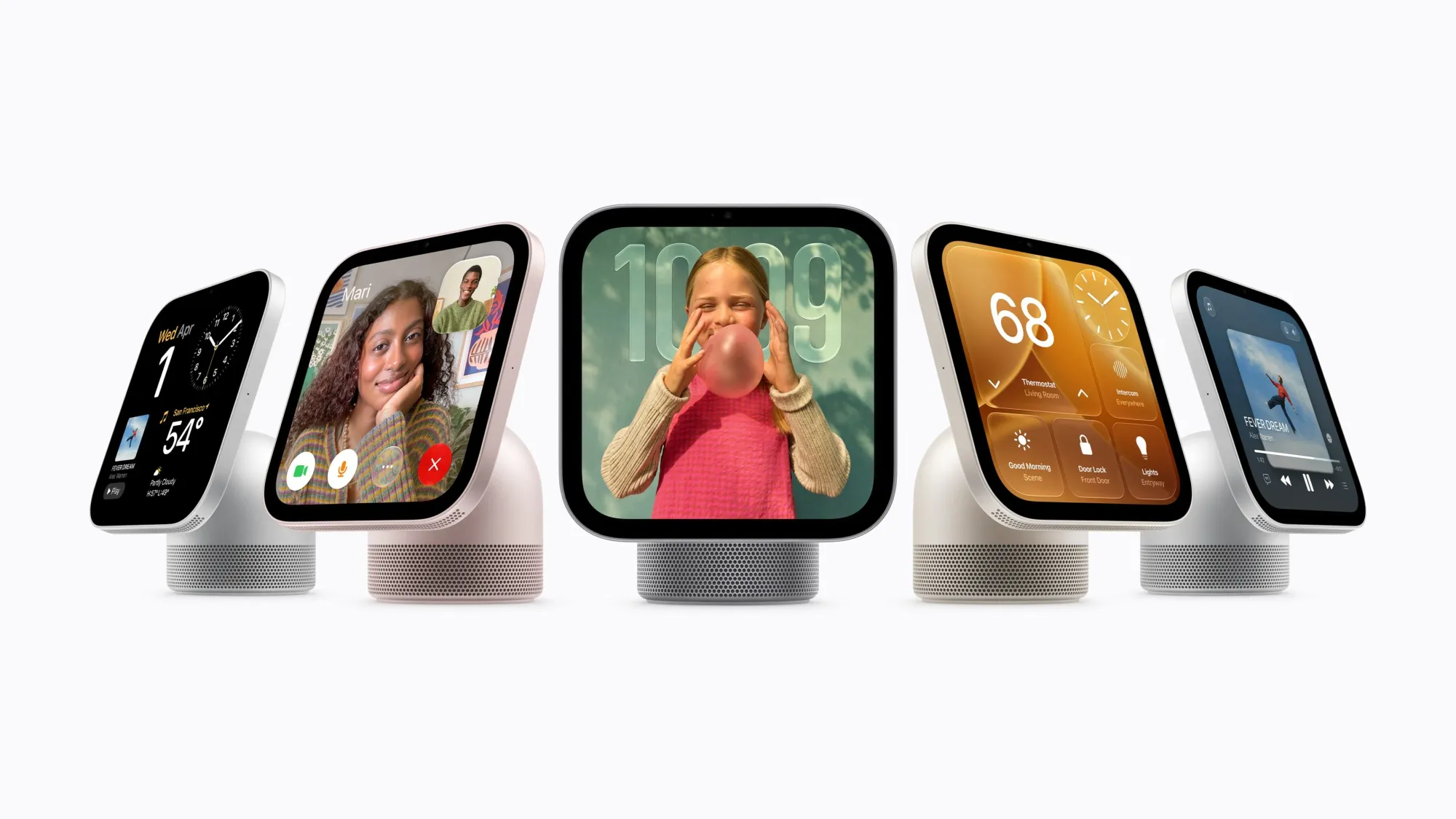
Apple is attempting to consolidate the fragmented smart home market by embedding generative AI directly into the domestic environment through its new Apple HomeView hardware. By leveraging Apple Intelligence and a redesigned, more conversational Siri AI, the company is positioning this 7-inch Liquid Retina display as a centralized intelligence hub rather than a simple smart display. This strategic move seeks to bridge the gap between personal mobile computing and ambient home automation, using facial recognition to deliver individualized data streams within a shared household setting. The device, which starts at $299, represents a significant push to make AI-driven personal context a permanent fixture of the physical home infrastructure.
Apple HomeView Hardware and Siri AI Capabilities
The Apple HomeView hardware features a 7-inch Liquid Retina display housed in an aluminum enclosure, designed for either tabletop use via a stainless steel hinge or wall-mounted installation. The company is offering two primary form factors: a standard tabletop model available in silver, starlight, rose pink, and space gray, and a dedicated wall-mounted version available in space gray and silver. To support the latter, Apple has partnered with Schneider Home to provide three purpose-built mounts, including the Power Mount USB-C Wall Connector ($59.95) and the Power Mount AC Wired ($79.95), with a PoE Wired option expected in early 2027 for $129.95.
At the core of the device is Siri AI, which Apple describes as a more capable and conversational assistant powered by advanced Apple silicon. The system is designed to utilize "personal context" by drawing on information from a user's paired, Apple Intelligence-enabled iPhone or iPad, including data from Messages, Calendar, and Apple Music. This allows the device to perform cross-app actions and surface relevant information based on the user's specific schedule or communication history. Even for users without an Apple Intelligence-enabled mobile device, the company states that Siri AI will still provide broad world knowledge and improved music discovery.
The hardware also includes a custom-engineered acoustic system consisting of two full-range drivers in the display for Spatial Audio, complemented by a down-firing woofer and two force-cancelling passive radiators in the base. This setup is intended to optimize loudness and bass response through computational audio. For smart home management, the device can livestream up to nine video feeds simultaneously via the Home Camera face, providing a centralized dashboard for monitoring security and IoT accessories.
Privacy Architecture and Intelligence Integration
Apple is positioning HomeView as a secure gateway for home automation, emphasizing a hardware-level approach to data isolation. The device utilizes the A18 chip, which incorporates "Secure Exclaves"—protected, compartmentalized runtimes designed to process camera and microphone data separately from the rest of the system. According to the company, data processed within these Secure Exclaves is inaccessible to the HomeView software, third-party apps, the user, and Apple itself. This architecture is intended to ensure that sensitive biometric and environmental data remains segregated from the primary operating environment.
To manage multi-user households, HomeView employs facial recognition to identify up to six different individuals. The company claims this allows the device to shift from a general household screen to a personalized experience, surfacing private content in apps like Messages, Calendar, and Reminders only when the specific enrolled user is recognized and their paired iPhone or iPad is present and recently unlocked. This mechanism is intended to prevent unauthorized access to personal data in shared living spaces.
For cloud-based intelligence, Siri requests can utilize "Private Cloud Compute," a system Apple claims extends device-level privacy to the cloud by ensuring data is neither stored nor made accessible to Apple. This integration is critical for the device's ability to handle complex natural language queries while maintaining the company's stated privacy standards. Furthermore, the device supports the Apple Home Collection, a new lineup of smart home products developed in collaboration with LG Electronics and Schneider Electric, alongside Matter-compatible accessories, to create a unified ecosystem for managing lights, thermostats, and locks.
Key Takeaways
- Apple HomeView features a 7-inch Liquid Retina display and is priced at $299 for both tabletop and wall-mounted models in the U.S.
- The device utilizes Siri AI and Apple Intelligence to provide conversational assistance and personalized context by drawing on data from paired iPhone or iPad devices.
- Security is managed via A18 chip "Secure Exclaves," which isolate camera and microphone data from the rest of the system to prevent software-level access.
TechInsyte's Take
In our view, Apple HomeView is less about entering the smart display market and more about establishing a physical anchor for the Apple Intelligence ecosystem. By moving generative AI from the pocket to the tabletop, Apple is testing whether "ambient intelligence"—AI that understands your context without being explicitly prompted—can become a standard component of home infrastructure. The heavy emphasis on Secure Exclaves and Private Cloud Compute suggests that Apple identifies privacy as the primary barrier to widespread consumer adoption of AI-driven home monitoring.
This launch also signals a strategic shift toward deeper hardware-software integration in the IoT space. By collaborating with Schneider Electric and LG Electronics on the Apple Home Collection, Apple is attempting to dictate the standards for the "smart home dashboard." However, the current unavailability of the device in the European Union due to Siri AI's regulatory status in iOS highlights a significant geopolitical risk for Apple's AI-first hardware strategy. Success for HomeView will depend on whether the convenience of personalized, facial-recognized AI outweighs the inherent privacy concerns of placing a camera-equipped, AI-driven hub in the center of the home.
Questions & Answers
How does Apple HomeView maintain user privacy in a shared household environment?
The device uses facial recognition to identify up to six different users, ensuring that personal content from apps like Messages and Calendar is only displayed when the specific user is recognized and their paired, unlocked iPhone or iPad is present. Additionally, the A18 chip uses Secure Exclaves to isolate microphone and camera data from the rest of the system.
What is the strategic importance of the partnership with Schneider Home?
The partnership provides specialized mounting hardware, such as the Power Mount USB-C and AC Wired options, which allows the HomeView to be integrated into home infrastructure more professionally. This supports Apple's goal of making the device a permanent, wall-mounted fixture for smart home management.
Can HomeView function as a smart home hub without an Apple Intelligence-enabled iPhone?
Yes. While users with Apple Intelligence-enabled devices will receive more personalized responses by drawing on personal context from their mobile devices, the company states that all users will still benefit from Siri AI’s broad world knowledge, conversational capabilities, and music discovery.
What are the primary hardware specifications for the HomeView audio system?
The audio system includes two custom full-range drivers in the display for Spatial Audio, a down-firing woofer, and two force-cancelling passive radiators in the base. The system uses Apple silicon and real-time sensors to perform computational audio optimization.
Source: Apple