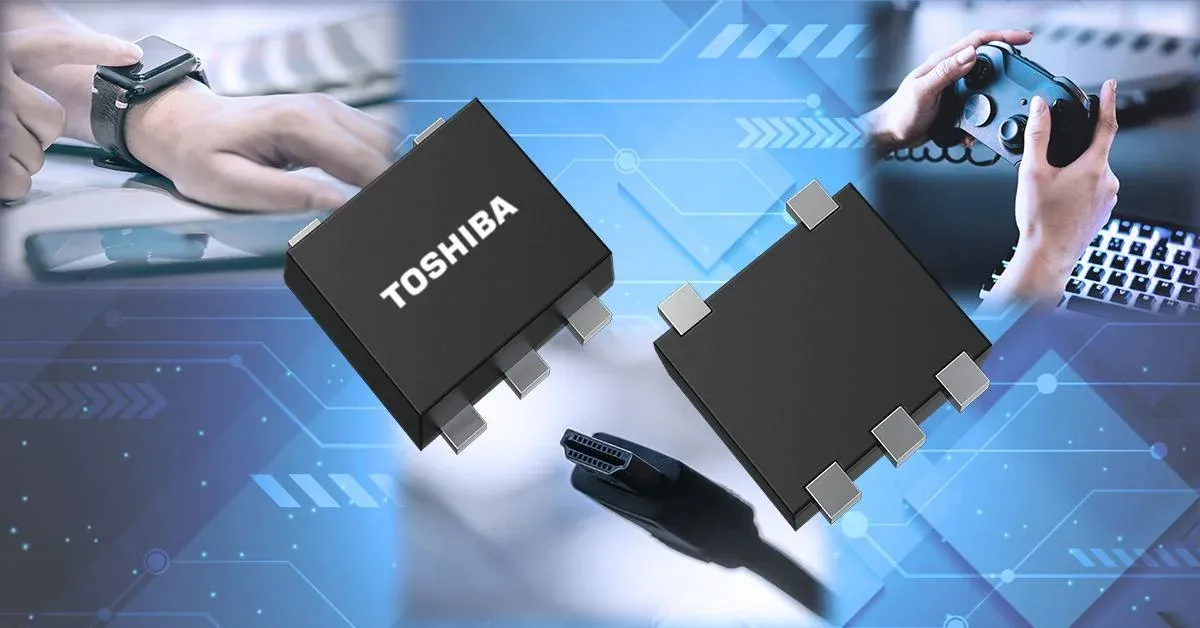
Toshiba Electronic Devices & Storage Corporation is targeting the growing demand for high-density, low-voltage power management by launching its TCKE5 Series of electronic fuses (eFuse ICs). This strategic move addresses the increasing complexity of protecting power supply lines in miniaturized electronics where traditional physical fuses may no longer suffice. By introducing components capable of operating as low as 1.7V, Toshiba is positioning itself to serve the specific requirements of 1.8V power lines, a critical need for modern, low-power hardware architectures. The company has confirmed that shipments for the four-product lineup, which includes the TCKE501UA, TCKE501UL, TCKE502UA, and TCKE502UL, begin immediately. This expansion signals a focused effort to capture market share in the rapidly evolving sectors of wearable technology, IoT devices, and high-density consumer electronics.
Toshiba TCKE5 Series Deployment and Specifications
The TCKE5 Series introduces a specialized protection layer for power supply circuits, specifically designed to mitigate risks from overcurrent and short-circuit conditions. Unlike standard glass tube or chip current fuses, these eFuse ICs provide active overcurrent protection by shutting off the output when specific thresholds are met. Toshiba has engineered these devices to support an input voltage range of 1.7V to 5.5V, making them the first in the company's eFuse portfolio to accommodate 1.8V power lines. This capability is particularly relevant for applications such as SD memory cards and other low-voltage components.
To maintain system reliability without causing unnecessary downtime, the series incorporates an overcurrent protection mask time (tOCP) of 2.4ms (typical). This feature is designed to prevent accidental shutdowns triggered by transient peak currents. Furthermore, the overcurrent detection threshold (IOCP) is not fixed; engineers can configure protection levels to match specific system requirements by using an external resistor (RILIM). The lineup offers flexibility in fault response, providing both auto-retry types, which automatically recover circuit operation, and latch types, which require an external signal for recovery. This variety allows hardware designers to select the specific response mechanism that best fits their device's power sequencing and safety protocols.
Hardware Miniaturization and Integration Capabilities
Toshiba is leveraging the SOT-353F (UFV) package to address the physical constraints of modern electronic design. Measuring approximately 2.0 x 2.1 x 0.7mm, this small, low-profile package is intended to reduce the PCB mounting area, facilitating the high-density layouts required for wearable and IoT devices. This focus on miniaturization directly supports the industry trend toward smaller, more power-efficient hardware that must still maintain robust electrical protection.
The technical specifications of the TCKE5 Series indicate a high level of integration for power management. The devices support 1.8V, 3.3V, and 5V power lines, covering a broad spectrum of common voltage standards. For instance, the output current (IOUT) can reach 1.0A DC and 2.0A during pulses. The series also includes different slew-rate settings, allowing developers to meet precise power sequencing needs. By integrating these multiple functions—protection, configuration, and miniaturized form factors—into a single IC, Toshiba is providing a solution that aims to simplify the design process for complex power supply circuits in USB devices, HDMI devices, laptop PCs, and gaming consoles.
Key Takeaways
- The TCKE5 Series supports an input voltage range of 1.7V to 5.5V, marking Toshiba's first eFuse lineup to support 1.8V power lines.
- The products are housed in a compact SOT-353F (UFV) package measuring 2.0 x 2.1 x 0.7mm (typical) to enable high-density PCB designs.
- The lineup offers two distinct fault response modes: auto-retry for automatic recovery and latch type for signal-triggered recovery.
TechInsyte's Take
In our view, Toshiba’s launch of the TCKE5 Series is a calculated response to the "voltage squeeze" occurring in the IoT and wearable sectors. As components shrink and operating voltages drop toward the 1.8V threshold, the margin for error in power management narrows significantly. By providing a configurable eFuse that can distinguish between a transient current spike and a genuine short circuit via the 2.4ms mask time, Toshiba is moving beyond simple "on/off" protection toward intelligent power resilience. This signals that the semiconductor market is shifting away from generic protection components toward highly specialized, application-specific ICs that prioritize both physical space and electrical precision. For enterprise hardware designers, this reduces the trade-off between device compactness and system reliability, a critical factor in the next generation of edge computing and mobile hardware.
Questions & Answers
How does the TCKE5 Series prevent unnecessary system shutdowns during transient power spikes?
The series utilizes an overcurrent protection mask time (tOCP), which is typically 2.4ms. This feature allows the device to ignore brief, transient peak currents that do not represent a sustained fault, thereby preventing the system from shutting down unnecessarily.
What flexibility does Toshiba provide for engineers configuring overcurrent protection levels?
Engineers can set the overcurrent detection threshold (IOCP) using an external resistor (RILIM). This allows the protection levels to be customized to meet the specific electrical requirements and safety tolerances of a particular system.
In what ways does the TCKE5 Series support high-density hardware design?
The series uses the SOT-353F (UFV) package, which is a small, low-profile footprint measuring approximately 2.0 x 2.1 x 0.7mm. This miniaturization helps reduce the required PCB mounting area, making it suitable for space-constrained devices like wearables and IoT hardware.
What are the primary differences between the auto-retry and latch type products in this lineup?
The auto-retry type is designed to automatically recover circuit operation once the fault condition is cleared, whereas the latch type requires an external signal to trigger the recovery process. This allows designers to choose a response mode that aligns with their specific power sequencing and safety needs.
Source: Toshiba