


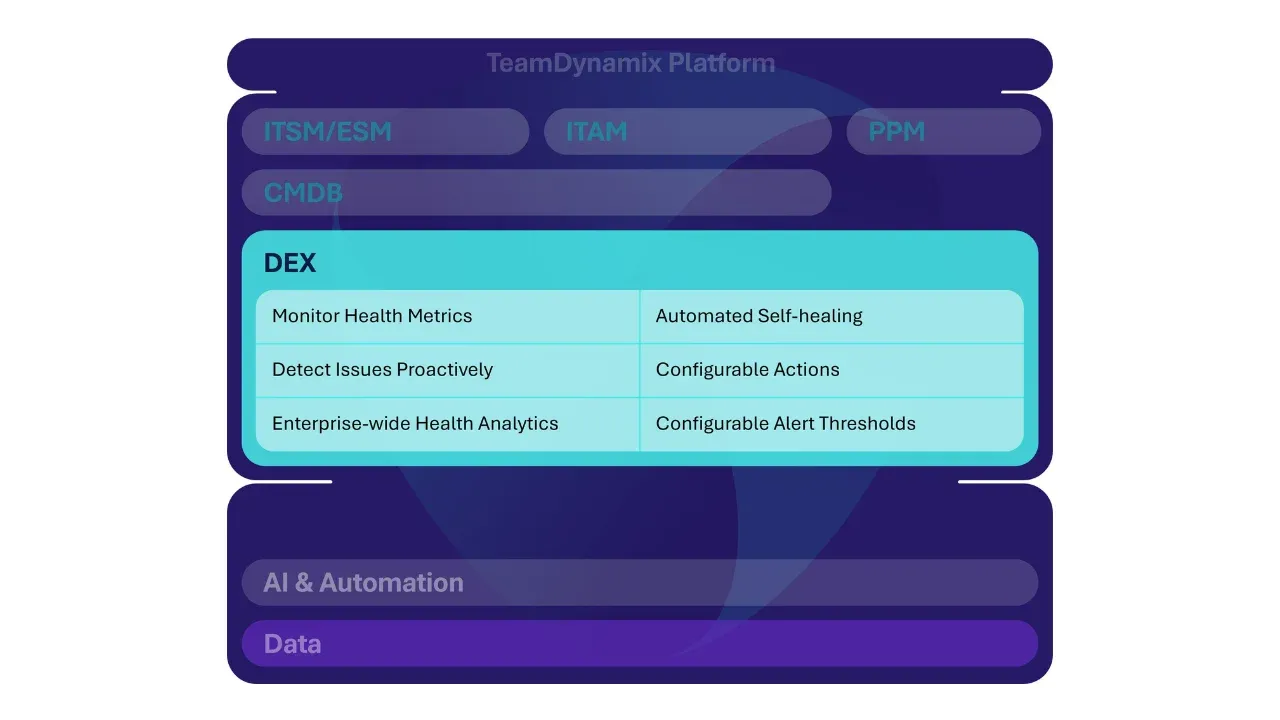
TeamDynamix is positioning its new Digital Employee Experience (DEX) solution as a method to bridge the visibility gap between silent hardware failures and IT service management. By integrating DEX natively into its existing no-code platform, the company aims to combine IT Service Management (ITSM) and IT Asset Management (ITAM) to address unrecorded technical friction. This strategic move targets the estimated two-thirds of employees who encounter technology issues but never report them, potentially recovering lost productivity hours through automated, proactive intervention.
Unifying ITSM, ITAM, and DEX Capabilities
The launch of TeamDynamix DEX introduces a platform-native layer designed to monitor computer telemetry and trigger autonomous responses. Rather than operating as a standalone tool, DEX integrates directly with the company's core ITSM and ITAM offerings. This unification allows IT teams to manage service delivery and asset lifecycles through a single, no-code interface. According to CEO Rod Mathews, the goal is to provide powerful capabilities without the high complexity typically associated with developer-heavy systems. By embedding DEX into the core platform, TeamDynamix is attempting to shift IT service delivery further left, moving from reactive ticket resolution to proactive, automated maintenance. This approach seeks to modernize service operations by linking real-time device health directly to enterprise automation workflows and existing service management protocols.
Telemetry Monitoring and Autonomous Remediation
Technically, DEX functions by tracking critical health signals across a fleet of Windows, macOS, and Linux devices. The system monitors specific metrics, including CPU, memory, disk, and network performance, alongside thermal throttling, sleep/wake reliability, and per-application crash behavior. These data points are aggregated into a centralized health score. When telemetry signals breach configured thresholds, the platform can execute risk-gated remediations from a pre-built library of cross-platform automations. If autonomous remediation is not possible, the system triggers a workflow through the platform’s AI and automation layer or generates a ticket containing full user and telemetry details. This mechanism is intended to address the "silent friction" reported by Chief Product Officer Andrew Graf, where unaddressed incidents cost an estimated one to five hours per occurrence.
Key Takeaways
- TeamDynamix DEX monitors telemetry across Windows, macOS, and Linux from a single implementation.
- The solution aims to reduce computer-related ticket volumes by 60% to 70% via autonomous remediation.
- The platform targets a 10% to 15% reduction in per-computer Total Cost of Ownership (TCO) by using measured health for hardware refreshes.
TechInsyte's Take
In our view, TeamDynamix is making a calculated bet that the future of enterprise IT lies in reducing the "visibility gap" created by unreported user issues. By bundling DEX with ITSM and ITAM, they are moving away from the fragmented "best-of-breed" stack that often requires heavy integration lifting. This unified, no-code approach suggests a strategic focus on the mid-to-large enterprise that lacks the massive developer resources required to maintain complex, custom-coded automation environments. If the company can deliver on its claim of 60-70% ticket reduction, it will fundamentally change how IT departments justify hardware refresh cycles and labor allocation.
Questions & Answers
How does DEX impact the hardware lifecycle and TCO?
DEX enables IT leaders to move away from arbitrary hardware refresh schedules. By monitoring actual device health signals, companies can refresh computers based on measured performance, which TeamDynamix claims can lower per-computer TCO by 10% to 15%.
What specific technical metrics does the DEX solution monitor?
The platform tracks a variety of telemetry signals, including CPU, memory, disk, and network performance. It also monitors thermal throttling, sleep and wake reliability, and how specific applications behave during crashes.
Can DEX manage a heterogeneous device environment?
Yes. The solution is designed to monitor computers running Microsoft Windows, macOS, and various Linux distributions from a single implementation without requiring a specific query language.
How does the platform handle issues that cannot be fixed automatically?
When a signal exceeds a threshold and autonomous remediation is not triggered, the system uses its AI and automation layer to initiate a workflow or creates a support ticket that includes complete computer, user, and telemetry data.
Source: Businesswire


