Operation Ramz, a 13‑country INTERPOL initiative that ran from October 2025 to 28 February 2026, marked a rare instance of coordinated law‑enforcement action across the Middle East and North Africa (MENA). Team Cymru, a provider of external threat intelligence and internet‑scale visibility, joined other private‑sector partners—Group‑IB, Kaspersky, the Shadowserver Foundation and TrendAI—to supply the data that enabled arrests, victim identification, and infrastructure takedowns. The results illustrate how shared telemetry can accelerate investigations and, for enterprise security teams, underscore the growing importance of integrating third‑party intelligence into day‑to‑day operations.
Operation Ramz: Scope and Immediate Outcomes
INTERPOL’s Operation Ramz targeted phishing, malware distribution, and large‑scale cyber scams that have inflicted significant financial loss in the region. The operation’s public metrics include:
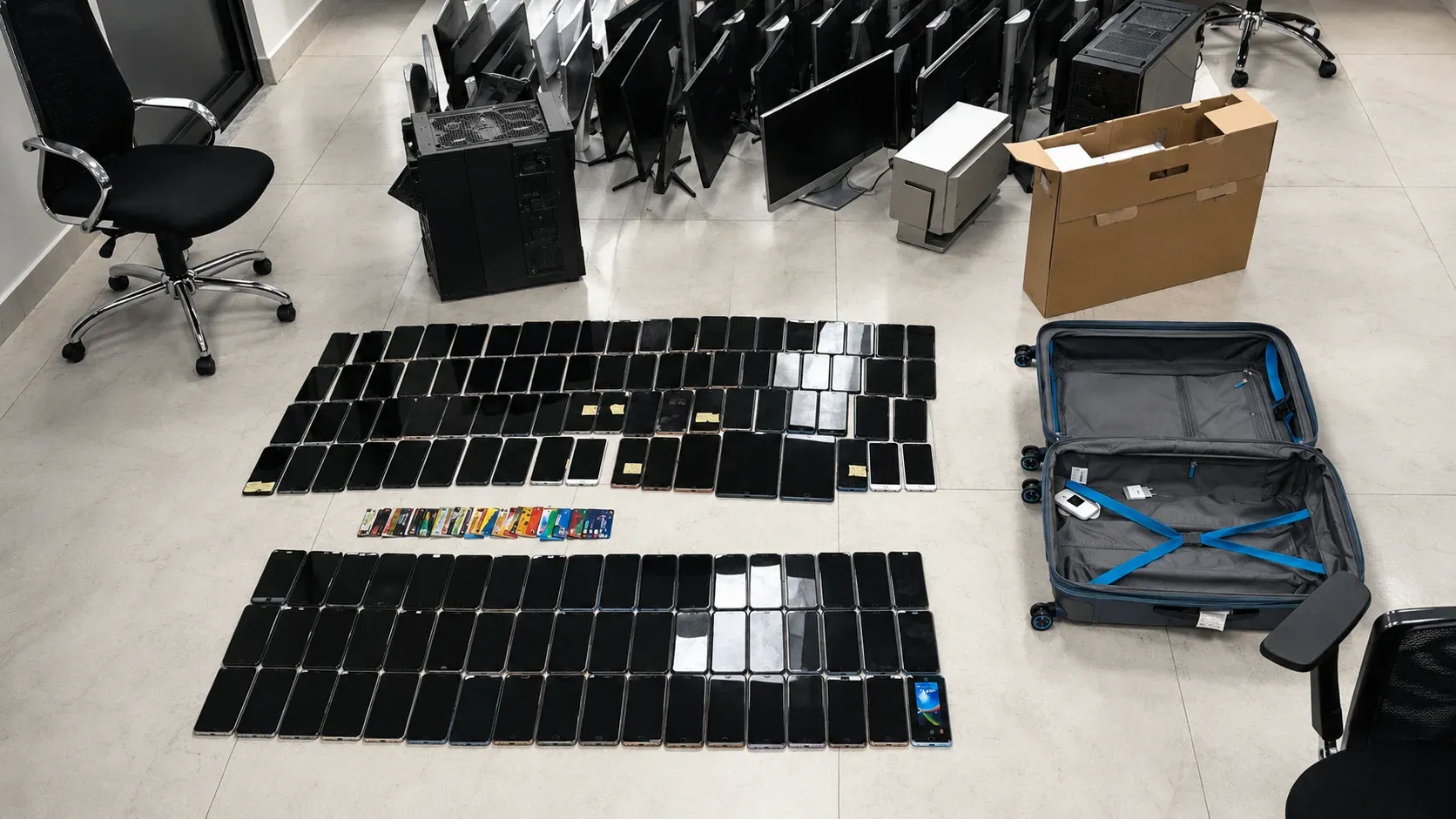
- 201 individuals arrested and 382 additional suspects identified.
- 3,867 victims identified across the participating jurisdictions.
- 53 malicious servers seized and nearly 8,000 pieces of data and intelligence shared among the 13 countries.
The participating states—Algeria, Bahrain, Egypt, Iraq, Jordan, Lebanon, Libya, Morocco, Oman, Palestine, Qatar, Tunisia and the United Arab Emirates—reported concrete disruptions: a phishing‑as‑a‑service site in Algeria was taken down, phishing tooling and banking data were seized in Morocco, a fraudulent investment platform in Jordan was dismantled (with 15 operators later identified as human‑trafficking victims), compromised devices were remediated in Qatar, and a vulnerable server hosting sensitive information was removed in Oman.
Neal Jetton, INTERPOL’s Director of Cybercrime, emphasized that “global collaboration” is essential when “cybercriminals exploit the digital landscape without borders.” The operation’s success demonstrates that coordinated intelligence sharing can translate raw data into actionable law‑enforcement leads.
Team Cymru’s Contribution and the Value of External Threat Intelligence
Team Cymru supplied “threat intelligence and internet‑scale visibility” that allowed investigators to map malicious infrastructure, attribute activity, and prioritize targets. According to CEO Joe Sander, the company’s telemetry “turns data into action” and makes it “harder, more expensive and riskier for cybercriminals to operate.”
Team Cymru’s platform aggregates context‑rich telemetry from beyond the network edge, delivering:
- Real‑time mapping of adversary infrastructure – useful for identifying command‑and‑control servers, phishing kits, and compromised hosting assets.
- Attribution signals – linking IP ranges, domain registrations, and SSL certificates to known threat actors.
- Noise reduction – filtering out benign background traffic to surface high‑confidence indicators.
These capabilities were leveraged alongside the other private partners to produce the 8,000 data points shared with law‑enforcement agencies. The collaboration also highlights the role of “Community Services” that provide free threat detection and DDoS mitigation to over 177 CSIRTs in more than 85 countries.
Implications for Enterprise Security Programs
While Operation Ramz is a law‑enforcement effort, its methodology offers several takeaways for corporate security teams:
- Cross‑border intelligence is no longer optional. Enterprises with a global footprint face threat actors that operate across jurisdictions. Integrating external feeds that include internet‑scale telemetry can surface attacks that internal logs miss.
- Actionable intelligence shortens response cycles. Team Cymru’s ability to convert raw network observations into “operationally actionable leads” mirrors the need for SOCs to move from alert fatigue to prioritized investigations.
- Collaboration with national CSIRTs adds resilience. The operation’s reliance on shared data among 13 nations demonstrates the benefit of establishing formal information‑sharing agreements with regional CSIRTs, especially in high‑risk markets.
- Vendor ecosystems matter. The partnership model—combining multiple intelligence vendors—shows that no single source can provide complete coverage. Enterprises should evaluate a layered CTI strategy that blends commercial, open‑source, and community feeds.
For CIOs and CISOs, the practical step is to assess whether existing threat‑intelligence platforms ingest external telemetry at the scale required to detect “malicious servers underpinning phishing, malware and large‑scale cyber scams.” If not, a pilot integration with a provider like Team Cymru can be justified by the operational efficiencies demonstrated in Operation Ramz.
Strategic Considerations for Technology Leaders
Adopting external threat intelligence involves more than a subscription; it requires alignment with existing security workflows:
| Consideration | Recommended Action |
|---|---|
| Data Integration | Use STIX/TAXII or API connectors to feed indicators directly into SIEM, SOAR, or XDR platforms, ensuring automated enrichment and playbook triggering. |
| Risk Prioritization | Map intelligence to asset criticality. Indicators tied to high‑value systems (e.g., ERP, cloud workloads) should receive elevated response tiers. |
| Compliance & Privacy | Verify that shared intelligence complies with regional data‑protection laws (e.g., GDPR, UAE’s PDPL) before ingesting victim‑related data. |
| Metrics & ROI | Track reduction in mean time to detect (MTTD) and mean time to respond (MTTR) after integration; compare against baseline to quantify value. |
| Vendor Governance | Establish SLAs for indicator freshness, false‑positive rates, and incident‑response support, mirroring the public‑sector expectations set by INTERPOL. |
By embedding these practices, technology leaders can transform the kind of “visibility needed to turn data into action” that Team Cymru provided to INTERPOL into measurable security improvements within their own organizations.
Key Takeaways
- Operation Ramz resulted in 201 arrests, 382 suspect identifications, 3,867 victim identifications, and the seizure of 53 malicious servers across 13 MENA countries.
- Team Cymru supplied internet‑scale threat intelligence that enabled the sharing of nearly 8,000 data points, illustrating the operational impact of external telemetry.
- Enterprises should consider integrating comparable external CTI feeds to improve cross‑border threat detection, reduce alert noise, and align with national CSIRT initiatives.
TechInsyte's Take
Operation Ramz demonstrates that coordinated, intelligence‑driven actions can dismantle cyber‑criminal infrastructure at scale. For enterprise security teams, the operation’s success underscores a clear strategic imperative: adopt external, internet‑scale threat intelligence and embed it within automated response workflows. Doing so not only mirrors the effectiveness achieved by INTERPOL and its private‑sector partners but also equips organizations to anticipate and neutralize threats that transcend geographic boundaries.
Source: Businesswire